
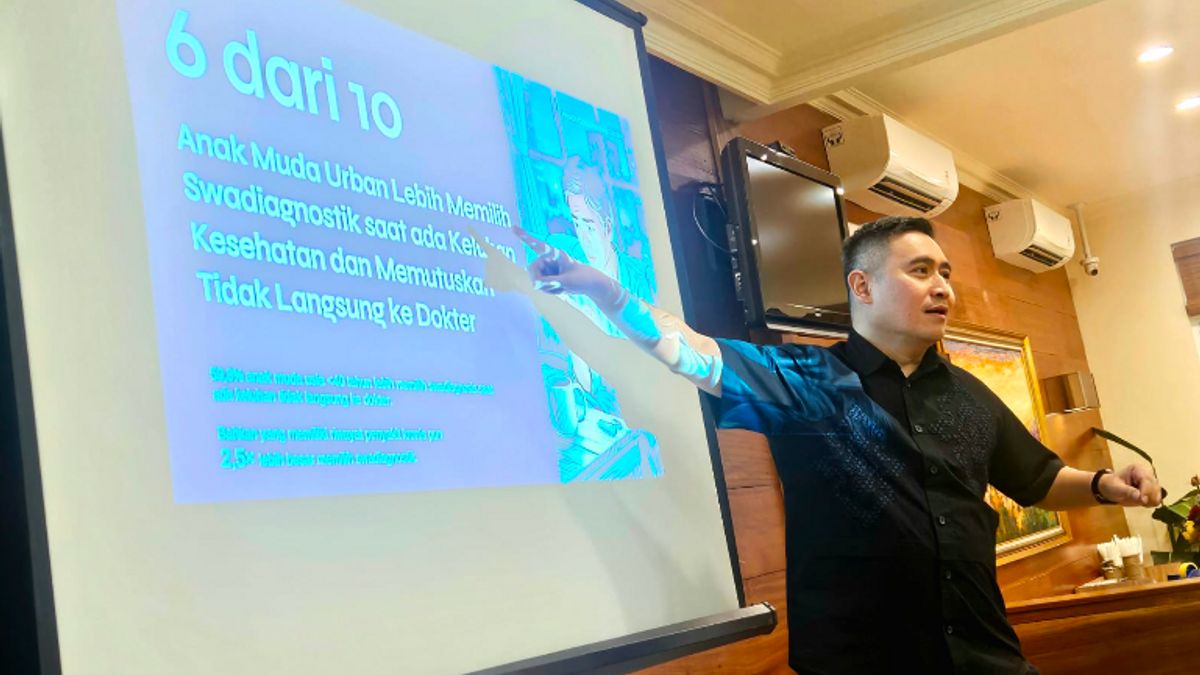


JAKARTA - The habit of finding out about diseases on their own through the internet to social media is commonly called swadiagnosik. This habit is also increasingly common, especially among young people.
The phenomenon of self-diagnosis is considered practical because a person can immediately search for information on symptoms only through search engines or digital content.
But unfortunately, this habit is also considered dangerous because it risks making someone misunderstand their health condition, trigger excessive anxiety, to self-medicate without medical supervision.
In addition, health information on the internet is not always in accordance with the condition of each individual. Symptoms that look similar do not necessarily indicate the same disease.
If it is done continuously without medical examination, self-diagnosis can also make a person ignore serious conditions that actually require doctor's treatment.
This phenomenon has also become a concern after a recent study from the Health Collaborative Center (HCC) found that almost 60 percent of urban young people under the age of 40 choose to self-diagnose first when experiencing health complaints.
The research conducted from March to May 2026 involved 448 respondents from various major cities in Indonesia such as Jabodetabek, Bandung, Surabaya, Semarang, and Yogyakarta.
The Head of Researcher and Founder of HCC, Dr. Ray Wagiu Basrowi, MKK, FRSPH, said that self-diagnosis has now evolved into a part of the health culture of urban generations.
"Self-diagnosis is now part of the health culture of urban generations. The Internet, AI-based search engines, social media, and the experiences of others are now the 'first doctors' for many young people before they come to health facilities," said Dr. Ray in his presentation in Jakarta, Wednesday, May 13.
The study found that Google and AI-based search engines are the main source of people conducting self-diagnosis. The most frequently sought complaints are related to respiratory, cardiovascular, digestive disorders, to psychological problems.
This phenomenon is also related to the term cyberchondria, which is a condition of increased anxiety due to too often looking for medical information on the internet.
One thing that is of concern, as many as 36 percent of respondents admitted to directly doing self-medication or self-treating themselves without consulting a doctor. In fact, 27 percent of respondents chose to ignore the doctor's prescription because they felt that information from the internet was more appropriate.
Interestingly, the study also found that about 57 percent of the self-diagnosis results were confirmed by doctors. According to Dr. Ray, this makes people's trust in the self-diagnosis process increasingly increasing.
"When someone feels that their internet search results are proven to be true several times, then trust in the self-diagnosis process will increase. This can form a false medical illusion in the community, because in fact what is considered suitable for the doctor can only be the result of screening the risk of disease and not a diagnosis," said Dr. Ray.
The research also showed that respondents with a history of chronic disease tend to self-diagnose more often than other groups.
According to HCC, this condition illustrates the existence of systemic fatigue in modern urban communities. Many people feel that the process of treatment takes time, cost, long queues, and not a little emotional energy.
"Some people feel that coming to a health facility takes a long time, queues, additional costs, and emotional energy. Finally, the internet is considered more practical, faster, cheaper, and feels more personal," said Dr. Ray.
More than half of the respondents also admitted that they felt more comfortable finding health information themselves than coming directly to the health facility because it was considered more practical and cost-effective.
Even so, HCC considers this phenomenon to be a serious concern because today's society is not only dealing with diseases, but also floods of digital information that are not necessarily accurate.
"In the future, the challenge is not to prohibit people from seeking health information on the internet. That's almost impossible. The challenge is how the state, health workers, digital platforms, and educational institutions build healthy and responsible digital health literacy," added Dr. Ray.
HCC assesses that increasing digital health literacy needs to be a priority agenda in the midst of the development of AI and social media algorithms that increasingly influence daily public health decisions.
The English, Chinese, Japanese, Arabic, and French versions are automatically generated by the AI. So there may still be inaccuracies in translating, please always see Indonesian as our main language. (system supported by DigitalSiber.id)
Most Popular Tags
#Prabowo Subianto #donald trump #firearm #8791 #giias 2026Popular


