
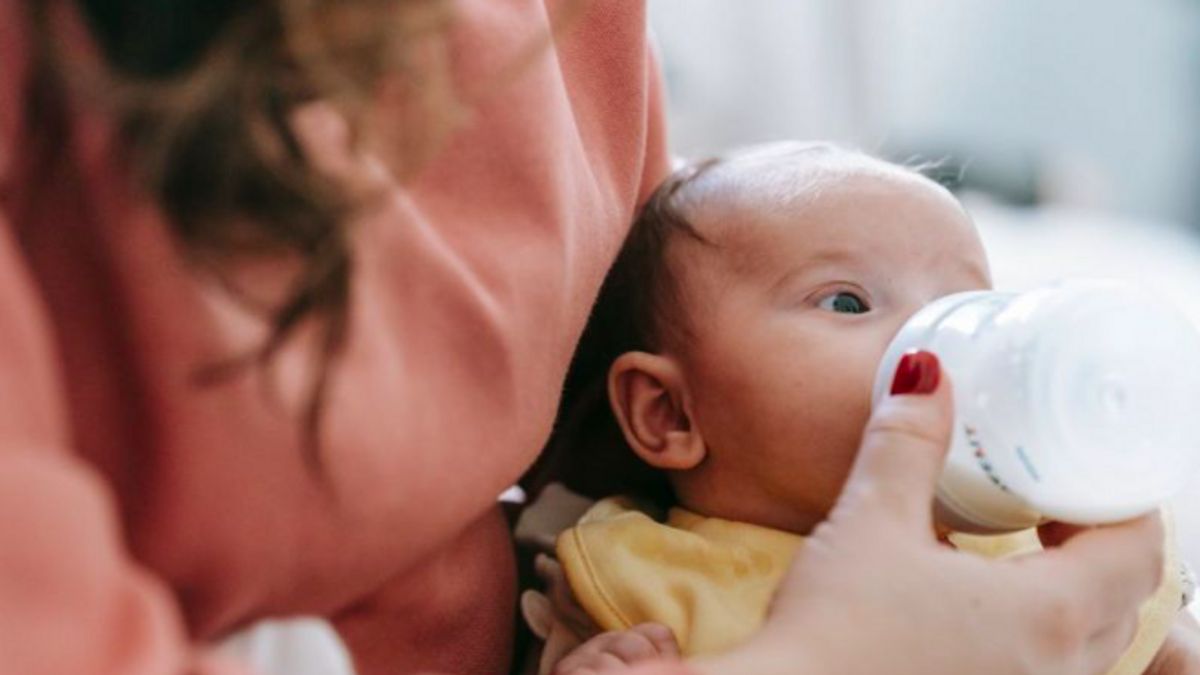


JAKARTA - In Indonesia, the practice of donors of breast milk (ASI) is getting more attention, especially because of the unavailability of official facilities such as the national standard bank (MISSIK). However, the need for donor breast milk continues to increase, especially for babies with critical health conditions such as prematureity.
Therefore, education regarding the procedures and safety standards of breastfeeding donors is very important so that its administration does not pose a health risk for both donors and recipients.
Head of the Breastfeeding Task Force of the Indonesian Pediatrician Association (IDAI), Dr. dr. Naomi Esthernita F.D., Sp.A., Subsp.Neo(K), emphasized that the breast milk donation process should not be carried out haphazardly. Both donors and recipients must meet certain medical requirements, and its implementation should be based on health facilities.
Breast milk donors should not be done only based on information from the internet. WHO itself states that breast milk donors should not be done online without proper medical procedures. Each donor must go through a screening process, and the breast milk provided must go through a fitting process, "explained Dr. Naomi in a webinar, as quoted by ANTARA.
Furthermore, dr. Naomi explained that babies who deserve donor breast milk are generally those who have clear medical indications, such as premature babies with a weight of under 1,500 grams and have not been able to receive breast milk from their mother. The provision of breast milk donors is not just for reasons of comfort, especially if the baby's mother is actually able to breastfeed.
"ASI donors are only given if there are medical indications. It's not because the mother doesn't want to breastfeed, then chooses a practical way of looking for breast milk donors," he said.
SEE ALSO:
-
 | INFO SEHAT
Cara Mengatasi Payudara Bengkak saat Menyusui di Rumah dengan Mudah
21 April 2025, 02:48 -
 | LIFESTYLE
Kiky Saputri Terharu ASI Keluar Sejak Hari Pertama, Bisa Menyusui Baby Kayya
25 Februari 2025, 14:10


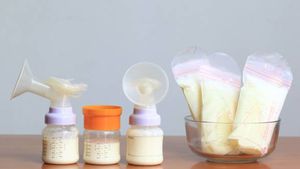
From the donor side, there is a big responsibility that must be fulfilled. A new mother can become a donor if the milk production exceeds the needs of her own baby. If the production is not sufficient for the child, then she is not advised to become a donor because it can interfere with the growth of her own baby.
In addition to ensuring the adequacy of breast milk, prospective donors are also required to undergo a series of medical examinations to ensure that they are in good health and do not carry infectious diseases. The examination includes Hepatitis B, Hepatitis C, HIV, CMV (Cytomegalovirus), and sifilis.
All potential donors must go through a strict screening stage in the hospital. If the results are declared safe, then the breast milk can be given to other babies, and must go through a fitting process to kill possible dangerous microorganisms, added dr. Naomi.
Although Indonesia currently does not have an official national-scale breast milk bank, several educational hospitals have begun to develop breast milk donor units as the first step towards a more organized system. This unit can become a center of information and education that is valid for people who need or want to become breast milk donors.
The national breast milk bank is not yet available. But several major hospitals already have units of breast milk donors that follow medical procedures according to standards," said dr. Naomi.
With the right understanding and education, it is hoped that the Indonesian people can use breast milk donors in a safe, effective, and in accordance with medical needs.
The English, Chinese, Japanese, Arabic, and French versions are automatically generated by the AI. So there may still be inaccuracies in translating, please always see Indonesian as our main language. (system supported by DigitalSiber.id)


