


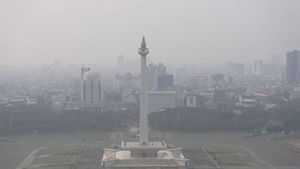
JAKARTA - Not all pollution is visible. Small particles flying in the air, such as PM2.5 and PM10, may not be visible, but may pose a big risk to the body. These particles fall into the category of dangerous pollutants that are often found in polluted urban air.
In addition to microdust particles, dirty air also often contains harmful gases such as ozone (O3), nitrogen dioxide (NO2), sulfur dioxide (SO2), and carbon monoxide (CO). Although it is not always felt immediately, long-term exposure to these substances can damage the respiratory system and other vital organs.
According to the Head of the Communication and Public Information Bureau of the Ministry of Health, Aji Muhawarman, the public needs to be more vigilant if they are in an environment with poor air quality.
"The polluted plane can carry many particles and gases that endanger health," he said as quoted by ANTARA.
He explained that fine particles such as PM2.5 and PM10 are able to penetrate the respiratory tract to the lungs, increasing the risk of respiratory tract infection, asthma, COPD (Pronic Obstructive Lung Disease), to heart problems. While carbon monoxide, which is odorless and colorless, can inhibit the supply of oxygen in the body due to its ability to bind hemoglobin in the blood.
SEE ALSO:
-
 | BERITA
Jakarta Akan Tambah Stasiun Pemantau Udara, Tiru Model Paris dan Bangkok
19 Maret 2025, 07:55


This condition, continued Aji, is very risky especially for pregnant women because it can trigger low birth weight (BBLR) in infants, even increasing the risk of death while perintal.
As a precautionary measure, Aji suggested that people limit outdoor activities when the air quality index shows unhealthy numbers. For children and adults, the appropriate use of masks can be a simple but effective protector of microparticles.
In addition, lifestyle also plays an important role. The public is advised not to use wood-fueled stoves, and to avoid burning garbage because both produce thick smoke that exacerbates air pollution, especially in densely populated environments.
Inside the house, it is important to ensure good air circulation. The use of ventilation fans and opening windows when the outside air is clean can help reduce the buildup of indoor pollutants.
Aji also emphasized that to avoid the use of products made from hard chemicals, such as cleaning sprays, room makers, or other aerosol products that can issue volatile chemical compounds (VOCs) into the air.
"This zone can exacerbate the quality of the air in the room, especially if it is used regularly," he said.
The English, Chinese, Japanese, Arabic, and French versions are automatically generated by the AI. So there may still be inaccuracies in translating, please always see Indonesian as our main language. (system supported by DigitalSiber.id)
Most Popular Tags
#Prabowo Subianto #donald trump #2026 World Cup #Febrie Adriansyah #8791Popular


