



JAKARTA - Colorectal cancer or intestinal cancer among young people continues to increase, at least in 27 countries. The incidence rate in adults under the age of 50 has doubled every decade, over the past 20 years.
If this continues, intestinal cancer is predicted to be the main cause of cancer-related death among young adults by 2030. The challenge for this incident is that the cause of intestinal cancer among young people is not known for sure.
Young adults diagnosed with intestinal cancer often have no family history, or risk factors such as obesity or hypertension. This triggers speculation about the potential of a hidden environment or microbes, something that is the latest study material.
The study was conducted by the University of California San Diego, which identified that microbes behind the increase in intestinal cancer at a young age are bacterial toxins called colibactins. These are bacteria that live in the large intestines and rectums, which are able to change DNA.
The researchers say that colibactin exposure in childhood leaves a distinctive genetic imprint on the DNA of colon cells, which can increase the risk of developing colorectal cancer before the age of 50.
SEE ALSO:
-
 | INFO SEHAT
Berisiko Picu Kanker Kolorektal, Konsumsi 4 Makanan Ini Sebaiknya Dibatasi
17 April 2025, 21:25 -
 | INFO SEHAT
Jangan Anggap Remeh, Kanker Usus Besar Kini Banyak Dialami Usia 20-an
06 Maret 2025, 10:55
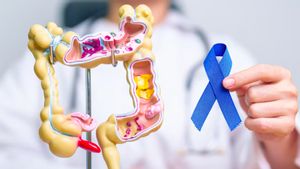

"This mutational pattern is a kind of historical record in the genome, and this pattern shows colibactin exposure early in life as the driving force behind the disease that appeared earlier," said study lead author Ludmil Alexandrov, professor at the Shu Chien-Gene Lay Department of Biotechnology at UC San Diego, quoted by CNA, on Tuesday, April 29, 2025.
Our initial goal is to research global collorectal cancer patterns to understand why some countries have a much higher rate than other countries. However, as we researched, one of the interesting and striking findings was how often colibactin-related mutations appeared in the early cases, "he explained.
The study also revealed that colibactin-related mutations account for about 15 percent of what is known as APC drive mutations. These are some of the earliest genetic changes that directly encourage the development of cancer, in cases of colorectal cancer.
If someone gets one of these trigger mutations when they are 10 years old, they can get it decades faster with collorectal cancer. They experience it at the age of 40, not 60, "he concluded.
The English, Chinese, Japanese, Arabic, and French versions are automatically generated by the AI. So there may still be inaccuracies in translating, please always see Indonesian as our main language. (system supported by DigitalSiber.id)
Most Popular Tags
#Prabowo Subianto #donald trump #2026 World Cup #Febrie Adriansyah #8791Popular


