

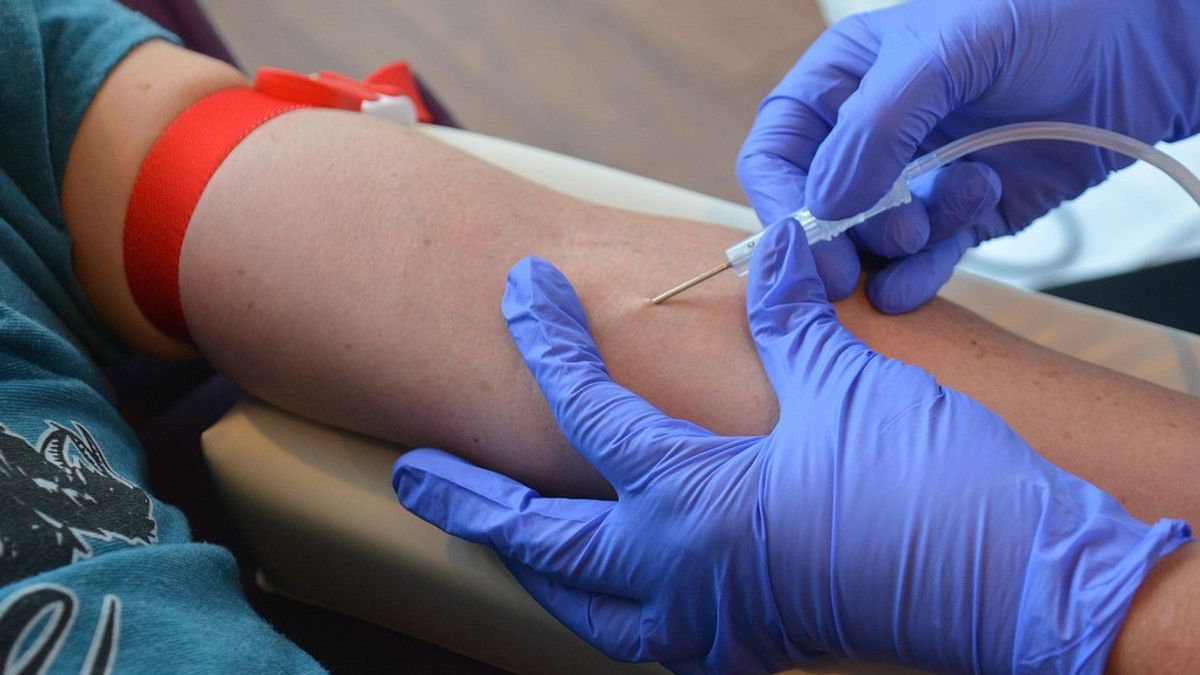


YOGYAKARTA Blood donation is an activity that provides many benefits, both for oneself and for others. In addition to helping save others, blood donation can reduce the risk of heart disease, hypertension, to reduce iron levels for people with hemotoraks. Despite bringing many benefits, there are several groups of people who cannot donate blood. Come on, understand more in the following article.
There are a number of factors that prevent a person from donating blood. For example, because you have a disease or experience certain conditions.
Quoted from AI-Care, here are some groups of people who cannot donate blood:
Pregnant women cannot donate their blood because they are at risk of developing anemia, a condition where the number of red blood cells in the body is lower than normal.
Please note, most cases of anemia that occur during pregnancy are caused by a lack of iron levels in the blood.
When pregnant, the body needs more iron to help the growth of the fetus. Pregnant women are required to fulfill 27 mg of iron every day to prevent anemia.
Anemia can affect fetal development, especially in the first trimester. Unresistant anemia can increase the risk of premature birth babies, be born with low weight, and experience growth disorders.
The World Health Organization (WHO) does not recommend pregnant women donate blood.
Apart from pregnant women, breastfeeding mothers are also not advised to donate blood, because it can reduce breast milk production during some of this time.
In addition, Donating blood during breastfeeding can cause various health problems, such as:
This group can only do blood donation after 3 months of pih bayi.
A person who has a history of heart disease is not recommended to donate blood, especially if he has had a heart attack, stroke or is taking blood dilution medication.
Another condition that makes people with heart disease not allowed to donate blood, namely:
Patients with tuberculosis (TB) and pneumonia are also included in the group of people who cannot donate blood. This activity can only be carried out after the sufferer has completed treatment and is declared completely cured of his illness.
A person infected with Human Immunodeficiany Virus (HIV) cannot donate blood. This is because blood from HIV sufferers can endanger the recipient and spread the virus to blood recipients.
A person suffering from sexually transmitted infection should not carry out blood donation activities. Because, this can spread the disease to the recipient.
SEE ALSO:



The group of people who cannot donate their next blood is hepatitis B and C. Not without reason, these two types of diseases can be transmitted through blood.
In fact, even though they have been declared cured, they still cannot donate blood, because they are feared that the virus will transmit to donor recipients.
That's information about groups of people who can't donate blood. Get news updates of other options only on VOI.ID.
The English, Chinese, Japanese, Arabic, and French versions are automatically generated by the AI. So there may still be inaccuracies in translating, please always see Indonesian as our main language. (system supported by DigitalSiber.id)
Most Popular Tags
#Prabowo Subianto #donald trump #2026 World Cup #Febrie Adriansyah #8791Popular


