

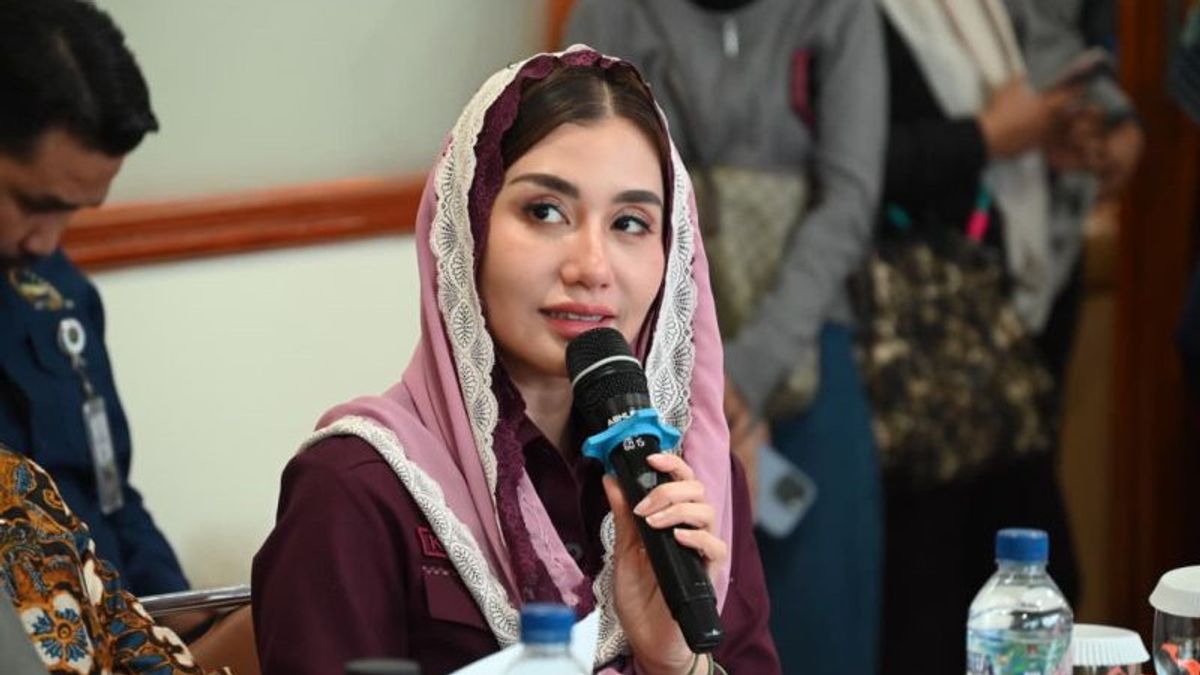


Member of Commission VII of the Indonesian House of Representatives, Novita Hardini, assessed that the success of the transformation of green industry or green industry is not only measured by energy efficiency or production achievement.
However, he said, from the extent to which the industry is able to survive in the midst of a global crisis, maintain the environment, and create economic justice.
"If you don't dare to change now, the national industry will not only lose competitiveness, but can be crushed by the global crisis," said Novita as quoted by ANTARA, Saturday, January 31.
To note, global economic uncertainty is increasingly putting pressure on the national industry. The weakening of the rupiah exchange rate, the surge in energy prices to geopolitical tensions are a combination of serious threats to the sustainability of the domestic industrial sector.
Responding to this condition, Commission VII of the DPR RI directly oversees the implementation of green industrial transformation as a survival strategy in the midst of a crisis.
One of the highlights is the move by PT Japfa Comfeed Indonesia in Lampung Province.
Furthermore, Novita emphasized that the global economic pressure has now had a direct impact, not only on large industries, but also on the household and farmer levels.
"The economic pressure today is felt by the public and industry players. The increase in energy prices has a direct impact on production costs. Without serious and sustainable transformation, the national industry is at risk of stagnating and even being eroded by the global crisis," said Novita.
He appreciated PT Japfa's initial step in starting to use solar energy as a renewable energy source. However, he reminded that the green industry should not stop at symbols or merely replacing electricity sources.
"Green industry is not just about solar panels. Transformation must touch waste management, ecosystem protection, resource efficiency, and a real impact on the surrounding environment. Otherwise, the green concept will only be a jargon," he said.
He also encouraged PT Japfa to become a pilot project for the green industry in the food sector, which truly implements the principles of sustainability in its entirety, from upstream to downstream.
Apart from environmental aspects, Novita also highlighted economic justice in the food industry ecosystem.
He reminded large companies not to move exclusively and leave room for small business actors.
"In line with the spirit of President Astacita about independence and food sovereignty, large industries should not run on their own. There must be a real collaborative space for MSMEs and micro-enterprises, so that the benefits of industrial progress are felt down to the lowest economic layer," he said.
The English, Chinese, Japanese, Arabic, and French versions are automatically generated by the AI. So there may still be inaccuracies in translating, please always see Indonesian as our main language. (system supported by DigitalSiber.id)


