


The Ministry of Transportation has reiterated its commitment to resolve the issue of Over Dimension & Over Loading (ODOL) goods transportation, which has been one of the most crucial issues in road safety and national logistics governance.
The Director General of Land Transportation, Aan Suhanan, said that handling ODOL is a long job that requires collective discipline from all parties.
"We really have to solve this ODOL problem because the impact is extraordinary," he said in an official statement, Thursday, November 20.
According to Aan, ODOL violations have become a national issue since the regulation was implemented in 2009. However, the implementation is not easy because it is related to many factors, ranging from infrastructure, operational culture, to driver compliance and transportation entrepreneurs.
" Quoting data from the Korlantas Polri, which shows that the involvement of goods transport vehicles in accidents reaches 10 to 12 percent and ranks second after motorcycles," said Aan.
In addition to safety, ODOL also has a significant impact on congestion and economic losses. The speed of heavy vehicles that do not meet standards triggers disruption of traffic flow and productivity losses. On the other hand, excessive burden speeds up road damage.
The damage to national roads due to ODOL vehicles reached Rp47.43 trillion. This is a fantastic number that should be used for other programs, such as toll tariff incentives or service improvements," he explained.
Nine Action Plans For Handling ODOL
To answer these challenges, the Ministry of Transportation together with relevant stakeholders have prepared 9 action plans that are being implemented. One of them is data integration across ministries/agencies.
"Until now, only about 40 percent of the vehicle's periodic test data has been recorded digitally, because most of the test centers are in local governments," he said.
Aan also explained digital-based law enforcement innovations, including the use of the Weigh in Motion (WIM) technology which has now been installed in more than 40 locations on toll roads.
"Through WIM integration with the Electronic Traffic Law Enforcement (ETLE) system, ODOL vehicle violators can be dealt with without direct interaction with officers," he said.
SEE ALSO:
-
 | EKONOMI
Cuaca Buruk Mengintai Akhir Tahun, Kemenhub Perintahkan Syahbandar Ketatkan Pengawasan
19 November 2025, 06:15

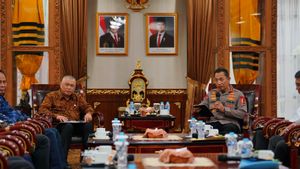
In addition, Aan said the main goal of taking action against ODOL vehicles is to protect the safety of road users and create a healthy logistics ecosystem.
"One life is too many. That's why we invite all stakeholders, let's together create Zero ODOL in 2027," he concluded.
On the same occasion, Dirlantas Polda North Sumatra, Kombes Pol Firman Darmansyah also warmly welcomed the action plan carried out by the Directorate General of Hubdat.
"Of course we are very happy and very proud because this innovation can support our performance later on toll roads for traffic control," he said.
The English, Chinese, Japanese, Arabic, and French versions are automatically generated by the AI. So there may still be inaccuracies in translating, please always see Indonesian as our main language. (system supported by DigitalSiber.id)


