


JAKARTA - The practice of illegal imports that are being intensively eradicated by the government has received appreciation from domestic upstream textile entrepreneurs. In addition to tightening, the Association of Indonesian Filament Filament Serat and Benang Producers (APSyFI) proposed that the government be able to implement a manifest port that applies as an import document.
APSYFI General Chairperson Redma Gita Wirawasta said that if the proposal departed from the illegal importation case that had occurred so far and was mainly caused by the Customs and Excise system, it still uses an in-land manifest or Goods Import Notification (PIB) as the main import document made by the importer (self declare).
"The possibility of falsification of data (mis-declare) is very large and often occurs," said Redma in an official statement received by VOI, Tuesday, November 18.
APSYFI found differences in export-import data from a number of countries in 2024, where it was found that the import value was not recorded at US $ 24.10 billion, specifically for textiles and textile products (HS 50-63) amounting to US $ 2 billion.
Meanwhile, Redma said, if in other countries the import documents that apply are original export documents from exporting countries. Thus, there is no gap for importers to change the contents of the documents.
"The export document was sent electronically from the export port to the import port directly when the ship was sailing, so this export document automatically became an import document," he said.
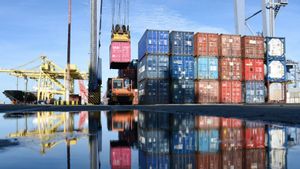
Not only that, but APSYFI also requested that Customs and Excise provide sufficient Container Scanner at all ports to scan all imported containers that enter.
Because in other countries, the scanning process is carried out for all containers and if the scan results do not match the documents, the container enters the red lane to be opened and checked manually.
"One of our weaknesses is that the container of the green lane is free through without scanning, the determination of the route is determined by Customs through profiling to become a toy for unscrupulous officers," he explained.
On the other hand, Chairman of the Working Convection Entrepreneurs Association (IPKB) Nandi Herdiman also highlighted the practice of importing Borongan. Nandi said that the wholesale import players are always on the green line.
SEE ALSO:
-
 | EKONOMI
Tertibkan Penjual Pakaian Bekas Impor, Menteri UMKM Temui Menteri Perdagang
17 November 2025, 19:25 -
 | EKONOMI
1.300 Merek Lokal Masuk Radar Pemerintah untuk Gantikan Produk Impor Ilegal
17 November 2025, 19:02 -
 | EKONOMI
APSyFI Minta Pemerintah Kendalikan Impor demi Amankan Pasar Domestik saat Lebaran 2026
13 November 2025, 10:22
"Here we do not understand, what profiling is being carried out by Customs and Excise so that wholesale importers always enter the green line. They only pay Rp150 million per container without properly calculating taxes and import duties that must be paid," he said.
According to calculations, the 40 feet container contains clothes so it is worth around Rp. 2.4 billion, so the import duties and taxes that must be paid are around Rp. 1 billion. In fact, if the goods come from a country that has a trade agreement, the tax must be paid a minimum of Rp. 450 million.
He hopes that the breakthrough of the Minister of Finance (Menkeu) Purbaya Yudhi Sadive who is keen to fix the violation of customs rules can provide new hope for business actors to rise again.
"For years, this practice has made us businessmen and workers in the convection miserable, hopefully, Pak Purbaya's breakthrough will soon be followed by other relevant ministers," he concluded.
The English, Chinese, Japanese, Arabic, and French versions are automatically generated by the AI. So there may still be inaccuracies in translating, please always see Indonesian as our main language. (system supported by DigitalSiber.id)


