


JAKARTA - The Indonesian Jewelry Producers Association (APPI) proposed to the Minister of Finance (Menkeu) Purbaya Yudhi Sadive that the jewelry tax levy scheme should only be imposed at the producer level.
The proposal arose because the association assessed that the current scheme complicates supervision, considering that most illegal producers do not collect and deposit value-added tax (VAT) when selling their products to gold stores.
At the Office of the Ministry of Finance, Jakarta, Thursday, October 24, Purbaya explained that jewelry entrepreneurs complained about compliance constraints among producers, including the rise of jewelry producers who carry out activities without fulfilling the complete tax administration.
"They ask us to adjust policies related to jewelry producers that are considered illegal," he said, quoted by Antara.
The practices in question of associations include manufacturers who do not include purchase documents or purchase certificates, so that their sales activities to gold shops are not monitored and are not accompanied by tax deposits.
In accordance with the Minister of Finance Regulation (PMK) Number 48 of 2023, the total tax burden on gold jewelery reaches around 3 percent, consisting of 1.1 percent at the producer level and 1.6 percent at the end of VAT at the consumer level.
To close leak gaps and speed up fiscus surveillance, the association proposes that all 3 percent tax burdens be imposed directly on manufacturers.
"So their suggestion is that all of them are deployed 3 percent (in producers). So consumers don't pay anymore, just in factories. So we can control it faster," said Purbaya.
SEE ALSO:
-
 | EKONOMI
IFG Tunjuk Leonardo Henry Gavaza jadi Direktur Keuangan PT Askrindo
22 November 2024, 20:47
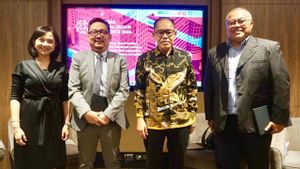

He added that the association also estimates that around 90 percent of producers are currently operating outside of a compliant tax mechanism, so that the potential state revenue from the jewelry sector is not optimal.
Purbaya stated that he would review the proposal, especially in terms of potential increase in state revenues and the effectiveness of supervision.
"So ask for treatment on how to pay VAT not only for consumers but directly for those companies." he said.
The English, Chinese, Japanese, Arabic, and French versions are automatically generated by the AI. So there may still be inaccuracies in translating, please always see Indonesian as our main language. (system supported by DigitalSiber.id)


