

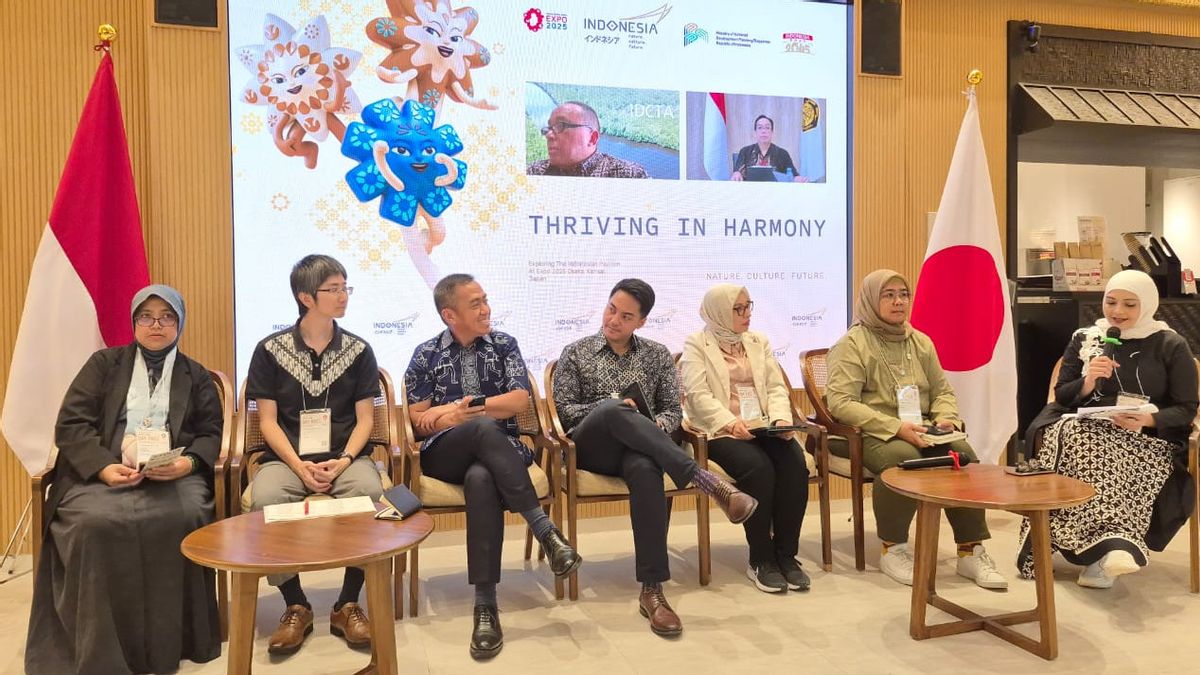


JAKARTA - The Indonesian government through the Ministry of Maritime Affairs and Fisheries (KKP) strengthens cooperation in blue carbon with partners in Japan through the Joint Crediting Mechanism (JCM) mechanism as a strategic step to control emissions while at the same time supporting sustainable green development.
Director General of Marine Spatial Planning of KKP Kartika Listriana revealed that the JCM cooperation between Indonesia and Japan has been running since 2013.
"Indonesia-Japan cooperation not only encourages emission reduction, but also provides blue economy-based investment opportunities to benefit the community and the environment," Kartika said in an official statement Friday, October 3.
Until now, said Kartika, there are 60 JCM projects in Indonesia with the potential for emission reduction of around 746,000 tons of CO2e per year and the opportunity to mobilize climate funding of up to 400 million US dollars through carbon trading.
In the talk show "Joint Crediting Mechanism Outreach for Indonesia" in Japan, Kartika said, JCM is not just a carbon trading scheme, but an instrument of accelerating technology transfer, green investment and financial incentives through carbon loans with integrity.
In addition, to explore cooperation in the field of mangrove conservation, coastal restoration, sustainable marine management, research and human resource development, several meetings were held with partners such as Sumitomo Corporation and the Sasakawa Peace Foundation (SPF).
In the future, Kartika, Indonesia and Japan will prepare the Implementation of Mutual Recognition Arrangement (MRA) for the carbon credit system, namely the Indonesian Emission Reduction Certificate (SPEI) and the Japan Joint Credit Mechanism (JCM).
Through the MRA, the two countries will recognize each other's targeted carbon credit systems and allow carbon credit exchanges to be certified to help achieve the nationally Determined Contribution (NDC) targets of each country and drive the global carbon market.
Kartika emphasized Indonesia's important role in encouraging blue carbon governance, namely through accelerating legalization and planning of marine space for blue carbon and blue economy programs in 17 locations for Certain National Strategic Areas (KSNT) and one pilot location in Central Java province.
"What is expected to be a real example of international collaboration in supporting the blue economy and achieving global climate targets," he explained.
SEE ALSO:
-
 | BERITA
Meski Perang, Persediaan Stok Gas Ukraina Tahun 2025 Ternyata dari Rusia
04 Oktober 2025, 06:02 -
 | BERITA
Ukraina Bisa Seret Uni Eropa Masuk Medan Perang, Hongaria Tolak Keras Keanggotaan!
03 Oktober 2025, 20:13 -
 | BERITA
Trump Sunat 7,6 M Dolar AS Dana Hibah untuk 16 Daerah Lumbung Suara Kamala Harris
03 Oktober 2025, 15:55


SEE ALSO:
-
| BERITA
Meski Perang, Persediaan Stok Gas Ukraina Tahun 2025 Ternyata dari Rusia
04 Oktober 2025, 06:02 -
| BERITA
Ukraina Bisa Seret Uni Eropa Masuk Medan Perang, Hongaria Tolak Keras Keanggotaan!
03 Oktober 2025, 20:13 -
| BERITA
Trump Sunat 7,6 M Dolar AS Dana Hibah untuk 16 Daerah Lumbung Suara Kamala Harris
03 Oktober 2025, 15:55
This step is believed to be concrete evidence of the KKP's commitment, which is now entering its 26th year old, in organizing the blue carbon ecosystem for national and even global interests.
According to Kartika, blue carbon is Indonesia's strategic asset to overcome climate change, protect the ecosystem while improving the welfare of coastal communities.
"Through the pilot project in Central Java, Indonesia wants to show that blue carbon governance can be a real and measurable model," he concluded.
The English, Chinese, Japanese, Arabic, and French versions are automatically generated by the AI. So there may still be inaccuracies in translating, please always see Indonesian as our main language. (system supported by DigitalSiber.id)


