


JAKARTA - Bank Indonesia (BI) said that loose monetary policy continues to encourage the growth of the amount of money in circulation, in line with the expansion of the government's fiscal policy which is directed to stimulate the real sector.
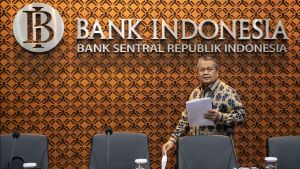
BI Governor Perry Warjiyo revealed the growth of primary money (M0) Adjusted, which has been adjusted to the impact of reducing the Bank's Minimum Laboratory (GWM) in Bank Indonesia due to the provision of a macroprudential liquidity incentive (KLM) policy reaching 7.34 percent on an annual basis or year on year (yoy) in August 2025.
This figure is much higher than M0 without adjustment to KLM which only grew 0.34 percent (yoy).
"From the influencing factors, the increase in M0 Adjusted comes from the expansion of the Clean Foreign Asset (NFA) Activator in line with the increase in foreign exchange reserves, while the components of Clean Bills to the Central Government (Net Claims on Government) have contracted so as to prevent an increase in M0 Adjusted," he explained at a press conference, Wednesday, September 17.
In addition, he conveyed that the expansionary monetary policy was also reflected in the circulation of money in a broad sense (M2) which increased from 5.46 percent (yoy) in January 2025 to 6.53 percent (yoy) in July 2025.
However, in terms of components, the increase in M2 growth was influenced by an increase in the growth of money in circulation in a narrow sense (M1), from 7.25 percent (yoy) in January 2025 to 8.72 percent (yoy) in July 2025, in line with the increase in the growth of cash outside of Commercial Banks and BPR from 10.30 percent (yoy) in January 2025 to 10.98 percent (yoy) in July 2025.
In terms of influencing factors, continued Perry, the increase in M2 mainly came from an increase in Net Foreign Assets (Net Foreign Asset) in line with the increase in foreign exchange reserves.
SEE ALSO:
-
 | EKONOMI
Pertumbuhan Ekonomi Masih Lemah, BI Soroti Konsumsi dan Investasi
17 September 2025, 17:32 -
 | EKONOMI
Menko Airlangga Sebut Perjanjian IEU-CEPA Diteken 23 September 2025
17 September 2025, 16:25 -
 | EKONOMI
Erick Thohir soal Pengganti Menteri BUMN: Tunggu Keputusan Presiden
17 September 2025, 16:02
Menurutnya, kontraksi pada tagihan bersih kepada pemerintah pusat dan masih rendahnya pertumbuhan kredit, turut membatasi potensi pertumbuhan likuiditas lebih lanjut.
"Ke depan, jumlah uang yang beredar diperkirakan akan meningkat sejalan dengan ekspansi kebijakan fiskal Pemerintah dan pertumbuhan kredit yang akan lebih tinggi," jelasnya.
SEE ALSO:
-
| EKONOMI
Pertumbuhan Ekonomi Masih Lemah, BI Soroti Konsumsi dan Investasi
17 September 2025, 17:32 -
| EKONOMI
Menko Airlangga Sebut Perjanjian IEU-CEPA Diteken 23 September 2025
17 September 2025, 16:25 -
| EKONOMI
Erick Thohir soal Pengganti Menteri BUMN: Tunggu Keputusan Presiden
17 September 2025, 16:02
According to him, the contraction in net bills to the central government and the low credit growth also limits the potential for further liquidity growth.
"In the future, the amount of money in circulation is expected to increase in line with the Government's fiscal policy expansion and higher credit growth," he explained.
The English, Chinese, Japanese, Arabic, and French versions are automatically generated by the AI. So there may still be inaccuracies in translating, please always see Indonesian as our main language. (system supported by DigitalSiber.id)


