

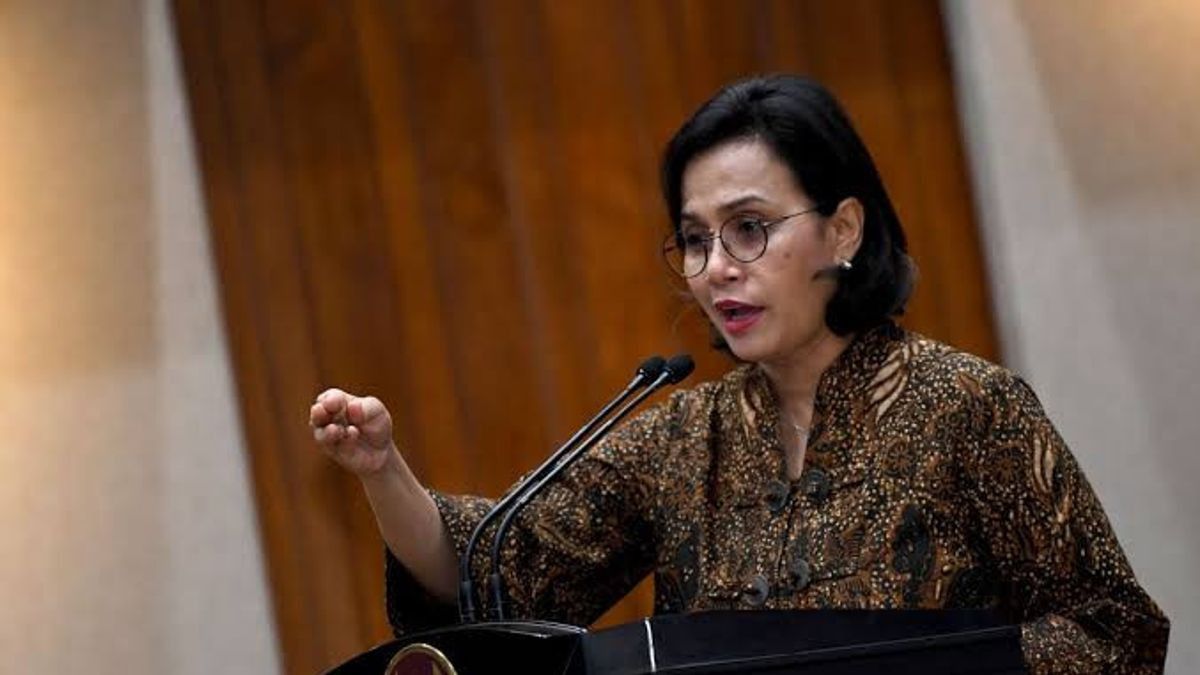


JAKARTA - The government has decided to make the efficiency of the Ministry/Institutional Budget (K/L) for the 2025 fiscal year. The policy is contained in Presidential Instruction (Inpres) number 1 of 2025 concerning Expenditure Efficiency in the Implementation of the APBN and APBD for the 2025 fiscal year. In line with the President's direction, Minister of Finance Sri Mulyani Indrawati issued a Letter of the Minister of Finance Number S-37/MK.02/2025. Where to instruct the Minister/Institutional Leadership to identify the spending efficiency plan for K/L. This efficiency plan includes operational and non-operative spending throughout K/L. Referring to these attachments, there are at least 16 items that need to be carried out efficiency. One of them is the infrastructure sector with budget efficiency reaching 34.3 percent. It is known that in 2025, the government allocates an infrastructure budget of IDR 400.35 trillion. Even so, there are items with greater budget efficiency namely office writing equipment (ATK), with 90 percent efficiency, printing and souveniring with 75.9 percent efficiency, as well as building rental, vehicles and equipment with 73.3 percent efficiency. Then, other expenditure with 59.1 percent efficiency, Seremonial Activity with 56.9 percent efficiency, Official Travel with 53.9 percent efficiency, Study and Analysis with 51.5 percent efficiency. Furthermore, Consultant Services with 45.7 percent efficiency, as well as Meeting, Seminar and the same with 45 percent efficiency, Honor Output Activities and Services Profession with a efficiency of 40 percent. Included, Diklat and Bimtek, with efficiency of 29.0 percent. Equity and Machinery, with efficiency of 28 percent Applicance, with efficiency 21.6 percent. Government assistance, with efficiency 16.7 percent. Maintenance and Care, with efficiency 10.2 percent. Nevertheless, the savings plan does not include employee spending or social assistance (bansos). This is oldest in 2a grains.
This efficiency is prioritized apart from the budget sourced from loans and grants, the rupiah is purely a companion unless it cannot be implemented until the end of the 2025 FY.
Then, the budget sourced from Non-Tax State Revenue of the Public Service Agency (PNBP-BLU) except for those deposited into the state treasury of the 2025 FY, as well as the budget sourced from State Sharia Securities (SBSN) and became an underlying asset in the context of the issuance of SBSN. In addition, K/L was asked to convey the results of the identification of the budget efficiency plan as referred to in point 2a to the DPR Commission partners to obtain approval. "Submitted a revised proposal in the form of a elaboration the budget is in accordance with the amount of efficiency in attachments and has received the approval of the DPR Commission partners to the Minister of Finance cq. Director General of Budget no later than February 14, 2025," reads the 2d point. Meanwhile, if until February 14, 2025 K/L has not proposed a revision as referred to in point 2.d, the Ministry of Finance will adjust it independently and register it in the Budget Implementation List (DIPA). "The entire process is in the context of K/L TA spending efficiency "2025 should be carried out in a transparent, accountable and responsible manner, as well as free from Corruption, Collusion and Nepotism (KKN)," wrote the letter. Previously, Finance Minister Sri Mulyani Indrawati explained, this step aims to improve the quality of state spending or better spending and support the creation of a more equitable welfare. "That is the focus on improving quality from spending, we say yes better spending, quality of spending needs to be done "Because what I said earlier is that if it will continue to be an important instrument, the quality of spending, both ministries, institutions, and regions needs to be improved," he said in a press conference, Friday, January 24. Sri Mulyani conveyed that this budget savings instruction aims to increase the efficiency of budget use and shift focus on spending on sectors that have a direct impact on the community, such as providing free nutritious food, improving the food, energy, and health sectors, as well as improving the quality of human resources. According to him, President Prabowo also advised that the budget for activities that do not have a direct impact on the community, such as ceremonial, official travel, or procurement of unproductive goods to be saved. "The President also conveyed indications that the APBN needs to be implemented in terms of efficiency and targeting accuracy, and of course reducing various things "Shoppings that are considered to have an impact on improving and strengthening the economy and welfare, improving productivity, creating growth, need to be strengthened," he explained.
SEE ALSO:
-
 | EKONOMI
Banjir Lagi di Grobogan, Kereta Api Arah Jakarta Kembali Alami Gangguan
28 Januari 2025, 14:06 -
 | EKONOMI
Dorong Hilirisasi Timah, Pemerintah Kuatkan Posisi Indonesia di Perdagangan Pasar Dunia
28 Januari 2025, 09:30
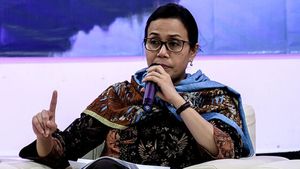

Sri Mulyani emphasized that this savings is expected to be diverted to more productive spending, which contributes to the creation of job opportunities, economic growth, and community welfare. In this case, Sri Mulyani said that focusing on spending that is directly beneficial to the community, such as a free nutritious food program, is expected to strengthen the local sector, create jobs, and support local-based economic growth. In addition, Sri Mulyani said that the Government will also coordinate with other parties, including BI OJK, LPS and the financial sector, to support the financing needed to support such programs Sri Mulyani added that the policy of pruning will have a positive impact on economic growth.
The English, Chinese, Japanese, Arabic, and French versions are automatically generated by the AI. So there may still be inaccuracies in translating, please always see Indonesian as our main language. (system supported by DigitalSiber.id)


