


JAKARTA - PT Semen Indonesia (Persero) Tbk (SIG) became the first building material company in Indonesia to achieve validation from an international institution, Science-Based Target Initiatives (SBTi). GIS is considered to have met SBTi's criteria in preparing a short-term target (near-term target) for reducing greenhouse gas (GHG) emissions in line with efforts to limit global warming to the level of 1.5° Celsius.
The achievement of GIS on President Prabowo Subianto's 100 Working Day is in line with the direction of the Minister of SOEs, Erick Thohir to support the Asta Cita program, especially regarding the harmonization of life with the environment and nature.
SBTi is a leading validation institution in the world that helps companies or organizations in setting targets for reducing GRK emissions based on science or the latest science aimed at limiting global warming to a level of 1.5$ Celsius according to the Paris Agreement on Climate Change.
The Minister of SOEs, Erick Thohir, said that the transformation of SOEs that was carried out aggressively must involve the sustainability aspect, one of which was by carrying out low-carbon environmentally friendly operations.
"I hope that SOEs will carry out energy transformation and reduce carbon emissions. This is a shared responsibility for the sustainability of our environment," said Erick Thohir.
GIS Corporate Secretary, Vita Mahreyni said, global warming caused by the increase in GRK emissions is a threat to the sustainability of life on earth. As the leader of the country's building materials industry, GIS plays an active role in global climate control by carrying out lower-carbon business operations and adhering to sustainable development principles.
"SIG is proud to be the first company in the Indonesia building materials industry to be validated by SBTi, which has strict criteria in setting a GRK emission target so that it can be scientifically accounted for. This validation proves SIG's strong commitment in reducing GRK emissions through an applicative action plan and measurable targets," said Vita Mahreyni, in her statement, Wednesday, January 22.
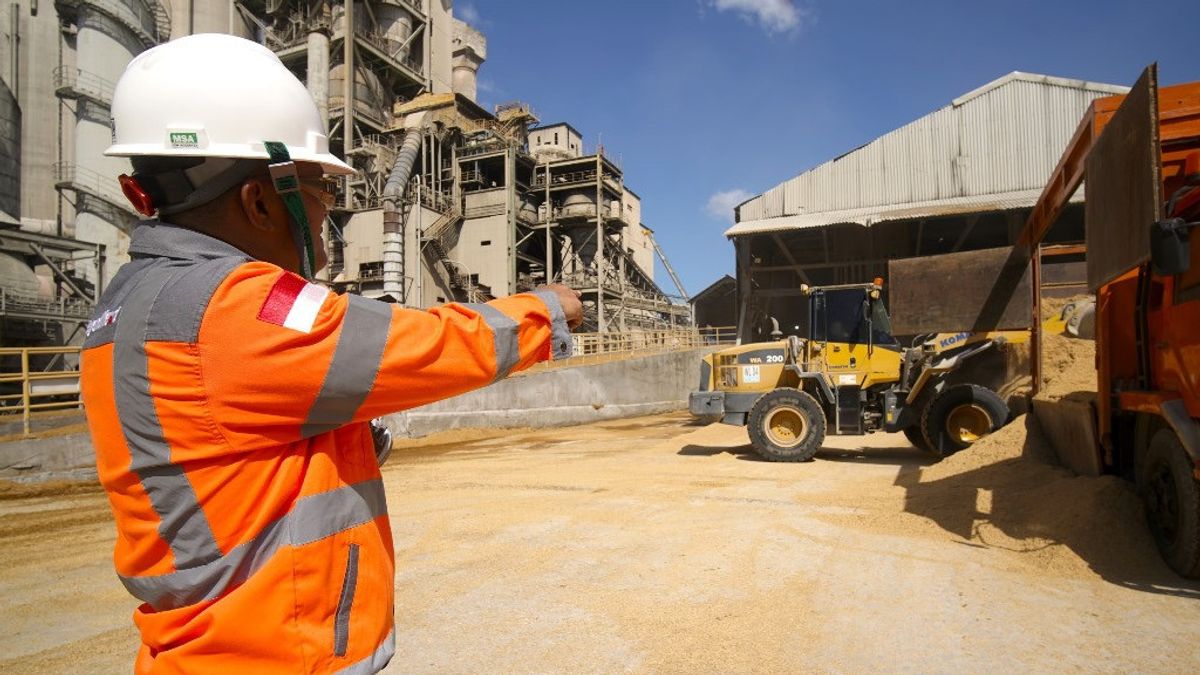
SIG has an ambitious target of reducing GRK emissions through a number of strategic initiatives, including the use of alternative fuels from agricultural waste, industry, urban solid waste (multipal solid waste) which is processed into refuse-derived fuel (RDF), biomass, and other sources. In addition to the use of alternative fuels, the production process in SIG factories is supported by the implementation of digitalization plant through the utilization of machine learning, big data and artificial intelligence (AI) for optimization of production activities to achieve energy use efficiency and increase productivity.
The use of alternative fuels is not only lower in emissions, but also helps in overcoming problems caused by urban waste such as unpleasant odors and disease disorders in the community, as well as the emergence of methane gas from agricultural waste that is not well managed.
SEE ALSO:
-
 | EKONOMI
Ini Penyebab Dolar Perkasa di Negara Berkembang tapi Lemah di Negara Maju
23 Juni 2023, 19:02 -
 | EKONOMI
Paris Summit 2023 Ungkap Belum Ada Investasi Ideal dalam Transisi Energi
23 Juni 2023, 17:19

To accelerate the achievement of emission reduction from Company operational activities, SIG also continues to develop renewable energy through the use of solar panels in its operational units, as well as optimization of exhaust hot gas from the cement production process (Waste Heat Recovery Power Generation/WHRPG).
Vita Mahreyni added, referring to the Company's data, the use of alternative fuels in all GIS factories in 2024 will reach 550 thousand tons, covering 314 thousand tons of biomass, 206 thousand tons of non- biomass, and 30 thousand tons of RDF. Through this initiative, SIG succeeded in increasing the domestic thermal substitution rate (TSR) to 7.56 percent, compared to the previous year's domestic TSR of 7.27 percent in 2023.
"SIG is always committed to being at the forefront of the building materials industry in carrying out low-carbon sustainable development principles and supporting social improvements to create a better life for the current generation and will come," said Vita Mahreyni.
The English, Chinese, Japanese, Arabic, and French versions are automatically generated by the AI. So there may still be inaccuracies in translating, please always see Indonesian as our main language. (system supported by DigitalSiber.id)


