

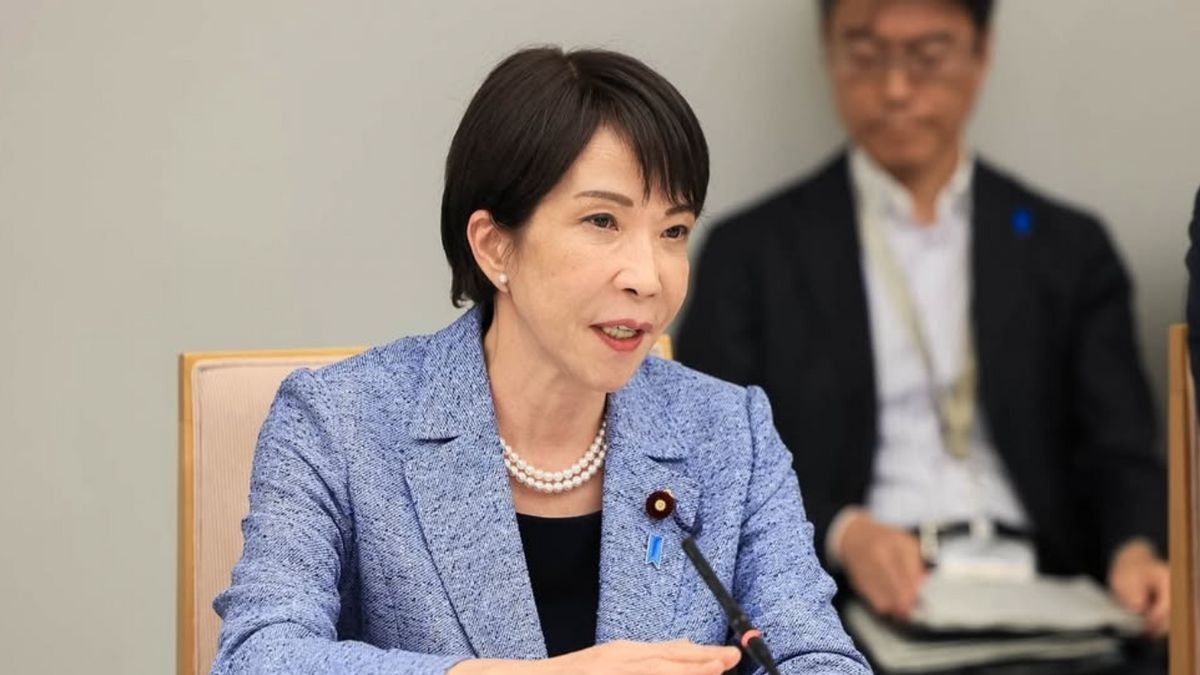


JAKARTA - Japanese Prime Minister Sanae Takaichi's promise to temporarily remove the 8 percent food tax is stuck on a seemingly trivial, but expensive, issue: the cash register.
Quoted from The Guardian, Tuesday, May 26, the Japanese government wants to reduce the consumption tax on food to zero percent for two years. The policy was promised by the Liberal Democratic Party or LDP during the February election, when Japanese citizens were depressed by the cost of living crisis.
However, the manufacturer of cash register machines said that the system in large retail networks was not designed to read zero percent tax rates. The system processes cash, card, and cardless payments. In order to be able to apply zero percent rates, the device must be overhauled. The time can be up to one year.
Takaichi admitted the problem when pressed by the opposition about the schedule for implementing the policy. In a parliamentary committee meeting on May 11, he called the situation "a disgrace for Japan".
He also said it was "sad" that Japan could not flexibly change tax rates when a pandemic or major disaster occurred.
This problem is known by some Japanese media as reji-kabe, or "cash register wall". The term refers to the technical barriers of the cash register machine in implementing tax policies.
Criticism also emerged. A number of political opponents and commentators assessed that the issue of cash registers could be used by the government to buy time. Because, the abolition of the food tax is not a cheap policy.
The Japanese Ministry of Finance is expected to bear the cost of around 5 trillion yen or 31.5 billion US dollars per year if the food tax is actually levied.
On the other hand, Japan's public debt ratio to gross domestic product or GDP is around 230 percent, the highest in the world. GDP is the value of all goods and services produced by a country in a given period.
Takaichi also mentioned during last year's debate that adjusting the cash register machine does take time. Therefore, some parties suspect that this technical issue gives the government room to find sources of financing.
Now, a compromise option is starting to emerge. The government is considering reducing the food tax to 1 percent, not zero percent. This option is said to be applicable in five or six months.
At 1 percent, the government almost met its campaign pledge, but still saved nearly $4 billion in costs.
This case shows the complexity of translating tax promises into policy. In Japan, the obstacles are not only the budget, but also the cash register system that is not ready to read zero percent tariffs.
The English, Chinese, Japanese, Arabic, and French versions are automatically generated by the AI. So there may still be inaccuracies in translating, please always see Indonesian as our main language. (system supported by DigitalSiber.id)


