

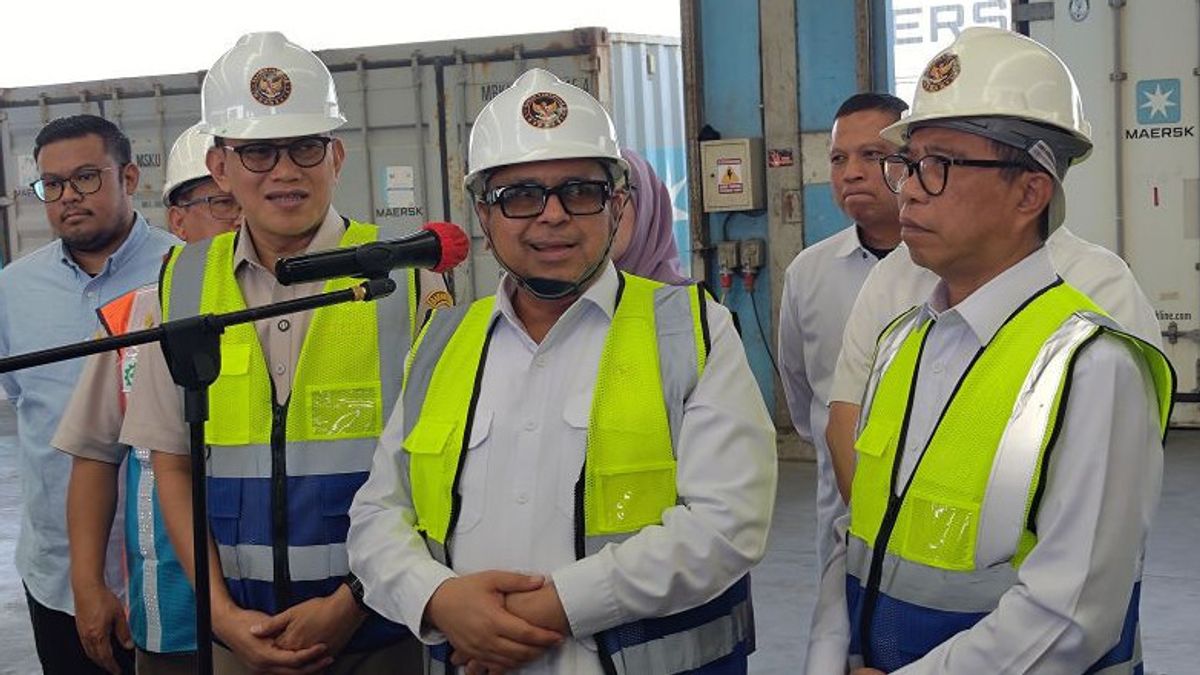


JAKARTA - The Indonesian Halal Product Assurance Agency (BPJPH) will implement the inclusion of the Indonesian halal logo on imported meat from Brazil that enters the domestic market starting October 2026.
"When we look at meat (imported) from Brazil that has been certified halal, one finding we found is that the halal logo from BPJPH from the Republic of Indonesia is not yet on the (halal) logo of Brazil," said BPJPH Head Haikal Hasan, quoted by ANTARA, Tuesday, May 12.
The man, who is familiarly called Babe Haikal, said that imported meat products, including Meat Bone Meal or animal feed from Brazil, so far have halal certification from the Brazilian halal certification agency, Fambras.
According to him, BPJPH and the Brazilian halal institution had previously signed a Mutual Recognition Agreement (MRA) or halal certification mutual recognition agreement.
He said the BPJPH had also visited Brazil to ensure that the halal certification process was in accordance with the standards in force in Indonesia.
"Fambras has visited us and our staff have also visited Brazil and we in Jakarta have signed a Mutual Recognition Agreement with Brazil," he said.
However, Babe Haikal said that the BPJPH halal logo from Indonesia is currently not listed on halal meat from Brazil that enters Indonesia.
According to him, the inclusion of the Indonesian halal logo is needed to strengthen information certainty for consumers regarding imported halal products circulating in the domestic market.
"(The inclusion of the halal RI logo) we will implement as soon as possible in October 2026 which will come," he said.
Apart from Brazil, BPJPH is also strengthening halal cooperation with a number of countries through the recognition of halal certification and the establishment of Foreign Halal Institutions (LHLN), including with Bangladesh and Yemen.
Babe Haikal explained that strengthening the supervision of halal certification is part of the implementation of Law Number 33 of 2014 concerning Halal Product Guarantee.
He said that products that enter, trade, and are distributed in Indonesia must have a halal certificate, while non-halal products must include a non-halal label.
"Products (halal) that enter Indonesia, are distributed, sold, distributed in the Indonesian region must be halal certified," he said.
BPJPH works with the Indonesian Quarantine Agency (Barantin) to inspect imported products in the country of origin and at the country's entry points to ensure that halal standards are met before products are circulated in Indonesia.
Head of Barantin Abdul Kadir Karding said that joint supervision was needed so that the inspection of imported products was more effective than after the goods were circulating in the market.
"If you want to find out whether it is halal or not in supermarkets or markets, it is hard work. Therefore, it takes cooperation with Quarantine," said Karding.
Barantin and BPJPH on Tuesday signed a memorandum of understanding (MoU) to strengthen the supervision of imported products through data exchange, joint supervision, and law enforcement coordination at the country's entry points.
The policy of compulsory halal certification will be expanded in October 2026 in accordance with the mandate of Law Number 33 of 2014 concerning Halal Product Guarantee and Government Regulation Number 42 of 2024.
In the country, BPJPH stated that it had accelerated the issuance of up to 10,000 halal certificates per day for business actors, especially micro, small, and medium enterprises (MSMEs), to pursue the implementation of the policy.
Of the approximately 66 million MSMEs in Indonesia, only about 3 million have halal certificates.
The English, Chinese, Japanese, Arabic, and French versions are automatically generated by the AI. So there may still be inaccuracies in translating, please always see Indonesian as our main language. (system supported by DigitalSiber.id)
Popular


