

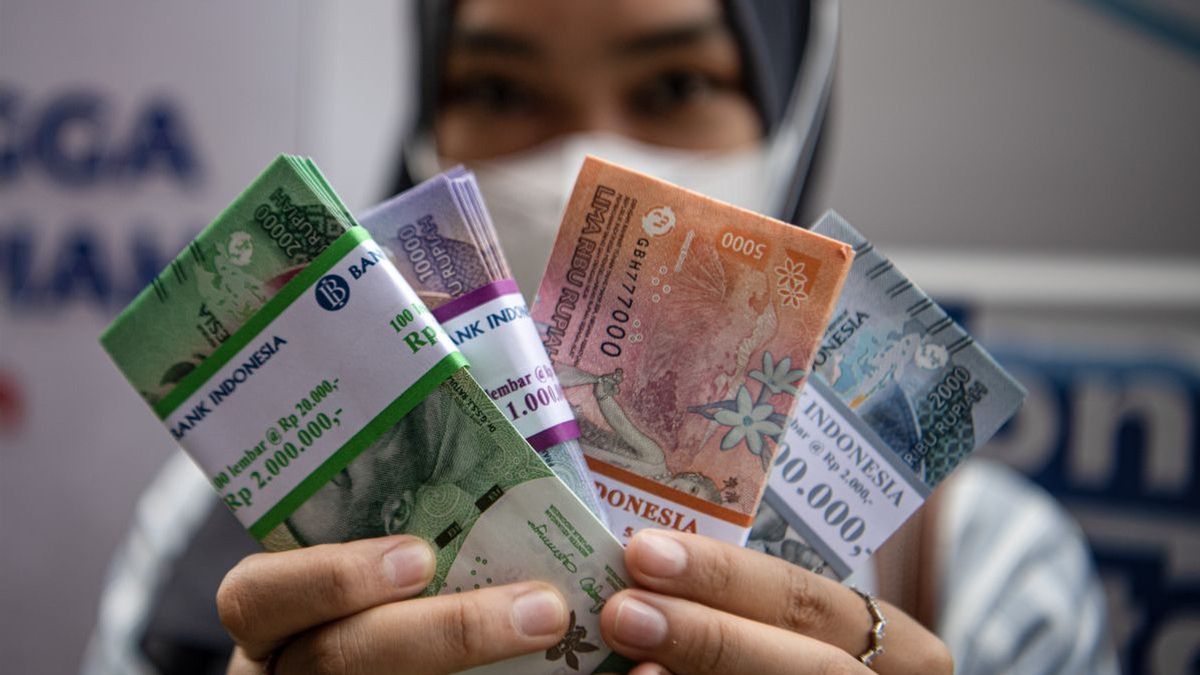


JAKARTA - Economist and Public Policy Expert from UPN Veteran Jakarta Achmad Nur Hidayat considers that the rupiah redenomination plan cannot be implemented in Indonesia without considering the economic and psychological conditions of the community.
According to Achmad, empirically the redenomination policy has indeed succeeded in countries with strong macroeconomic stability and high public trust, such as Turkey in 2005 or South Korea which carried it out in stages.
However, he emphasized that Indonesia's situation is different, so that success in other countries cannot be a direct benchmark.
He explained that the stability of the rupiah exchange rate currently relies heavily on Bank Indonesia's intervention, with an exchange rate of more than IDR 16,000 per US dollar. On the other hand, the slowdown in exports and import pressure has also narrowed the monetary policy space.
From a psychological point of view, Achmad assessed that the Indonesian people are still used to the big nominal, in which a thousand rupiahs are considered small money and if the nominal is simplified to one rupiah, this has the potential to cause confusion in transactions and determine market prices.
"Experiencing in Zimbabwe and Venezuela shows that without public communication and system readiness, redenomination actually causes inflation of expectations and price panic," he said in his statement, Monday, November 10.
Furthermore, he conveyed from an economic perspective, the positive impact of redenomination on economic growth was almost insignificant and there was no empirical evidence that the nominal simplification was able to increase GDP, expand employment, or reduce poverty.
"On the other hand, careful fiscal policies such as APBN incentives for labor-intensive sectors, worker salary subsidies, and improving the quality of public services have a much higher multiplier effect on people's welfare," he explained.
Achmad assessed that the Ministry of Finance under the leadership of Purbaya Yudhi Sadive should focus more on three crucial issues, namely overcoming unemployment, maintaining people's purchasing power, and improving the quality of public services.
"Fiscal orientation should not be in the monetary symbol, but in the real welfare economy, the benefits of the people are directly felt," he said.
He added, instead of pursuing redenomination prestige, the government should take advantage of the 2025-2026 fiscal momentum to encourage APBN-based productive incentives, such as expanding wage subsidies for the MSME sector, reducing corporate income tax for labor-intensive industries, or strengthening small infrastructure spending that can absorb local labor.
According to Achmad, this policy has a direct effect on increasing public income and domestic consumption, which is the main driver of the national economy. Meanwhile, with public service reforms, the government can increase budget efficiency and reduce potential leakage.
SEE ALSO:
-
 | EKONOMI
Redenominasi Rupiah Masuk Prolegnas 2025–2029, BI Tegaskan Tak Ubah Nilai dan Daya Beli
10 November 2025, 11:43 -
 | EKONOMI
Redenominasi Rupiah: Ilusi Angka yang Mengganggu Fokus Ekonomi Bangsa
09 November 2025, 18:15
"Even if the main motive for redenomination is to maintain the dignity of the rupiah, actually that dignity can only be born from real economic powers, not just from how much is stated in banknotes," he said.
According to him, if redenomination is forced now, the policy will reflect more economic political ambitions than responding to public needs.
"The true economic policy is that is able to change people's lives, not just perceptions. In that context, the Ministry of Finance's priority should not be to polish the rupiah number, but to polish the fate of the people," he said.
Achmad stressed that redenomination will not strengthen the economy if the welfare foundation is still fragile.
According to him, the people do not need a symbol of progress, but rather the courage of the state to ensure that every rupiah in the state budget really returns to the people through job creation, improving education, and quality public services.
"Redenomination may seem cool in the eyes of technocrats, but for people who fight every day to exchange sweat for a piece of rice, such a policy is just a rhetoric decoration while their urgent need continues to wait in long queues of social assistance. Purbaya should write history not by removing three zeros from the rupiah, but by adding three basic values of public policy: partiality, sustainability, and social justice. That is a true redenomination not a number redenomination, but a redenomination of meaning for the nation," he explained.
The English, Chinese, Japanese, Arabic, and French versions are automatically generated by the AI. So there may still be inaccuracies in translating, please always see Indonesian as our main language. (system supported by DigitalSiber.id)


