

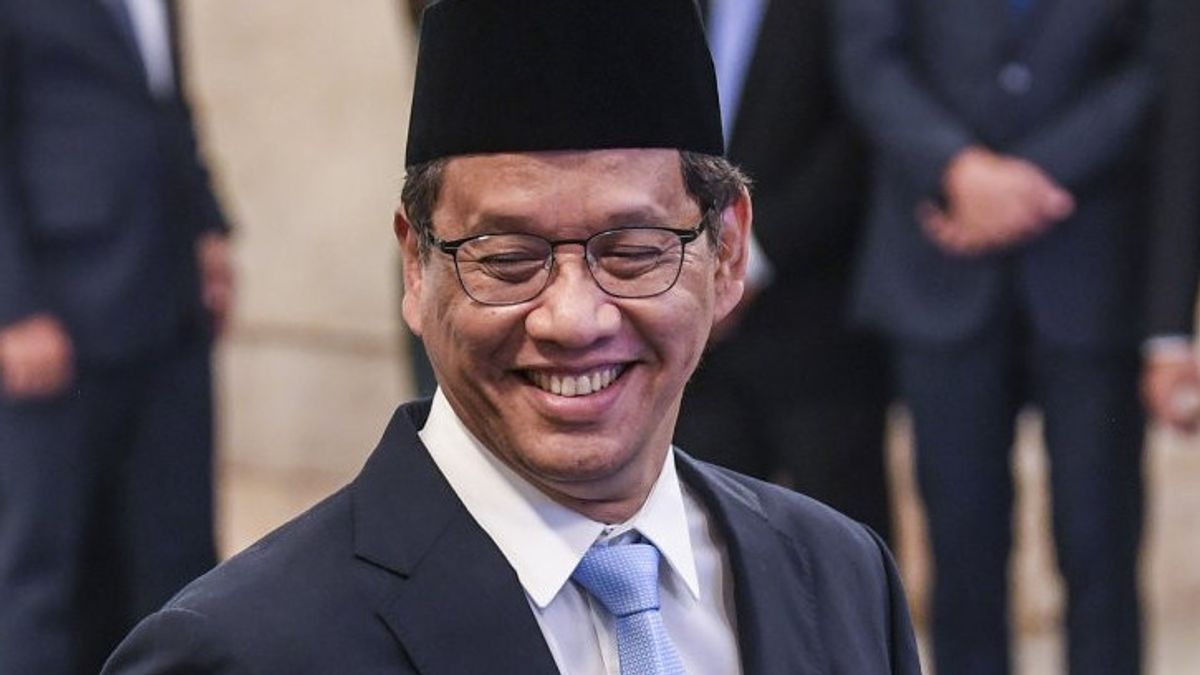


"We have spoken with the bank not to buy SRBI or SBN," he told the media crew after a Working Meeting (Raker) with Commission XI of the Indonesian House of Representatives, Thursday, September 11.
He stressed that its use was fully handed over to the bank, as long as its goal was to strengthen liquidity in the national financial system.
"(The designation) likes the bank. The important thing is that we have liquidity into the system," he said.
Purbaya explained that the funds would be channeled to six banks, consisting of four Himbara banks and two sharia banks.
"There are six. (There are four Himbaras), two Islamic banks, the same BSIs," he said
The list of banks that will receive the funds is four Himbara banks, namely PT Bank Mandiri (Persero) Tbk, PT Bank Negara Indonesia (Persero) Tbk, PT Bank Rakyat Indonesia (Persero) Tbk, PT Bank Tabungan Negara (Persero) Tbk.
Meanwhile, two Islamic banks, namely PT Bank Syariah Indonesia Tbk (BSI) and PT Bank Syariah Nasional (BSN), were previously PT Bank Victoria Syariah (BVIS) and have been acquired by BTN as part of the process of separating Sharia Business Units (UUS).
Regarding the amount of funds that will be received by each bank, Purbaya said that a proportional scheme would be implemented, although it did not specify the figures.
"There are proportions, different. We will arrange them later," he said.
He emphasized that the distribution process and it will start tomorrow and may be carried out quickly.
"It should be fast (the distribution process). Tonight I signed, tomorrow I will enter the banks," he said.
He explained that this step to place funds was part of the government's efforts to reactivate credit flow and encourage economic growth.
Meanwhile, the funds came from the More Budget Balance (SAL) and the Remaining Budget Financing (SiLPA) which was previously placed in BI.
In addition, the initial placement of these funds is aimed at strengthening the liquidity base, including encouraging the circulation of primary money (M0) in the economy.
He added that this fund is expected to be disbursed immediately by banks in the form of credit or financing to support economic growth.
"If you put it in a safe, it's a loss for him. For example, he doesn't put it in BI anymore, does he lose, right? He will be forced to distribute it in the form of credit," he said.
Purbaya explained that this policy aims to encourage market mechanisms to run in encouraging the economy.
SEE ALSO:


"So what we force is to be given fuel so that the market mechanism runs so that they are forced to distribute, not forced, which is usually relaxed, forced to think a little harder," he said.
He also ensured that he would directly monitor the progress of the placement of the funds, which will begin tomorrow through the guarantee scheme.
"What is clear is that it was the first attempt. Put it that way first and we'll see within a week, two weeks, three weeks, what the impact will be on the economy. If it's not enough, add more," he said.
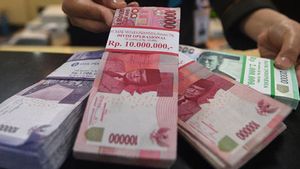
According to Purbaya, the total state cash funds that are still stored in BI have reached around Rp440 trillion and will continue to be used gradually to support liquidity and maintain financial system stability.
"Instead of hanging out. But later if we don't get enough, we can add more money, we will continue to add more money, there is a tax for everything that goes back into the system. But what we are guarding is not to let us issue bonds, if we collect taxes, the system is dry," he said.
The English, Chinese, Japanese, Arabic, and French versions are automatically generated by the AI. So there may still be inaccuracies in translating, please always see Indonesian as our main language. (system supported by DigitalSiber.id)


