



JAKARTA - The contribution of the non-oil and gas processing industry to the national economy has increased. This is reflected in its contribution to the national economy in the first quarter of 2025 reaching 17.50 percent.
This achievement increased compared to the same period the previous year, which was 17.47 percent and higher than the contribution throughout 2024 which was at 17.16 percent. Likewise, compared to the second quarter of 2022 or after COVID-19 hit Indonesia.
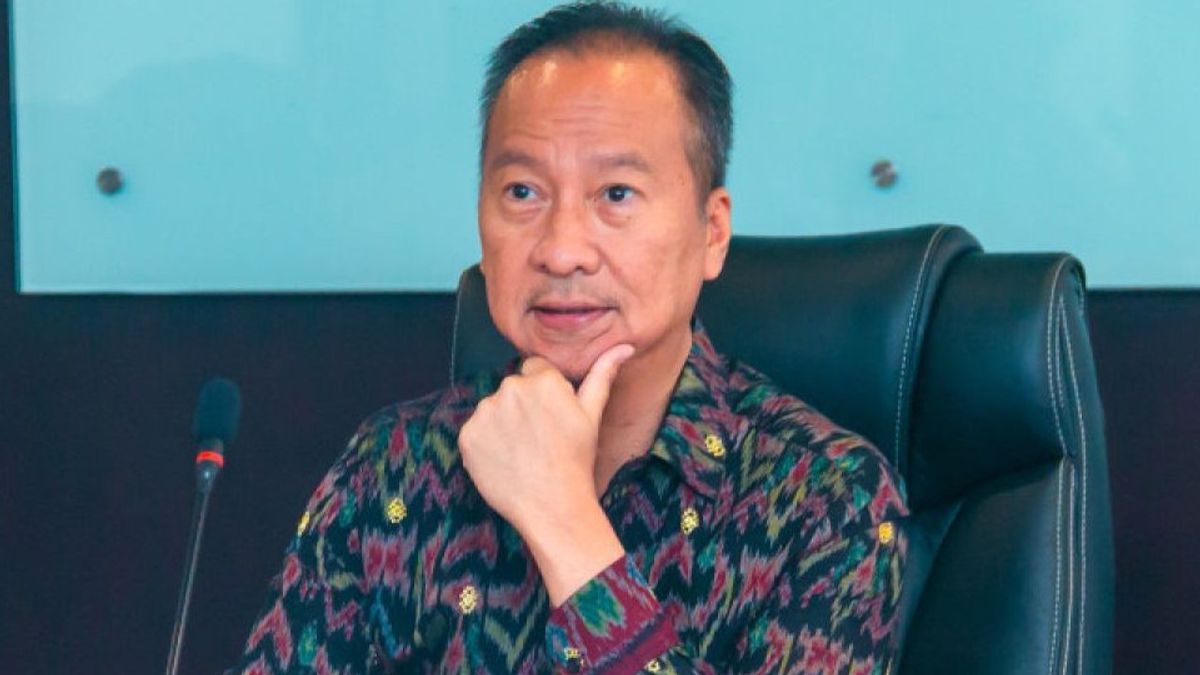
Minister of Industry (Menperin) Agus Gumiwang Kartasasmita appreciates the players in the manufacturing industry in the country. This is because this positive performance is a tangible manifestation of the resilience and competitiveness of the national industry in the midst of the turmoil of the global economic impact and the flood of cheap imported products in the domestic market.
"The trend of increasing the contribution of the non-oil and gas processing industry is a positive signal, that the government's efforts to strengthen the industrial structure continue to run, because to create an integrated industry from upstream to downstream and produce high added value for the economy and employment," Agus said in a written statement, Monday, May 5.
Agus assessed that the main strategy that continues to be encouraged is to further strengthen the supply chain and increase the added value of domestic raw materials, including through the downstream industry policy and optimizing the program for Increasing the Use of Domestic Products (P3DN) which is manifested in the Domestic Component Level (TKDN) policy.
"We have started TKDN policy reforms since early January 2025. This is crucial to create added value in the country, reduce dependence on imports and job creation," he said.
In addition, Agus said, downstreaming is the key to converting the paradigm of the raw commodity-based economy into a high value added product. The policy has proven to have a broad effect on the national economy, including creating jobs, expanding investment and increasing export value.
"With the combination of downstream policies, increasing TKDN and transformation of technology and research-based industries, we are optimistic that the performance and economic contribution of the manufacturing industry sector will continue to increase and become the main foundation for sustainable national economic growth," said Agus.
In fact, based on World Bank data, there has been an increase in Manufacturing Value Added (MVA) which has also had an impact on Indonesia's position in the global manufacturing country. In 2023, Indonesia managed to enter the top 12 in Manufacturing Countries by Value Added in the world.
"The MVA trend has always increased since 2019-2023 except during the COVID-19 pandemic that hit Indonesia. To continue to spur this added value, strategic policies, pro-businesses and pro-investments are needed, so that our manufacturing industry is increasingly competitive in the global arena," he said.
Meanwhile, based on data from the World Bank, the MVA of the manufacturing sector of Indonesia in 2023 reached 255.96 billion US dollars, an increase of 36.4 percent compared to 2022 of 241.87 billion US dollars.
The figure in 2023 is the highest achievement in history and reflects the strategic role of the manufacturing sector in the national economy. For output and global value, Indonesia is equivalent to other developed countries, such as the UK, Russia and France.
SEE ALSO:


Meanwhile, BPS noted, the non-oil and gas processing industry grew by 4.31 percent in the first quarter of 2025. The sectors that supported the performance of the manufacturing industry in that period, including the food and beverage industry grew by 6.04 percent. This is supported by quite high demand during Ramadan and Eid al-Fitr.
Furthermore, driven by the performance of the base metal industry which grew by 14.47 percent, in line with the increase in foreign demand for basic metals, particularly iron and steel.
In addition, the skin industry, skin and footwear goods grew by 6.95 percent because they were driven by an increase in domestic demand during Ramadan and Eid al-Fitr as well as an increase in exports.
The English, Chinese, Japanese, Arabic, and French versions are automatically generated by the AI. So there may still be inaccuracies in translating, please always see Indonesian as our main language. (system supported by DigitalSiber.id)
Most Popular Tags
#Prabowo Subianto #donald trump #Febrie Adriansyah #8791 #giias 2026Popular


