

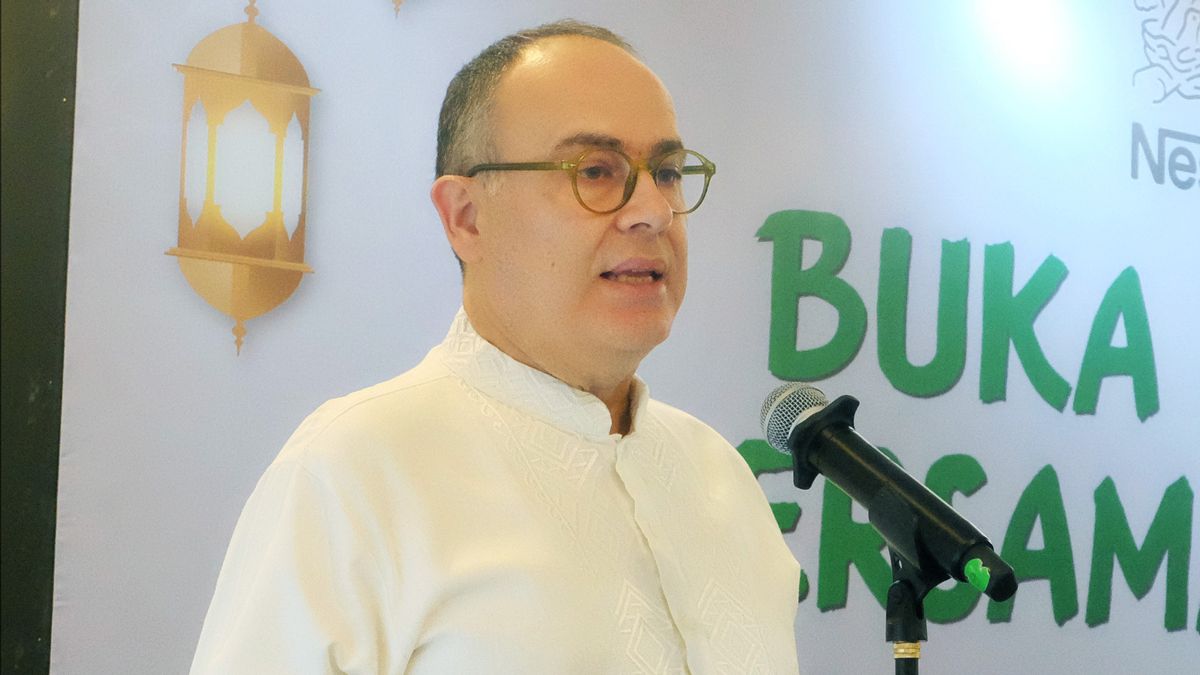


JAKARTA - Food and beverage producers made from Nestle Indonesia's milk have ambitions to achieve Net Zero Emission (NZE) or zero carbon emissions by 2050.
One of the efforts made is the procurement of responsible raw materials.
"This commitment is in line with our efforts to achieve wider environmental goals, such as our global commitment to achieve net zero emissions by 2050. Under our four pillars of sustainability, acting on climate change, sustainable packaging, maintaining water, and procuring responsible raw materials," said President Director of PT Nestle Indonesia Samer Chedid in a written statement, Monday, March 24.
Samer added that his party had succeeded in reducing carbon emissions by 20.38 percent in 2024.
In addition, supply of 21.3 percent of the main raw materials from regenerative agricultural practices is one year faster than the 2025 target.
Nestle in Indonesia has implemented various programs that contribute to achieving global sustainability targets by adjusting local challenges and opportunities.
Several main sustainability targets that are the focus of Nestle Indonesia include reducing carbon emissions, increasing the use of regenerative raw materials, reducing the use of virgin plastic and implementing circular economy, to increasing access to quality nutrition.
Sustainability is a shared responsibility, and the success of this initiative depends on the collaboration of various stakeholders.
The world currently faces various complex challenges, ranging from climate change to food security which causes increasing health problems. No one party can do this business alone, cross-sector collaboration is needed to make it happen. As one of the business actors in Indonesia, Nestle strives to actively take part with various other stakeholders in carrying out various efforts and innovations to maintain sustainability," said Director of Corporate Affairs & Sustainability Sufintri Rahayu.
According to him, the development of waste management infrastructure is also continuously carried out to increase recycling capacity and reduce waste that ends up in the final disposal site.
His party also contributes to supporting the Indonesian government in building waste management infrastructure.
The establishment of the Baraya Runtah TPS3R in Karawang is a form of Nestle's support in an effort to reduce household waste sent to the TPA.
The facility manages about 4.8 tonnes of trash per day from about 4,000 households.
Through innovation, sustainability, and responsible business practices, his party continues to strive to create sustainable impacts involving stakeholders and the wider community, including farmers who are business partners.
In the future, Nestle will continue to be committed to presenting positive changes, building a better food system, and creating a healthier and more sustainable future for all.
In February 2025, Nestle released the latest CSV Report which summarizes the achievement of its sustainability initiative throughout 2024.
This report highlights Nestle's various efforts to reduce environmental impacts, including reducing carbon emissions.
Globally, Nestle has succeeded in reducing carbon emissions by 20.38 percent compared to 2018, with the next target reaching 50 percent by 2030 and net zero by 2050.
SEE ALSO:
-
 | EKONOMI
Kadin Dukung Pemerintah Indonesia Kembangkan Pembangkit Listrik Tenaga Nuklir
05 Maret 2025, 08:07

To achieve this target, Nestle adopts renewable energy in its operations.
Currently, 95.3 percent of the electricity used in its manufacturing facilities globally has come from renewable energy.
In addition, Nestle is also innovating in waste packaging and management, with a main focus on reducing the use of viral plastic as well as increasing the proportion of packaging that can be recycled or reused.
Nestle's sustainability commitment also includes support for the agricultural and livestock sectors of the people, including in Indonesia.
The English, Chinese, Japanese, Arabic, and French versions are automatically generated by the AI. So there may still be inaccuracies in translating, please always see Indonesian as our main language. (system supported by DigitalSiber.id)


