
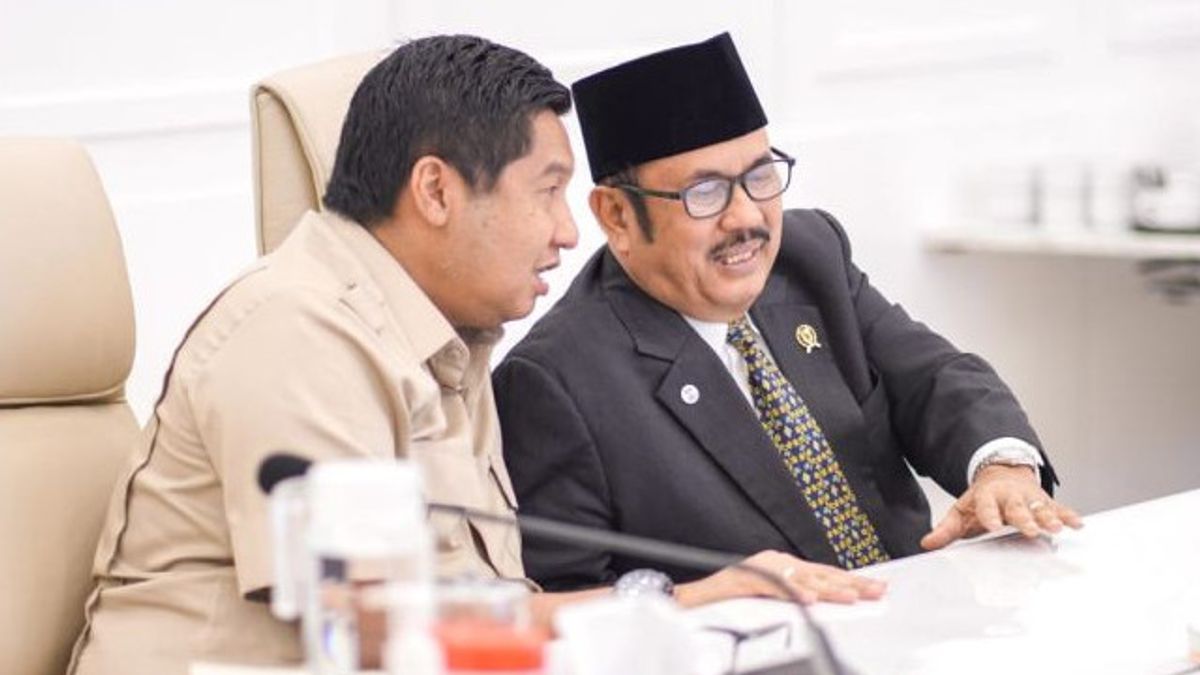


JAKARTA - Minister of National Development Planning/Head of the National Development Planning Agency (PPN/Bappenas) Rachmat Pambudy said the three million house construction program could accelerate the achievement of Sustainable Development Goals (TPB/SDGs).
"The provision of housing is not only the responsibility of one party, but also requires synergy between the central government, regional, private sector, and the community. With the strategy that has been designed, it is hoped that the three million housing program can have a real impact on improving community welfare, as well as accelerating the achievement of Sustainable Development Goals," he said during a coordination meeting with the Minister of Housing and Settlement Areas (PKP) Maruarar Sirait and Acting Head of the Central Statistics Agency Amalia Adininggar Widyasanti, as quoted from an official statement in Jakarta, reported by Antara, Friday 7 February.
On this occasion, he said that his party together with the Ministry of PKP continued to strengthen strategies in providing housing for low-income people (MBR).
The government affirms its commitment to realize the target of building three million houses in the 2025-2029 period, consisting of two million units in rural areas and one million units in urban areas.
"The construction of housing is not only a matter of providing a place to live, but also ensuring that people have decent, affordable, and quality housing to improve their welfare," said the Head of Bappenas.
In addition, the government is trying to improve access to decent and affordable housing for MBR by using socio-Economic Registration data (Regsosek), as well as developing a charging queue system that will ensure that the beneficiaries are really right on target. This system includes preference information, purchasing power, and residential requests, both owned houses, rentals, and leases.
In order to support the sustainability of this program, he continued, a revision of Law (UU) Number 23 of 2014 concerning Regional Government (Pemda) is needed to expand the authority of local governments in implementing housing for MBR.
Currently, these regulations limit the role of local governments, even though they have a better understanding of housing needs in their respective regions.
BACA JUGA:
-
 | EKONOMI
Ini Penyebab Dolar Perkasa di Negara Berkembang tapi Lemah di Negara Maju
23 Juni 2023, 19:02 -
 | EKONOMI
Paris Summit 2023 Ungkap Belum Ada Investasi Ideal dalam Transisi Energi
23 Juni 2023, 17:19

The government has also encouraged the matching program scheme as implemented in the "Weak Tuku By Omah" program in Central Java.
Furthermore, the three million house program is projected to have a significant impact on national economic growth. With an investment value of IDR 412.50 trillion, the program is projected to increase economic growth by 1.68 percent and absorb 380 thousand workers.
"The government is also trying to strengthen the housing ecosystem through investment-based savings development and securitization of housing financing assets. The self-help housing financing scheme in rural areas will be expanded, while housing development in urban areas will adopt the concept of transit-oriented development and consider renewal urban debt (city rejuvenation)," said Rachmat.
The English, Chinese, Japanese, Arabic, and French versions are automatically generated by the AI. So there may still be inaccuracies in translating, please always see Indonesian as our main language. (system supported by DigitalSiber.id)


