


JAKARTA – Annus horribilis is a Latin phrase that became famous after being uttered by the late Queen Elizabeth II in 1992. It roughly translates to "year of disaster." That year, the British monarchy was rocked by extraordinary scandals that the Queen viewed as a terrible disgrace to the monarchy.
That year, Prince Andrew separated from his wife, Sarah Ferguson. Then, Andrew's older sister, Princess Anne, also divorced her husband, Captain Mark Phillips. This was compounded by the publication of Lady Diana's biography, which exposed sensitive issues in her marriage to her ex-husband, King Charles III, who was still a Prince at the time.
Finally, of course, there was the devastating fire at Windsor Castle in November 1992. The disaster caused severe damage to the castle, the official residence of the British Royal Family.
"1992 was not a year I will remember as a happy one. To quote one of my advisors, it was more accurately described as an annus horribilis," said Queen Elizabeth II in her speech marking her 40th anniversary on the throne on November 24, 1992.

What Queen Elizabeth II experienced also affected the current ruler of the British Empire, King Charles III. It began with the marriage of his youngest son, Prince Harry, to the divorced American soap opera actress Meghan Markle, and now a scandal has surfaced involving the King's younger brother, Prince Andrew.
On October 17, Andrew was stripped of his honorary titles as a British royal by Charles III. Andrew no longer has the right to use the titles of Prince, Duke of York, Earl of Inverness, Baron of Killyleagh, and many other honorary titles. He also had to renounce his membership in the Order of the Garter, the oldest order of chivalry in the United Kingdom.
"With the consent of Your Majesty, we feel I must take further action. Therefore, I will no longer use the titles or honors that have been bestowed upon me," read a Buckingham Palace statement explaining Andrew's position.
Sexual Harassment Case
It all started with Andrew's relationship with the American billionaire and notorious pedophile, Jeffrey Epstein. Andrew, known for his reckless behavior, was involved in several sex parties with Epstein, involving underage girls.
Andrew's divorce from Ferguson wasn't particularly controversial. However, when the child sex scandal surfaced, it shocked the world. Andrew's disgrace was exposed after a woman named Virginia Guiffre claimed she was raped by the Prince while he was in London in 2001.
Guiffre, who was 17 at the time, was a victim of Epstein's illegal sex trafficking operation. Both Giuffre and Epstein have now died of the same cause: suicide. On October 21, the book, "Nobody's Girl," a chronicle of Guiffre's life, was published, and it fully details the behavior of Andrew and his gang of sex addicts.
"Years later, I often thought about him. He was very nice, but he acted as if having sex with me was a fundamental right for him," Guiffre said of Andrew in her memoir, published by the US publisher Alfred A. Knopf Inc.

Charles III's actions against his younger brother are suspected to be a clean-up effort at the request of his eldest son, Prince William. The heir to the British throne is reportedly furious about the case involving his uncle.
Besides being the next King of England after Charles III, William is also facing numerous problems. First, his wife, Kate Middleton, or Princess Catherine, is struggling to fully recover from breast cancer. Likewise, his father, Charles III, is also still battling cancer. Not to mention his younger brother, Prince Harry, who often behaves outside of royal customs.
William wants to avoid inheriting a heavy moral burden upon his accession if Charles III does not immediately remove Andrew.
"King Charles is not vindictive. He is simply trying to be fair to his younger brother, who has been involved in numerous legal cases but has never received any punishment," wrote Phil Dampier, a Woman's Day journalist who specializes in covering issues within the British Royal Palace.
Phil wrote that if Charles III did not immediately resolve the problems within the kingdom that had been kept under wraps, he feared that they would one day explode, risking the destruction of the English monarchy.
Even now, Charles III is under intense attack from "republican" groups, groups who want the monarchy in England abolished. Republicans are the vanguard of the anti-monarchy community in England.
News of Charles III's activities has been eclipsed by news of Andrew's case. Even when the King laid a wreath at a memorial specifically built to honor LGBTQ armed forces personnel who died in battle, it was completely ignored.
While visiting Lichfield Cathedral in Staffordshire on October 27, 2025, King Charles III was harassed by republican supporters.
"How long have you known about Andrew and Epstein? Have you asked the police to cover up Andrew's case?" were the chants hurled at Charles III by republicans in Staffordshire.
Cleaning Up Before Succession
Charles III's actions against his younger brother are suspected to be a clean-up effort at the request of his eldest son, Prince William. The heir to the British throne is reportedly furious about the case involving his uncle.
Besides being the next King of England after Charles III, William is also facing numerous problems. First, his wife, Kate Middleton, or Princess Catherine, is struggling to fully recover from breast cancer. Likewise, his father, Charles III, is also still battling cancer. Not to mention his younger brother, Prince Harry, who often behaves outside of royal customs.
William wants to avoid inheriting a heavy moral burden upon his accession if Charles III does not immediately remove Andrew.
"King Charles is not vindictive. He is simply trying to be fair to his younger brother, who has been involved in numerous legal cases but has never received any punishment," wrote Phil Dampier, a Woman's Day journalist who specializes in covering issues within the British Royal Palace.
Phil wrote that if Charles III did not immediately resolve the problems within the kingdom that had been kept under wraps, he feared that they would one day explode, risking the destruction of the English monarchy.
Even now, Charles III is under intense attack from "republican" groups, groups who want the monarchy in England abolished. Republicans are the vanguard of the anti-monarchy community in England.
News of Charles III's activities has been eclipsed by news of Andrew's case. Even when the King laid a wreath at a memorial specifically built to honor LGBTQ armed forces personnel who died in battle, it was completely ignored.
While visiting Lichfield Cathedral in Staffordshire on October 27, 2025, King Charles III was harassed by republican supporters.
"How long have you known about Andrew and Epstein? Have you asked the police to cover up Andrew's case?" were the chants hurled at Charles III by republicans in Staffordshire.
Princess Catherine's insistence
Prince William, as heir to the British throne, plays a major role in maintaining the monarchy. Therefore, he is determined to shed light on the case of his uncle, Andrew.
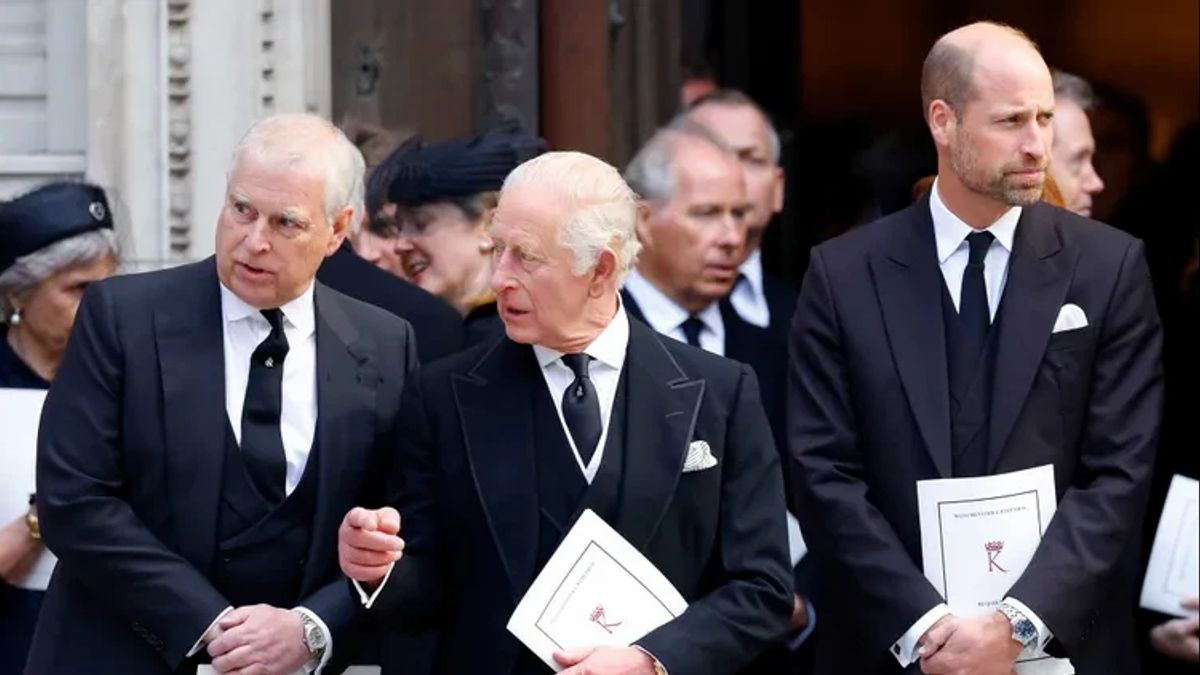
British media have revealed that their relationship is very strained. During the funeral procession for Katharine Duchess of Kent on September 16, William was caught deliberately avoiding Andrew's greetings when he attempted to engage him in conversation.
"Kate is naturally angry with Andrew and Harry because she and William have carried the entire burden of the monarchy on their shoulders. Their problems are already heavy enough. With family members making things worse, the burden is multiplied tenfold. But that's what happens," said an unnamed source within the British royal family.

The source also stated that Princess Catherine played a major role in encouraging Prince William to urge his father, King Charles III, to "clean up" the palace before officially succeeding him to the throne.
For the British monarchy, this was a move that could prevent collapse and overcome political pressure from republicans.
However, for Andrew, a veteran of the 1982 Falklands War, his expulsion from British nobility was like a modern-day Greek tragedy. A popular 5th-century BC drama genre, popular in Greece, depicts the downfall of a respected figure due to his inability to control his passions.
The English, Chinese, Japanese, Arabic, and French versions are automatically generated by the AI. So there may still be inaccuracies in translating, please always see Indonesian as our main language. (system supported by DigitalSiber.id)
Most Popular Tags
#Prabowo Subianto #donald trump #firearm #8791 #giias 2026Popular


