
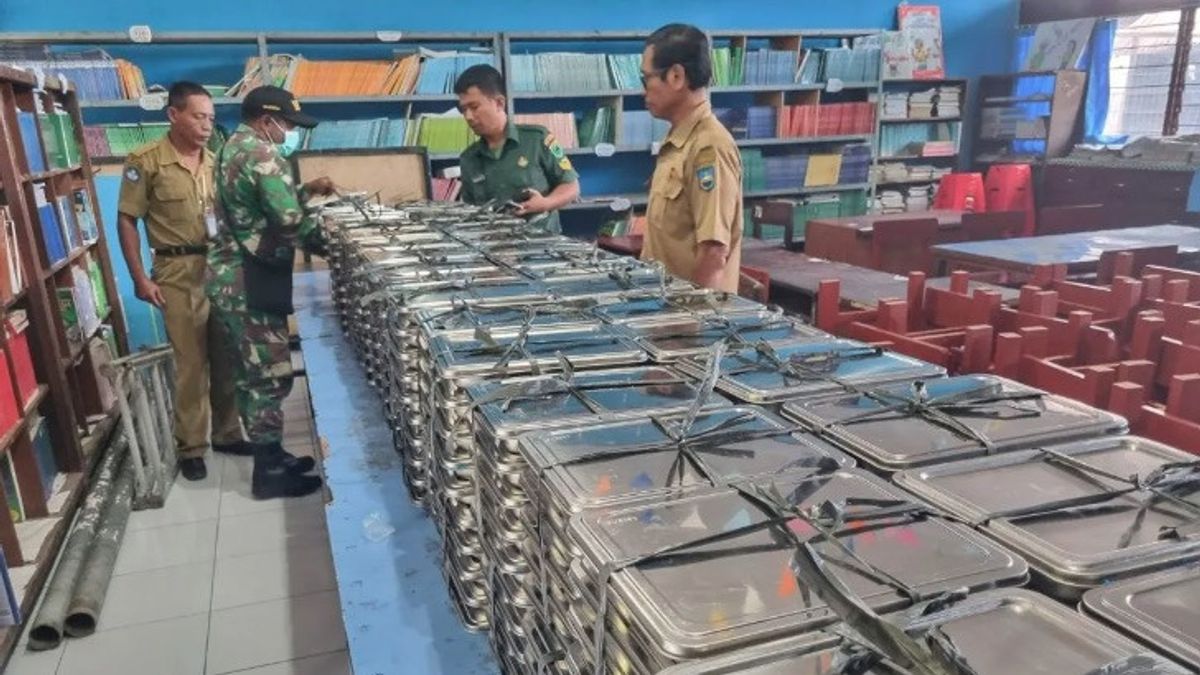


JAKARTA The Free Nutrition Food Program (MBG) has been in the spotlight again after about a week of running. Suddenly, the Chairman of the Regional Representative Council (DPD) Sultan B. Najamuddin encouraged the public to be seen in the costs of implementing the MBG program, including through funding sourced from zakat.
Since January 6, 2025, the MBG program has finally officially processed in Indonesia. The National Nutrition Agency said this program started targeting around 600,000 school children spread across 26 provinces.
However, it has only been a week since this program received a number of criticisms. Starting from the distribution of food which is considered not on target, to the nutritional needs of children that are not met through MBG. Not to mention the question of funds that are said to make the government quite complete in carrying out this mega project.
Since the campaign period before the 2024 Presidential Election (Pilpres), the MBG program has become one of the mainstays of the Prabowo Subianto and Gibran Rakabuming Raka pairs. This program is a real step for the government to ensure that the younger generation, including in remote areas, get sufficient nutrition according to the Nutrition Adequacy Rate (AKG).
The hope is that Indonesia has superior human resources (HR) in order to realize the 2045 Golden Generation. However, President Prabowo's free lunch program continues to change, ranging from program names to budgets per serving.
The name of the program, which was originally a free lunch, changed to a free nutritious meal, even before this program started. The budget per portion for the program also had a change, down from Rp. 15,000 to Rp. 7,500.
The government has set a budget for MBG of IDR 71 trillion for 2025. This budget is far below the initial plan of IDR 450 trillion assuming a price per serving of IDR 15,000. As a result, this program is carried out in stages.
Meanwhile, Coordinating Minister for Food Affairs Zulkifli Hasan said that the Rp71 trillion budget was only sufficient to finance this program until June 2025. For a full year, said the man who is familiarly called Zulhas, a budget of Rp420 trillion is needed.
Recently, the Chairman of the DPD RI Sultan B. Najamuddin encouraged community involvement in the cost of implementing the MBG program, one example through funding sourced from zakat.
"I see this, indeed the country must be under Pak Prabowo Mas Gibran, I really want it, I want this free nutritious eating program to be maximized," said Sultan.
"It's just that we all know that our budget is also not, of course not all of them will be used to eat free nutrition," he continued.
Sultan also mentioned the need for community involvement in this program, for example through zakat funds. He believes that the DNA of Indonesian people who are generous and like to work together can be used for the MBG project.
A similar opinion was also expressed by the General Chairperson of the Nahdlatul Ulama (PBNU) Executive Board, Yahya Cholil Staquf, who proposed infaqak and alms funds which have been managed by various zakat, infaq, and alms management institutions so that they can be used to support the MBG program.
At the same time, uploads of screenshot photos containing information that local governments and parents are invited to donate to this program. The upload was widely commented on on social media.
Through the Spokesperson for the Presidential Communication Office (PCO) Ujang Komarudin, the government emphasized that there is no rule that requires parents to donate to the MBG program. But on the other hand, the government does not prohibit if there are parents who want to or want to help as long as it is transparent and does not violate the rules.
The problem of funds for MBG, which seems to be quite a hassle for the government even though it's only been a week, immediately became a concern. Most people admit that they object if the people participate in the form of participation' to run this program.
Public policy observer from Trisakti University Trubus Rahadiansyah said ideally this free nutritious eating program is the responsibility of the government, in accordance with their campaign promise before winning the presidential election.
However, when the government signaled that this program needed assistance from the people, with a mutual cooperation pattern, he said, according to Trubus, new policies or regulations from the government needed, including providing tax incentives to those who provided assistance.
"The president's response is like that, the government is open to anyone who wants to help. So, if you really want the public to be involved, then there must be policies or regulations," Trubus said when contacted by VOI.
For example, if the funds used are outside the state budget, what can the donor get? For example, there is a tax incentive. So there must be adequate rules, in order to win a solution," he added.
Trubus hopes that assistance from the community or any party will not cause new problems such as misappropriation of funds.
"Because of the mutual cooperation fund, don't let government funds be misappropriated because they feel that someone is helping," he said.
The proposal for tax incentives for people who help the free nutritious food program is raised by a double-edged knife by the Executive Director of the Institute for Development of Economic and Finance (INDEF) Esther Tri Astuti.
On the one hand, it can indeed help ease the burden on the government, because the burden of funding is not only from the state budget. But on the other hand, it can add to the problem, because state revenues from the tax side can be reduced if the party who helps the MBG program gets tax incentives.
SEE ALSO:
-
 | BERNAS
Raline Shah Perpanjang Daftar Artis di Pemerintahan, Tren Kabinet Obesitas Berlanjut
20 Januari 2025, 15:00 -
 | BERNAS
Pantauan Netray Soal Program Makan Bergizi Gratis: Warganet Soroti Potensi Food Waste
20 Januari 2025, 09:09 -
 | BERNAS
Israel dan Hamas Sepakati Gencatan Senjata: Apa yang Tersisa setelah Perang 15 Bulan?
18 Januari 2025, 07:30

Meanwhile, the Executive Director of the Segara Research Institute Piter Abdullah suggested that the MBG program not involve the community. He emphasized that it was the government's duty to find sources of funds for the program, so that if you can't afford it, it means that the Free Nutrition Eating program cannot be implemented.
"In terms of governance, there is a risk if the government program is mixed with community assistance or with zakat, government funds must be accounted for according to existing regulations, different from community funds or zakat," said Piter.
The English, Chinese, Japanese, Arabic, and French versions are automatically generated by the AI. So there may still be inaccuracies in translating, please always see Indonesian as our main language. (system supported by DigitalSiber.id)
Most Popular Tags
#Prabowo Subianto #donald trump #firearm #8791 #giias 2026Popular


