

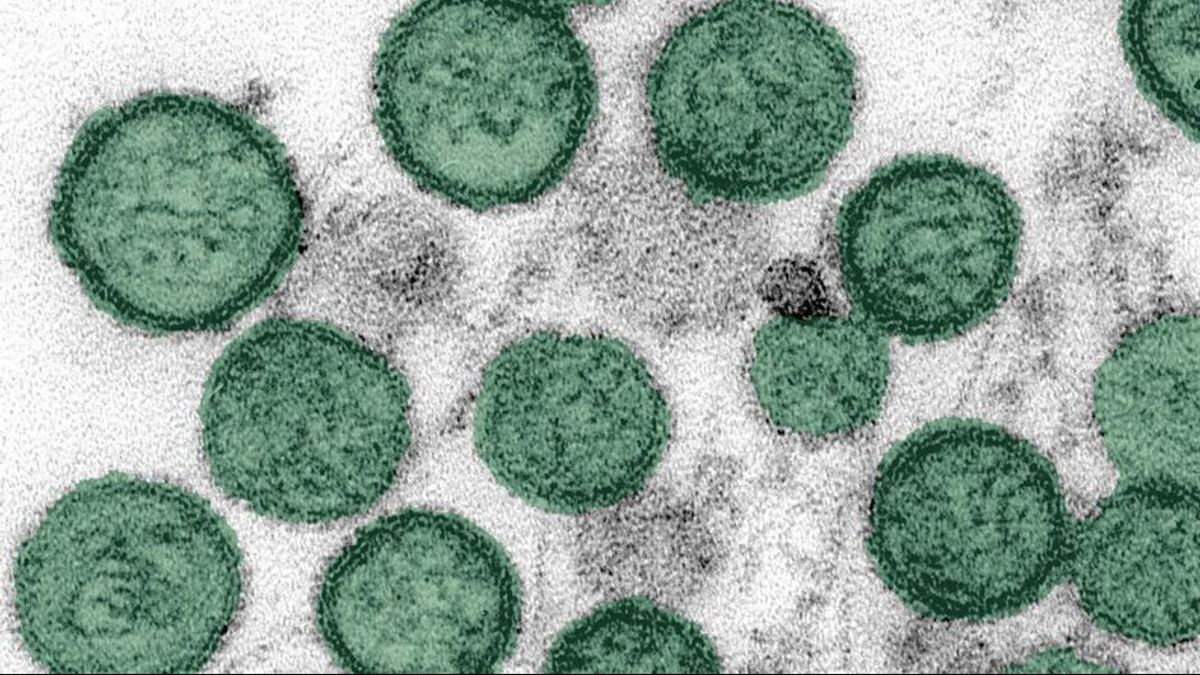


JAKARTA - The World Health Organization (WHO) assesses the risk of hantavirus spread, which was found among passengers on the Hondius Ship in the Atlantic Ocean, is still relatively low.
"At this stage, the risk of public health (related to hantavirus) is relatively low," said WHO Director-General Tedros Adhanom Ghebreyesus on Wednesday on the X social media platform, reported by ANTARA from Sputnik, Wednesday, May 6.
Previously, the WHO said the Andes hantavirus strain had been detected on the MV Hondius cruise ship, with diagnoses confirmed by tests conducted at institutions in South Africa and Switzerland.
The total number of confirmed infections reached eight after one additional case was identified in a patient who had returned to Switzerland. Three of them died.
Responding to this finding, Spain decided to accept the ship, which is now sailing around Cape Verde, to moor in the Canary Islands, based on international law and the spirit of humanity.
Upon arrival at the Canary Islands, passengers and crew will undergo medical examinations and be handled through facilities and transportation systems that have been specially prepared for handling and transfer.
The process will be carried out in such a way as to avoid contact with the local population.
These measures will be implemented in accordance with the case management protocol and integrated contact developed by WHO together with the European Centre for Disease Prevention and Control (ECDC), to ensure the necessary safety guarantees.
Based on the WHO website, hantavirus is a group of viruses transmitted by rodents (rodents) and can cause severe illness in humans.
Transmission of hantavirus to humans occurs through contact with the urine, feces, or saliva of infected rodents. Infection can also occur, although less commonly, through rodent bites.
Early symptoms of hantavirus often resemble the flu and appear one to eight weeks after exposure, namely fever and chills, muscle pain, headache, nausea, vomiting, and diarrhea.
In the advanced stage, sufferers will have difficulty breathing because the lungs are filled with fluid.
The English, Chinese, Japanese, Arabic, and French versions are automatically generated by the AI. So there may still be inaccuracies in translating, please always see Indonesian as our main language. (system supported by DigitalSiber.id)
Most Popular Tags
#Prabowo Subianto #donald trump #firearm #8791 #giias 2026Popular


