


JAKARTA - The Asian Development Bank (ADB) approved a loan worth US$300 million or around Rp4.99 trillion for the construction of a disaster-resilient road of about 72 kilometers on the southern coast of Java Island.
This project aims to increase connectivity while at the same time encouraging economic growth in the southern region of Java.
"This road project will address the critical infrastructure gap between the developing northern Java corridor and the southern region of Java," said Director of ADB for Indonesia Bobur Alimov as reported by ANTARA, Wednesday, December 3.
The South-South Trans Java or South-South Java Road project will repair the existing narrow dirt road and connect it thoroughly.
Currently, traveling from agricultural areas in Jember Regency to Banyuwangi Regency, East Java, takes up to eight hours.
With the new road, travel time is estimated to be reduced by about two hours, so that it is easier for people to access markets, education services, and economic opportunities.
Alimov explained that road design will integrate biorekayasa solutions and climate resilience in order to be able to face extreme weather while strengthening national and rural connectivity.
According to Alimov, the climate change adaptation measures that are implemented include increasing the capacity of the hydraulis structure to reduce flood risk, protection of slopes with natural-based solutions, as well as the construction of climate-resilient bridges that can be used during extreme weather events.
This effort is in line with Indonesia's commitment to the Paris Agreement.
Alimov said the project also supports the 2025-2045 National Long-Term Development Plan and the ADB state partnership strategy for Indonesia 2025-2029.
In addition to strengthening competitiveness, the construction of this road is expected to balance economic developments between the north-medium region of Java which has been well connected to the southern coast where access roads are still limited.
ADB also emphasized the aspect of gender equality through an allocation of at least 10 percent of skilled construction work for women.
SEE ALSO:
-
 | BERITA
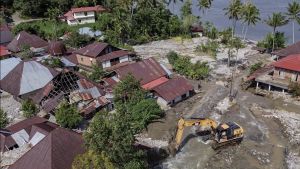
Data Terkini: Banjir Bandang Sumatera, Sri Lanka, Thailand Tewaskan Lebih dari 1.400 Orang
03 Desember 2025, 14:28


The road safety program will be designed to meet the needs of women, children, and people with disabilities, as well as to be equipped with public education regarding the use of roads safely.
"The prevention of gender-based violence and human trafficking will be integrated in project implementation," ADB said in a statement.
The English, Chinese, Japanese, Arabic, and French versions are automatically generated by the AI. So there may still be inaccuracies in translating, please always see Indonesian as our main language. (system supported by DigitalSiber.id)
Most Popular Tags
#Prabowo Subianto #donald trump #2026 World Cup #Febrie Adriansyah #8791Popular


