

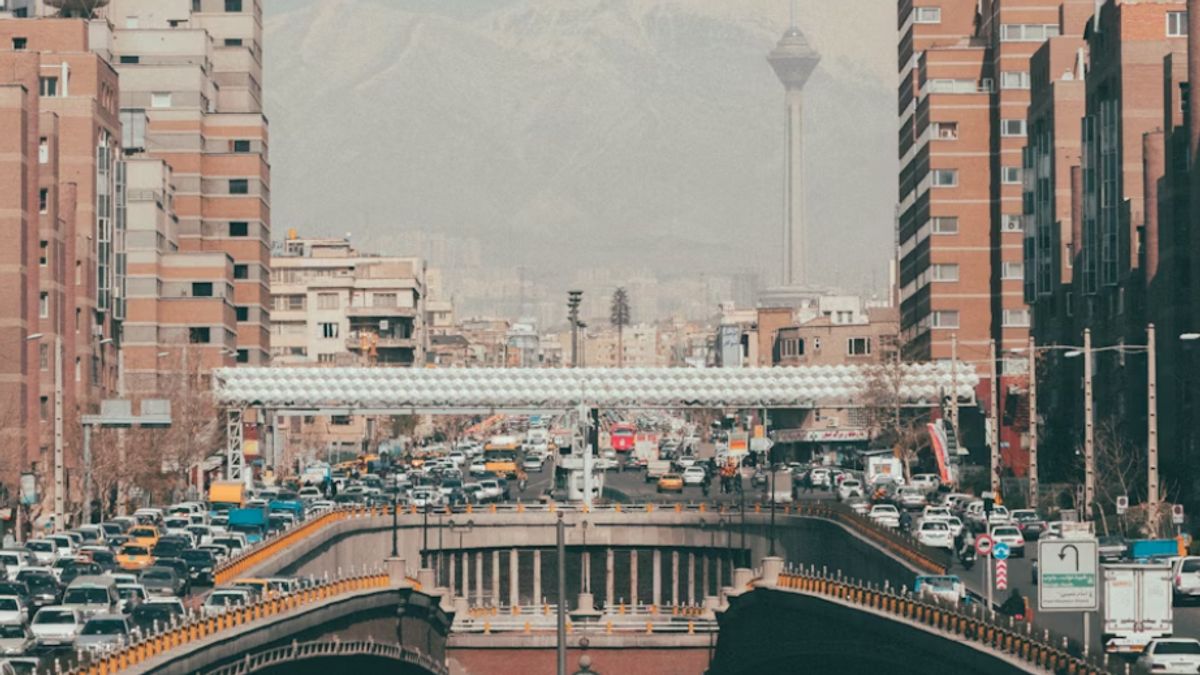


JAKARTA - Iranian President Masoud Pezeshkian warned the capital, Tehran, could face severe water shortages and may even have to be evacuated if the rain doesn't rain immediately.
Speaking during a visit to Sanandaj in western Iran, Pezeshkian said the government was facing a combination of economic, environmental and social crises.
He said high prices and inflation were the result of a domestic policy failure and international sanctions, according to a Daily Itimad report.
"High prices and inflation are the mistakes of parliament and the government. There are efforts being made, but limited financial resources have prevented these projects from being completed," he said as quoted by ANTARA from Anadolu, Friday, November 7.
Turning to a water crisis due to drought, Pezeshkian warned Iran is facing serious natural challenges, including reduced rainfall and water resources.
"If it rains, we have to start limiting the water supply in Tehran next month. If the drought continues, we will run out of water and be forced to flee the city," he said.
The president stressed the urgent need for better management and conservation of water resources and energy, while describing the situation in Tehran as "worry."
SEE ALSO:
-
 | BERITA
Lebih dari 200 Penerbangan di Bandara Delhi India Ditunda, Ini Biang Keladinya
07 November 2025, 17:25 -
 | BERITA
Sempat Diteror Drone Misterius, Bandara Liege Belgia Kembali Beroperasi
07 November 2025, 17:05


Water Crisis In Tehran
Tehran's water supply relies on five main dams, namely Lar, Mamlu, Amir Kabir, Talegan, and Latyan, with Amir Kabir being the biggest.
However, Iran has seen a sharp decline in rainfall over the past five years, and meteorological data show that the rainfall in Tehran this year is about 40 percent below the seasonal average.
The lack of rainfall, especially in spring and summer, has caused the reservoir's surface to drop drastically, affecting surface water reserves and groundwater.
The Tehran Water Authority warned that on July 20 the reservoir supplying the capital city had reached its lowest level in a century due to a prolonged drought.
Rotating water outages have been implemented throughout the summer.
On November 3, Behzad Parsa, head of the Air Tehran Authority, said dam reserves could only supply the city for two weeks if dry conditions continued.
Pezeshkian had previously warned on July 23 that if the crisis continues without effective action, then the supply of water for society will soon become impossible.
The English, Chinese, Japanese, Arabic, and French versions are automatically generated by the AI. So there may still be inaccuracies in translating, please always see Indonesian as our main language. (system supported by DigitalSiber.id)


