


JAKARTA - Minister of Environment (LH) Hanif Faisol Nurofiq said Jakarta is now in a state of waste emergency which requires serious handling to suppress the emergence of waste.
Minister of Environment and Environment Control Agency (BPLH) Hanif said the government had issued Presidential Regulation (Perpres) Number 109 of 2025 concerning the Handling of Urban Waste Into Renewable Energy Based on Environmentally Friendly Technology in which there was a determination of the waste emergency conditions set by the minister.
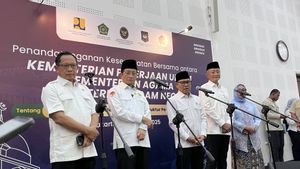
"Jakarta has entered a waste emergency and the decision regarding the waste emergency as mandated by the Presidential Decree last night has been signed," said Minister Hanif when met after an event in Jakarta on Wednesday, which was confiscated by Antara.
"The flood is the same. We ask the Governor of West Java for permission to immediately prepare everything to solve the problem of Greater Bandung waste," he added.
The implications of determining the condition of the waste emergency as referred to by Presidential Regulation Number 109 of 2025 indicate the need for quick handling, especially waste treatment by using environmentally friendly technology.
The Jakarta and Greater Bandung areas themselves have not been included in the recommendations of seven waste processing locations into electrical energy (PSEL) submitted by KLH/BPLH to Danantara.
SEE ALSO:
-
 | BERITA
Topan Halong Hantam Alaska, Rumah-rumah Terseret Arus Laut, 1.500 Warga Mengungsi
15 Oktober 2025, 15:51 -
 | BERITA
Diam-diam KPK Periksa Arie Prabowo Ariotedjo Eks Dirut PT Antam Pekan Lalu
14 Oktober 2025, 14:16 -
 | BERITA
Remaja Pasang Bom Pipa dan Tikam 3 Pegawai Mantan Sekolahnya di California Ditangkap
14 Oktober 2025, 17:22 -
 | BERITA
DPR Harap Prabowo Hadiri KTT Perdamaian di Mesir Dorong Progres Kemerdekaan Palestina
14 Oktober 2025, 13:02 -
 | BERITA
2 Anggota Parlemen Israel Interupsi Pidato Trump, Angkat Poster Bertuliskan 'Genosida'
13 Oktober 2025, 18:46 -
 | BERITA
Warga Menyemut Sambut Tahanan Palestina Dibebaskan Israel Tiba di Khan Younis
13 Oktober 2025, 17:51
He said that although the two areas recorded significant amounts of waste per day, there were several conditions that could not be met for the construction of the PSEL. Including the absence of land and water for the PSEL operation.
According to data from the KLH's National Waste Management Information System (SIPSN), in 2023 the Jakarta area produces 8,600 tons of waste every day. During the 2023 period, DKI Jakarta reported a total of 3,141,650 tons of waste.
In the same period, all of West Java produced 22,019 tons of waste per day. Specifically for the Bandung City area 1,609 tons per day, Bandung Regency 1,301 tons, and West Bandung Regency 742 tons. For West Java, in the 2023 period there were 8,037,083 tons of waste produced in the region.
On the same occasion, he reminded that PSEL will not solve waste issues in the country instantly. This is because PSEL is projected to only reduce waste by around 33 thousand tons per day, from the number of 143,000 tons per day.
"So there are still 100 thousand tons per day that we have to think about. Among them are through collaboration with RDF from the cement industry. Then we will develop it through the construction of medium and small facilities throughout the country," said Hanif.
The English, Chinese, Japanese, Arabic, and French versions are automatically generated by the AI. So there may still be inaccuracies in translating, please always see Indonesian as our main language. (system supported by DigitalSiber.id)
Most Popular Tags
#Prabowo Subianto #donald trump #2026 World Cup #Febrie Adriansyah #8791Popular


