

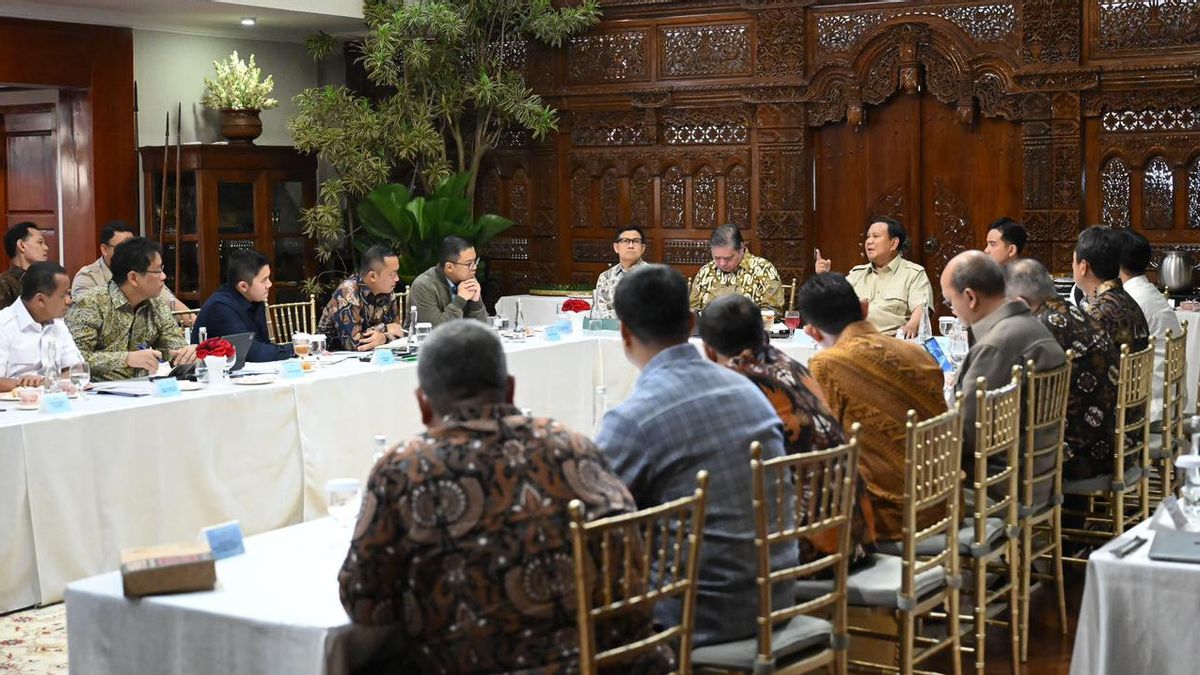


JAKARTA The performance of the oil and gas sector under the Minister of Energy and Mineral Resources (ESDM) Bahlil Lahadalia is considered to show positive results in the alignment of Asta Cita Pemerintahan Prabowo Subianto 'Gibran Rakabuming Raka.
Energy observer from the Gerilya Institute, Subhkan Agung Sulistio, said that national oil and gas lifting was recorded to have increased significantly beyond the target assumption in the first semester of 2025 State Revenue and Expenditure Budget (APBN) or reached an average of 111.9 percent. According to him, the increase in lifting from around 430 thousand to almost 600 thousand barrels per day should be appreciated.
This step shows there is improvement in governance in the field. However, to maintain a positive trend, the government needs to open new work areas and find new oil reserves," he said in a public discussion entitled One Year Prabowo-Gibran: Are We Sovereign in Energy? At Bumi Serpong Damai (BSD), Banten, Monday 13 October.
Subkan explained, technological innovation and cost efficiency are also important factors in increasing production. New technology helps optimize wells that were previously considered unproductive. But if we want the long term, exploration of new areas is key," he said.
One of the policies that also received public attention was the legalization of people's oil wells. The government has given permission to the public to manage old wells that are no longer economical for large companies.
"That's the right step. The old well has a small result, so it's better to leave it to the community. At least this encourages energy independence at the local level," said Subkan.
Meanwhile, a public policy observer from the Islamic University of Syekh Yusuf (UNIS) Tangerang, Adib Miftahul, assessed that this achievement in the energy sector could not be separated from the efforts of President Prabowo and Minister of Energy and Mineral Resources Bahlil Lahadalia to reorganize the governance of national natural resources.
Prabowo is making a massive reset of economic governance, including energy. He is recalculating the country's wealth and ensuring that there are no more rent groups playing in the middle," Adib said.
According to Adib, a number of programs such as downstream mining, smelter construction, and legalization of people's wells are concrete steps towards energy sovereignty. However, he said, the big challenges faced were not only on the technical policy side, but also on the public narrative.
"Often the problem is communication. Pieces of videos or statements on social media form negative perceptions, even though the policy direction is good," he said.
SEE ALSO:
-
 | BERITA
2 Anggota Parlemen Israel Interupsi Pidato Trump, Angkat Poster Bertuliskan 'Genosida'
13 Oktober 2025, 18:46 -
 | BERITA
Warga Menyemut Sambut Tahanan Palestina Dibebaskan Israel Tiba di Khan Younis
13 Oktober 2025, 17:51 -
 | BERITA
Selain Abbas-Prabowo, Netanyahu Bakal Hadiri KTT Perdamaian Sharm El-Sheikh
13 Oktober 2025, 16:52 -
 | BERITA
Israel Ungkap Hamas Sudah Lepaskan 13 Sandera, Total 20 Sandera Hidup Dibebaskan
13 Oktober 2025, 16:33 -
 | BERITA
Uni Eropa Jaga Lagi Perbatasan Gaza-Mesir di Rafah Usai Pembebasan 20 Sandera
13 Oktober 2025, 15:37 -
 | BERITA
Hamas Rilis Daftar 1.900 Warga Pelestina Disandera Bakal Dibebaskan Israel
13 Oktober 2025, 15:10 -
 | BERITA
Temui Pramono, Haikal Hasan Minta Warteg–Warkop di Jakarta Urus Sertifikat Halal
13 Oktober 2025, 15:38
SEE ALSO:
-
| BERITA
2 Anggota Parlemen Israel Interupsi Pidato Trump, Angkat Poster Bertuliskan 'Genosida'
13 Oktober 2025, 18:46 -
| BERITA
Warga Menyemut Sambut Tahanan Palestina Dibebaskan Israel Tiba di Khan Younis
13 Oktober 2025, 17:51 -
| BERITA
Selain Abbas-Prabowo, Netanyahu Bakal Hadiri KTT Perdamaian Sharm El-Sheikh
13 Oktober 2025, 16:52 -
| BERITA
Israel Ungkap Hamas Sudah Lepaskan 13 Sandera, Total 20 Sandera Hidup Dibebaskan
13 Oktober 2025, 16:33 -
| BERITA
Uni Eropa Jaga Lagi Perbatasan Gaza-Mesir di Rafah Usai Pembebasan 20 Sandera
13 Oktober 2025, 15:37 -
| BERITA
Hamas Rilis Daftar 1.900 Warga Pelestina Disandera Bakal Dibebaskan Israel
13 Oktober 2025, 15:10 -
| BERITA
Temui Pramono, Haikal Hasan Minta Warteg–Warkop di Jakarta Urus Sertifikat Halal
13 Oktober 2025, 15:38
The same thing was conveyed by a political communication observer from the University of Muhammadiyah Tangerang, Korry El Yana, who assessed that many energy policies failed to be understood by the public because their delivery was incomplete. In addition, he assessed that the rise of narratives of buzzers and wild opinions on social media exacerbated perceptions of the government. Because the communication is incomplete, what appears is pieces of misleading videos and comments," he said.
He also encouraged the government to form an official communication channel that explains the overall and data-based energy policy. "If the communication is open and involves experts, people can believe it. Do not let the good program sink because of negative framing on social media," he said.
The English, Chinese, Japanese, Arabic, and French versions are automatically generated by the AI. So there may still be inaccuracies in translating, please always see Indonesian as our main language. (system supported by DigitalSiber.id)
Most Popular Tags
#Prabowo Subianto #donald trump #2026 World Cup #Febrie Adriansyah #8791Popular


