

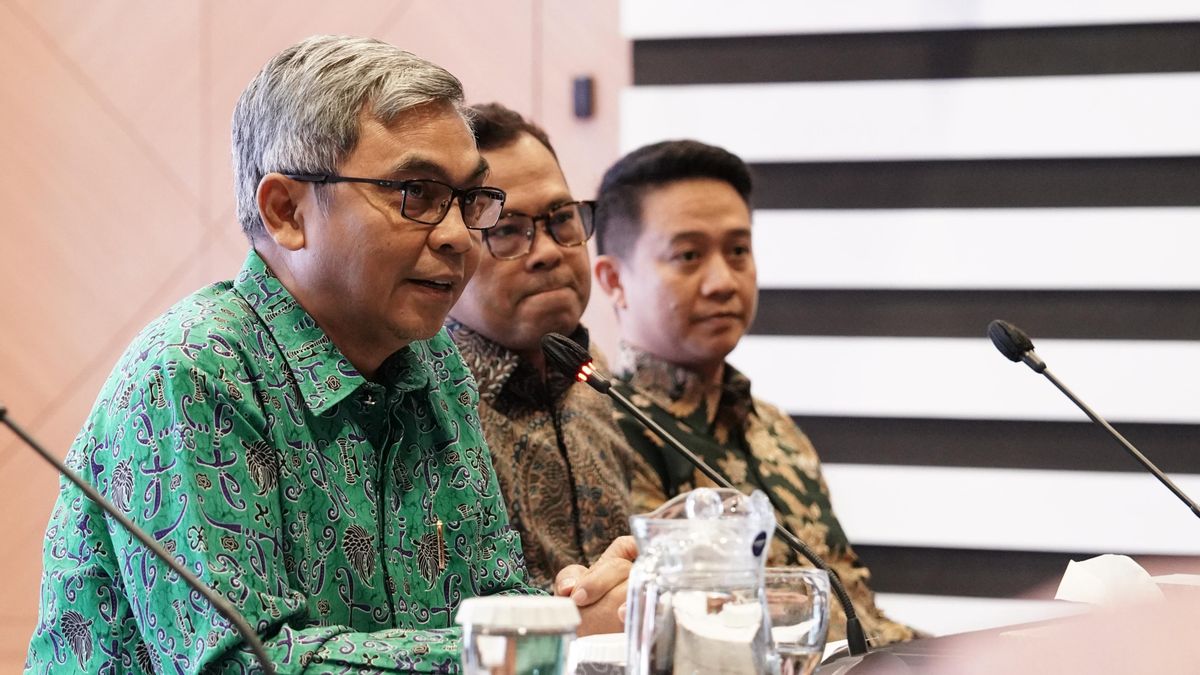


JAKARTA - Chairman of the Corruption Eradication Commission (KPK) Setyo Budiyanto said Law Number 31 of 1999 jo. Law Number 20 of 2001 concerning Corruption Crimes (Tipikor) does not keep up with the times. In fact, the fraudulent mode of practice continues to change.
This was conveyed by Setyo in a focus group discussion (FGD) with the theme 'Searching for a Form of Criminal Politics in the Amendment to the Law on the Eradication of Criminal Acts of Corruption' on Friday, September 12. One of the things he mentioned was the trading of influence or trading influence.
"Kasus impor sapi yang ditangani KPK, trading influence tidak diatur dalam UU Tipikor," kata Setyo seperti dikutip dari keterangan resmi lembaga, Selasa, 16 September.
The case of beef imports that Setyo mentioned was the alleged bribery that occurred in 2013. Five people were named as suspects, including Luthfi Hasan Ishaaq, who served as President of the Prosperous Justice Party (PKS) to Ahmad Fathanah as a member of the Indonesian House of Representatives for the 2009-2014 period.
According to Setyo, this case is a form of influence trade that is not regulated in the law. "So the KPK is looking for a way out so that it can be punished," he said.
"Many problems in the Anti-Corruption Law are no longer in accordance with developments and the impact of the corruption eradication is ineffective, efficient, and maximal," continued the former Director of Investigation of the KPK.
This condition makes FGD need to be implemented. This is because the laws that regulate corruption should be adaptive and comprehensive.
In addition, Setyo said, the eradication of corruption, which is still ineffective, is reflected in the Corruption Perception Index (CPI) score in 2024. Indonesia is at 37 and occupies the position of 99 out of 180 countries.
Meanwhile, Topo Santoso as a legal expert who was present as a resource person highlighted the norms in the United Nations Convention Against Corruption (UNCAC) which have not been accommodated in the Corruption Act. These include bribery of foreign public officials, bribery in the private sector, and embezzlement of wealth in the private sector.
"The Corruption Law has been more than 24 years referring to Law Number 20 of 2001. Since then there has been no comprehensive review that is rational, in-depth, and based on philosophical, juridical, and sociological evaluations," he said.
Meanwhile, Taufik Rachman, who is an international legal expert and public policy, stated the importance of this policy to include new crimes such as trading in influence, illiteracy investment, and private television.
He also encouraged legal innovation, including the extension of the expiration date of the case, the Deferred Prosecution Agreement (DPA), the citizen lawsuit, to strengthening the mechanism for replacing state losses.
"In addition, it is also necessary to adjust the arrangement of replacement money, clarify the meaning of harming the country's economy, and introduce the type of confiscation that aims to compensate for losses," said Taufik.
SEE ALSO:
-
 | TEKNOLOGI
AS Ancam Lanjutkan Larangan TikTok Jika China Tidak Hentikan Tuntutan Tarif dan Teknologi
16 September 2025, 02:05


Then there is another discussion in the FGD. Here are the details:
1. Social policy issues to prevent corruption, for example the obligation to convey LHKPN, regulation of conflicts of interest, obligation to develop anti-corruption education; and 2. Institutional issues in eradicating corruption, such as coordination between law enforcement agencies, the independence of the KPK, and audit institutions for state financial losses or the country's economy.
Furthermore, the results of this FGD are stated in the Academic Script (NA) as a priority in the 2025-2029 National Medium-Term Development Plan (RPJMN).
This process is aimed at formulating the Policy Recommendation for Amendments to the Corruption Act which is the mandate of the KPK in Pokja 1 with the National Legal Development Agency (BPHN) and the Directorate General of Legislation at the Ministry of Law and Human Rights.
The English, Chinese, Japanese, Arabic, and French versions are automatically generated by the AI. So there may still be inaccuracies in translating, please always see Indonesian as our main language. (system supported by DigitalSiber.id)
Most Popular Tags
#Prabowo Subianto #donald trump #2026 World Cup #Febrie Adriansyah #8791Popular


