


JAKARTA - A legal expert as well as a lecturer from the Faculty of Law, Gadjah Mada University (UGM), Muhammad Fatahillah Akbar explained the context of new findings in a case that has permanent legal force or inkrah.
This explanation was conveyed by Fatah when giving her opinion in the trial of the alleged bribery case of the Inter-Time Substitution (PAW) of members of the DPR and the obstruction of the investigation with the defendant of the Secretary General of the PDI-P (PDIP), Hasto Kristiyanto.
It started when the Public Prosecutor (JPU) questioned the findings of the alleged involvement of a new party in a case that had been heard or submitted.
"So, for example, there are 4 perpetrators of criminal acts of bribery, givers and recipients who have been tried in court and the verdict has been signed. Now, in the process, in the process of developing the investigation, new facts were found so that it turned out that a new suspect was found," asked the prosecutor during a trial at the Jakarta Corruption Court, Thursday, June 5.
"So there are new legal facts found by investigators that have not been revealed at the previous trial. So in the context of criminal law, is this possible?" he added.
Answering this question, Fatah said that the examination of criminal cases could stand alone. So, in the process it is possible to find new facts in case development.
"So when new facts and so on are found, then the examination can be carried out again for people who have never been processed, because if for example he has been processed later we will talk about the article nebis in idem," said Fatah.
Then, it is said that this matter can be done if evidence is found that can relate the involvement of the new party to the case that has permanent legal force.
"But as long as the person has not, and facts have been found to connect the person with the process that has been decided at the trial, it will be submitted to the panel of judges who are authorized to assess whether the examination of the evidence was due to the examination of evidence in this context of witness examination, expert examination and then it is attached to the ongoing trial examination process," he said.
The prosecutor then asked Fatah's opinion regarding the recycling of the case that had been decided. In particular, the question of the same witness in the trial of proof of a new case can be said to be a court recycling process.
"We are of course in the trial process related to the new suspect who became a defendant in the same case. Of course, we will have an obligation to present the same evidence, right like that. Witness statements, instructions, letters, like that. Can the trial be said to be like recycling in quotes?" asked the KPK prosecutor.
Fatah also gave her opinion. He made an analogy that the three people who were charged with the crime still had to be prosecuted even though the trial of one of the perpetrators had already been signed.
"When there are 3 people who commit the same criminal act, the three people in splits, evidence, witnesses, and so on, can be applied, used the same against all three. Only differences when there is a different time. For example, if one has signed or not, that's right, then, it will still be processed by law," he said.
Fatah then gave an example of a criminal act with the perpetrator of a child and one adult perpetrator. The legal process for adult perpetrators must continue even though the decision against child perpetrators has already been decided due to a time limit for detention.
"I have this example, I always tell you in class as well, for example there are adults doing salting with children. He makes participation with children, both of them are detained, while children have a time limit for detention. When a child has a time limit for detention, like it or not, he wants the trial to go first, even though it could be that the child is not the main perpetrator," said Fatah.
"He tried first, the decision was inkrah first than the decision of the adult perpetrator, which is the main thing because he has a longer period of detention. But it does not bind to the child's decision, but the main actor still has to be examined objectively in the trial examination process in court," he continued.
In the alleged bribery case, Hasto was jointly charged with advocate Donny Tri Istiqomah; the former convict of the Harun Masiku case, Saeful Bahri; and Harun Masiku gave money amounting to 57,350 Singapore dollars or equivalent to Rp600 million to Wahyu in the 2019-2020 period.
The money is allegedly given with the aim that Wahyu seeks the KPU to approve an interim replacement request (PAW) for the Elected Legislative Candidate for the Electoral Region (Dapil) of South Sumatra (Sumsel) I on behalf of DPR Members for the 2019-2024 period Riezky Aprilia to Harun Masiku.
SEE ALSO:
-
 | BERITA
7 Orang Terinfeksi COVID-19 Varian NB.1.8.1 di Irlandia, Apa Saja Gejalanya?
04 Juni 2025, 16:33 -
 | BERITA
Depok Minta Pemprov DKI Tambah Rute Transjabodetabek dan MRT ke Wilayahnya
04 Juni 2025, 14:00
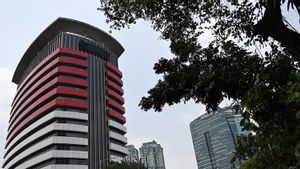
In addition, Hasto was also charged with obstructing the investigation by ordering Harun, through the Aspiration House guard, Nur Hasan, to submerge Harun's cell phone into the water after the Corruption Eradication Commission (KPK) arrested members of the General Election Commission (KPU) for the 2017-2022 period Wahyu Setiawan.
Not only Harun Masiku's cellphone, Hasto is also said to have ordered his aide, Kusnadi, to drown his cell phone in anticipation of forced attempts by KPK investigators.
Hasto is threatened with a crime as regulated in Article 21 and Article 5 Paragraph (1) letter a or Article 13 of Law (UU) Number 31 of 1999 concerning Eradication of Criminal Acts of Corruption as amended and supplemented by Law Number 20 of 2001 in conjunction with Article 65 Paragraph (1) and Article 55 Paragraph (1) 1 jo. Article 64 Paragraph (1) of the Criminal Code.
The English, Chinese, Japanese, Arabic, and French versions are automatically generated by the AI. So there may still be inaccuracies in translating, please always see Indonesian as our main language. (system supported by DigitalSiber.id)
Most Popular Tags
#Prabowo Subianto #donald trump #2026 World Cup #Febrie Adriansyah #8791Popular


