
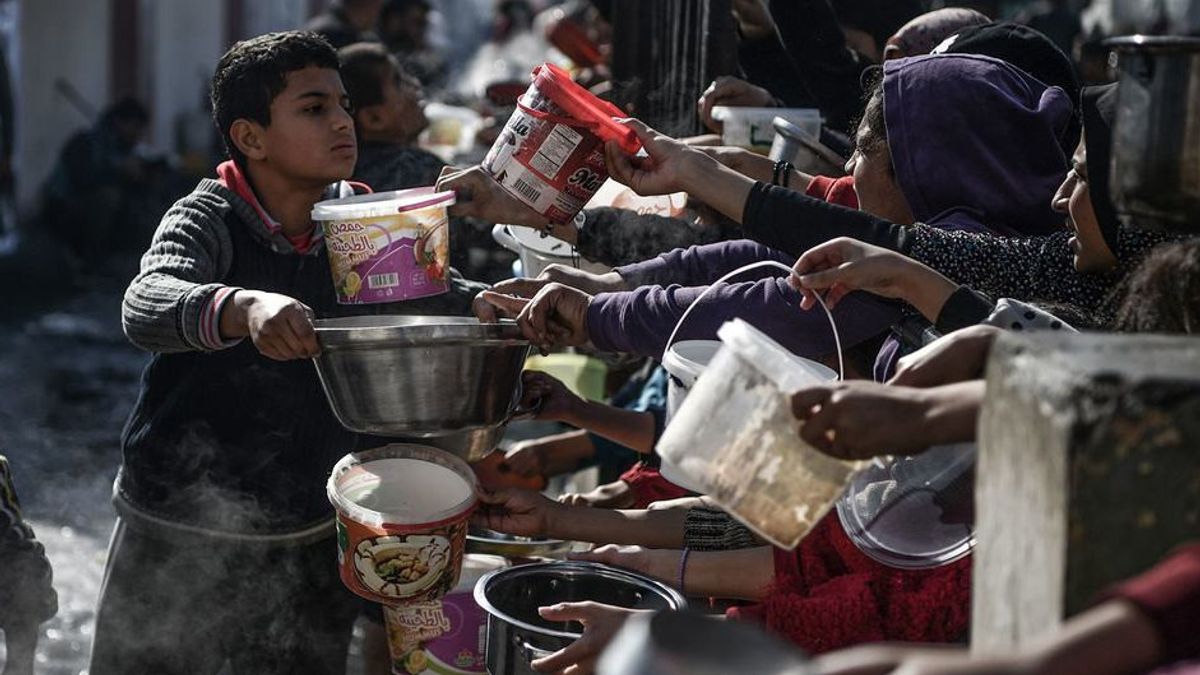


JAKARTA - The World Health Organization (WHO) calls on the international community to increase greater aid in Gaza after Israel and Hamas reached a ceasefire agreement to end the 15-month war in the region.
The UN health agency said its member countries, donors, and the global community, including the private sector, should support urgent health needs and the long-term rebuilding of Gaza's health care system.
"The PBB cannot provide a response alone," said Rik Peeperkorn, WHO representative for the Palestinian Population Area.
The current condition of the follow-up to the Gaza ceasefire agreement has not yet been fully completed. Israel postponed holding a cabinet meeting on Thursday because it wanted to ratify the ceasefire with Hamas.
Senior Hamas official Izzat el-Reshiq said his group remains committed to a ceasefire agreement agreed the day before, which was scheduled to take effect Sunday, January 19, to end the 15-month bloodshed.
An elaborate ceasefire agreement comes on Wednesday, January 15 after mediation by Qatar, Egypt and the United States to halt a war that has devastated coastal territory and ignited Middle East turmoil.
SEE ALSO:
-
 | BERITA
Serangan Pelajar Berpisau di Slovakia Tewaskan Guru dan Teman Sekelas
16 Januari 2025, 22:54
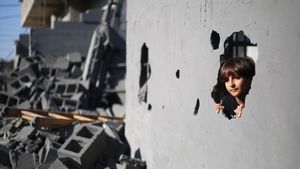


The deal outlines a six-week initial ceasefire with a gradual withdrawal of Israeli troops from the Gaza Strip, where tens of thousands of people were killed.
Hostages detained by the militant group Hamas, which controls the area, will be released in exchange for Palestinian prisoners detained in Israel.
The English, Chinese, Japanese, Arabic, and French versions are automatically generated by the AI. So there may still be inaccuracies in translating, please always see Indonesian as our main language. (system supported by DigitalSiber.id)
Most Popular Tags
#Prabowo Subianto #donald trump #Febrie Adriansyah #8791 #giias 2026Popular


