

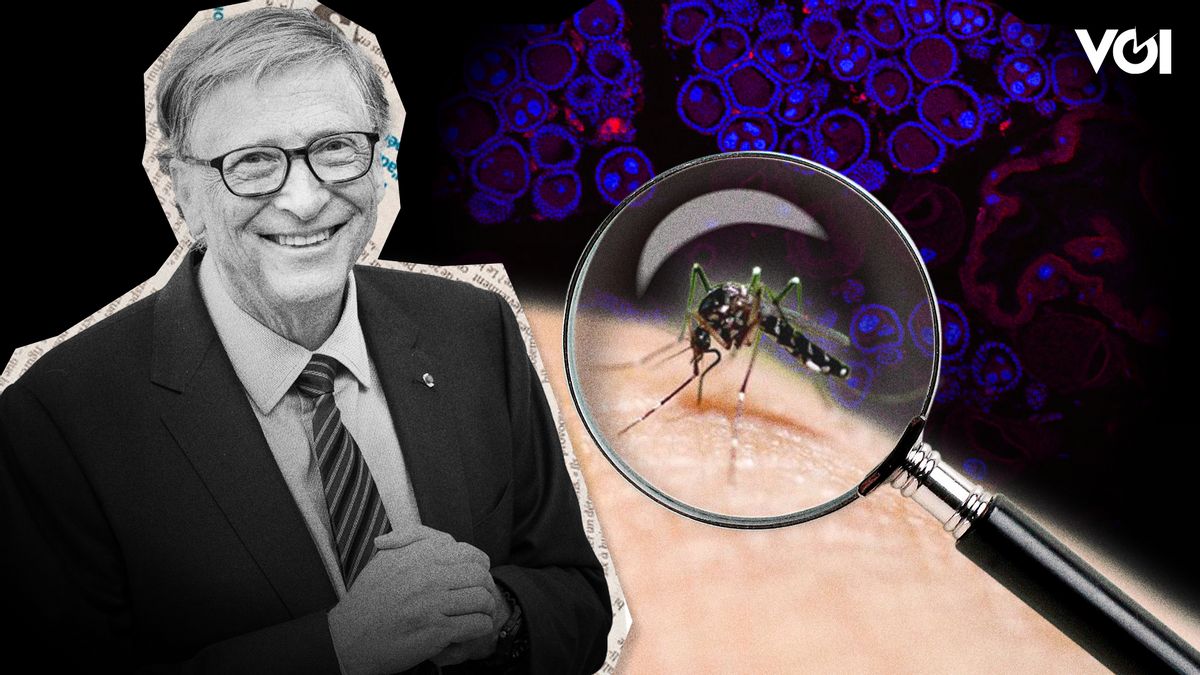
JAKARTA - The founder of Microsoft Group, Bill Gate, visited Indonesia, and was greeted by President Prabowo Subianto. Indeed, Prabowo has long awaited the presence of the founder of the Gates Foundation.
In his remarks at the discussion session before a number of Indonesian Ministers and entrepreneurs, Bill Gates expressed his appreciation for Indonesia's concrete steps in adopting new vaccines such as rotavirus, pneumokokus, and HPV to protect children from deadly diseases. Gates also highlighted Indonesia's important role in the trial of tuberculosis vaccines (TB) which will bring benefits not only to Indonesia and the world.
Gates also praised the Gates Foundation's collaboration with the Indonesian government, including the involvement of Health Minister Budi Gunadi Sadikin in the Gavi Council, a global organization focused on distributing vaccines to children around the world, he said in the discussion, as quoted by the presidentri.go.id page.
Bill Gates' visit to Indonesia aims to strengthen cooperation in the health sector and sustainable development. In his meeting with President Prabowo at the Merdeka Palace, Jakarta, they discussed various initiatives, including trials of tuberculosis vaccines, nutritional programs for pregnant women, and the development of public digital infrastructure.
At least Indonesia Bersama sejumlah negara seperti Nigeria, India menjadi salah satu daerah yang ditunjuk sebagai negara yang menjadi tempat uji coba dan penelitian penyakit TBC dan pengembangan virus deterrencenya, yang dikembangkan atas dana dari Gate Foundation. Gate juga mengakui pembangan mosquito Wolbachia yang dianggap dapat menghentang penyebaran penyakit dengue fever.
Modern technological and scientific innovation is increasingly at the forefront of efforts to fight infectious diseases in various parts of the world. One of the main figures in this global movement is Bill Gates, through the Bill & Melinda Gates Foundation, which has invested heavily in health projects in developing countries, including Indonesia. One of the technologies that is now in the spotlight is the Wolbachia mosquito, as well as the development of new vaccines for diseases such as tuberculosis and malaria.
Wolbachia Mosquito: New Weapon Against Dengue Fever
Dengue hemorrhagic fever (DHF) is still a scourge in tropical countries, including Indonesia. To overcome this, the Aedes aegypti mosquito release project containing Wolbachia bacteria has been tested in Yogyakarta since 2014. These bacteria naturally inhibit the ability of mosquitoes to transmit dengue virus to humans.
The results were quite astonishing, studies showed a decline in dengue cases by 77% and a reduction in hospitalization rates by 86%. This success then prompted program expansion to other regions, such as West Jakarta and Bali, with support from the World Mosquito Program, Gadjah Mada University, and the Bill & Melinda Gates Foundation.
However, this technology cannot be separated from controversy. Various conspiracy issues and theories emerged on social media, including allegations that this mosquito is a dangerous genetic engineering project. Even those who linked it to Bill Gates' hidden agenda. These claims have been denied by scientists and official institutions.
In addition to the Wolbachia mosquito, Bill Gates also focuses on developing new vaccines. One of the main targets is tuberculosis (TBC), which is still a major cause of death in developing countries, including Indonesia. In collaboration with various global partners, the Gates Foundation supports the development of a new generation of TB vaccine which is expected to be more effective than the BCG (Bacillus Calmette-Guerrin) vaccine which has been used for more than a century.
In his meeting with President Prabowo Subianto, Bill Gates also discussed the opportunity to make Indonesia a location for clinical trials of TB vaccines, as well as expanding access to malaria vaccines and other basic immunizations, especially for children and vulnerable groups.
Between Public Innovation And Distrust
Technological advances in health are often overshadowed by distrust from some people. In the fast-spreading era of information, hoaxes and conspiracy theories around vaccines and biotechnology can hinder public acceptance of innovation that actually save lives.
In this case, the role of education and transparency is key. The government, scientists, media, and community leaders need to work hand in hand to straighten out misinformation and increase science literacy in the public. Science must be approached by inclusive and easy-to-understand communication, not just with technical data.
There are several baseless claims and issues linking the spread of the Wolbachia mosquito to Bill Gates' hidden agenda, including allegations of genetic engineering or disease spread. However, these claims have been denied by experts and declared as hoaxes.
But according to IDI health expert, Professor Zubairi Djoerban, this mosquito named Wolbachia is a project developed by the World Mosquito Program (WMP), a company owned by Monash University. It has even been released in the Yogyakarta Region.
Because these mosquitoes can be supported by Bil and Melinda Gate, the Wolbachia mosquito is often referred to as the Bill Gate mosquito. The issue that is circulating is that the mosquito spreads the LGBT gene. Wolbachia is a bacteria that are inserted into male aedes aegypti mosquitoes. This Wolbachia can paralyze dengue viruses in the body of aedes aegypti mosquitoes, so that the dengue virus will not infect humans.
The program aims to reduce the spread of dengue fever (DHF) by infecting Aedes aegypti mosquitoes using Wolbachia bacteria, which inhibit the ability of mosquitoes to transmit the virus.
The application of Wolbachia mosquito technology and new vaccines is a major breakthrough in the global health world. With strong collaboration between international institutions, local governments, and the community, the potential for innovation is very large to reduce the death rate due to infectious diseases. However, the challenge in building public trust must continue to be a concern so that science can truly bring broad benefits to humanity.
Bill Gates' visit to Indonesia is also expected to expand collaboration in the field of philanthropy, health innovation, and sustainable agriculture. This is in line with the government's vision to improve the quality of life of the community and national development.
Until now, Bill Gate has allocated USD 300 million to Indonesia, which is focused on producing polio vaccines through Bio Farma, which is now one of the largest vaccine producers in the world.
In addition to health, Gates also appreciated the progress of the agricultural sector in Indonesia, especially in the development of superior seeds and increasing productivity of food crops such as bananas. Working on things like bananas, where Indonesia has great genetic diversity. We can improve the quality of bananas here, as well as help avoid disease," he explained as reported by the presidential.go.id page.
The English, Chinese, Japanese, Arabic, and French versions are automatically generated by the AI. So there may still be inaccuracies in translating, please always see Indonesian as our main language. (system supported by DigitalSiber.id)


