
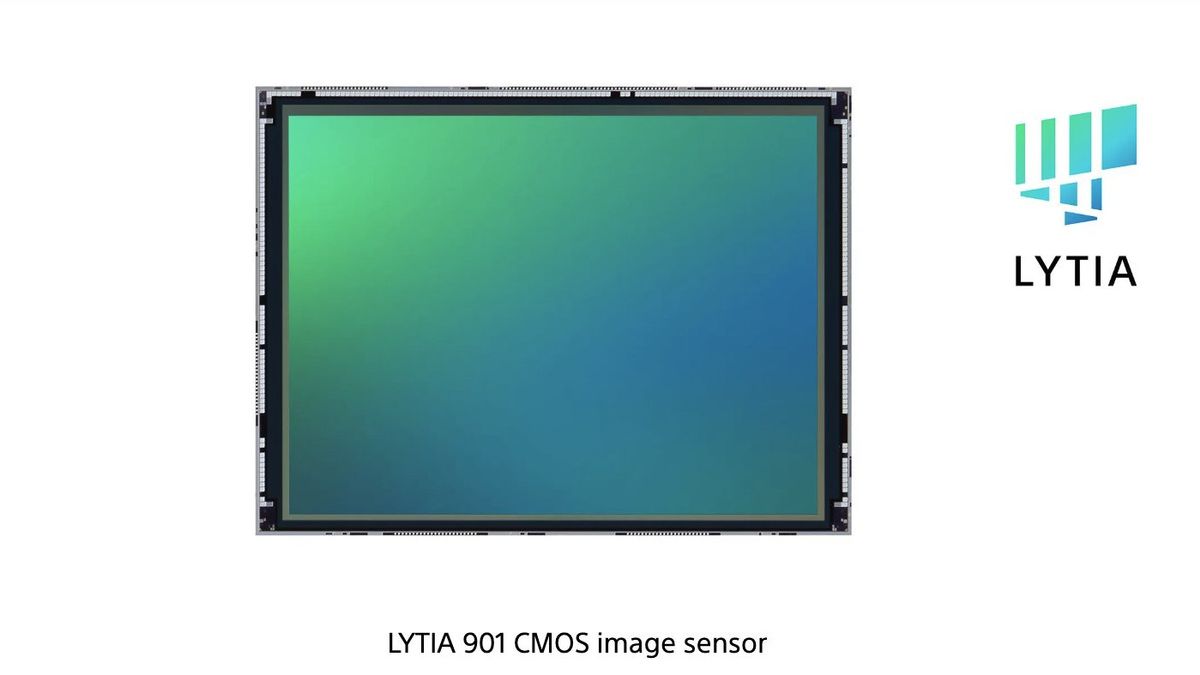


JAKARTA - Sony officially introduced its flagship camera sensor for smartphones, LYTIA 901, or LYT-901. This 200-megapixel sensor has long been discussed in industry and was previously known as Sony IMX09E's internal name. Its presence marks a new step in this Japanese company in the competition for high-end mobile camera technology.
LYTIA 901 is not just a large resolution sensor. This 1/1.12-inch unit carries a 0.7-micrometer pixel and uses a Quad-Quad Bayer Coding (QQBC) array designed to produce sharper details.
Sony also submerges flagship-class technologies such as DCG-HDR, Fine 12-bit ADC, as well as HF-HDR a hybrid HDR system that is a combination of Hybrid Frame-HDR and Dual Convertion Gain HDR. This combination is claimed to provide a much better dynamic range than the previous generation.
Sony also utilizes AI-based processing to manage high-resolution pixel data to make it more efficient for mobile chipsets to handle. The 12-bit analog-to-digital Pipeline used in this sensor is faced with the Fine 12-bit ADC, allowing for cleaner shooting in complicated conditions.
SEE ALSO:
-
 | TEKNOLOGI
Samsung Galaxy S26 Akan Hadir dengan Peningkatan Pengisian Daya Super Cepat
01 Desember 2025, 20:05 -
 | TEKNOLOGI
Militer Israel Larang Penggunaan Ponsel Android, Hanya Boleh iPhone
01 Desember 2025, 19:35 -
 | TEKNOLOGI
ByteDance Perkenalkan Alat Kendali Suara AI yang Didukung Model Doubao
01 Desember 2025, 19:04 -
 | TEKNOLOGI
Gim The 9th Charnel Siap Meluncur 30 Januari 2026 untuk PS5, Xbox Series, dan PC
01 Desember 2025, 18:35 -
 | TEKNOLOGI
Perjuangan Berbuah Manis, SMAN 5 Ambon Jadi Juara GYC 2025 Free Fire
01 Desember 2025, 18:05
Other technical advantages include 2x zoom hardware support as well as 4x in-zoom sensors for photos and videos. LYTIA 901 is the only sensor capable of hardwareally handling 3x optical zoom as well as 4K video recording at 30 fps, with the ability to record 4K 120 fps via 4\times binning configuration. Available pixel-binned profiles include 50MP (2times2) and 12.5MP (4times4) modes.
This sensor is estimated to be the backbone of the main camera of a number of Ultra class phones that will launch in 2026. Vivo X300 Ultra is said to almost certainly use it and even rumors say the phone carries two 200MP sensors at once, for the main camera and telephoto periscope. OPPO Find X9 Ultra is also predicted to adopt the same technology.
On the other hand, the presence of this sensor on the Xiaomi 17 Ultra looks doubtful because the phone is likely only a rebranding version of the 17 Pro Max. Meanwhile, Samsung is said to not be using this sensor for the Galaxy S26 Ultra, given that the company usually develops its own sensors.
With LYTIA 901, Sony reiterated his position as master of camera sensor technology in the mobile world and apparently, any manufacturer who wants to occupy the Ultra caste next year will fight to taste his abilities.
The English, Chinese, Japanese, Arabic, and French versions are automatically generated by the AI. So there may still be inaccuracies in translating, please always see Indonesian as our main language. (system supported by DigitalSiber.id)
Most Popular Tags
#Prabowo Subianto #donald trump #firearm #8791 #giias 2026Popular


