

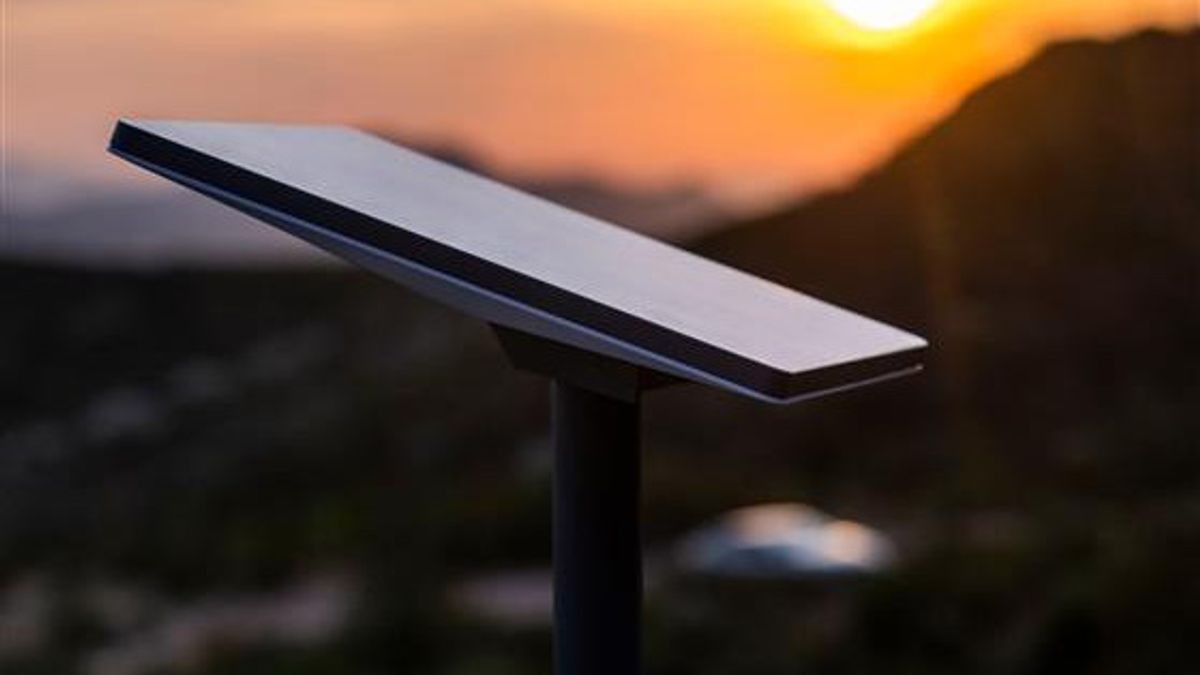


JAKARTA It's been more than a year since Starlink has been available in Indonesia, but the journey is not as smooth as SpaceX might expect. This happens because of the many challenges the company needs to overcome.
This satellite first arrived in May last year and could be used in various regions, including in areas that are difficult to reach optical or cellular networks. This satellite connectivity service is here as an alternative to a strong wireless connection.
However, Starlink is not as popular as imagined. This is based on Starlink's download speed which fell almost two-thirds by almost half. According to Opensignal, analytics companies of international cellular networks, this decline was caused by soaring demand.
This congestion forced Starlink to temporarily suspend new customer registration. As the service resumed in July 2025, the company imposed a very expensive 'subscription spike'.
This cost ranges from Rp. 8 million to Rp. 9.4 million, far beyond the average monthly wage in Indonesia. This cost is also difficult for most workers to reach. This is also in contrast to SpaceX's initial goal of wanting to reach less served areas.
"The data shows that Starlink has succeeded in reaching remote areas, but the challenge now is to balance speed with price consistency and accessibility. Indonesia needs complementary solutions, not just one technology that dominates," Opensignal said in a statement, reported on Monday, October 13.
SEE ALSO:
-
 | TEKNOLOGI
Huawei Indonesia Raih Penghargaan atas Solusi Transformasi Ketahanan Siber
13 Oktober 2025, 09:33 -
 | TEKNOLOGI
Redmi Turbo 5 Kantongi Sertifikasi Radio, Siap Meluncur Akhir 2025
13 Oktober 2025, 10:05



Starlink also faces competition challenges as the Fixed Wireless Access (FWA) solution is more often relied on. This solution is dominated by several companies, one of which is Orbit from Telkomsel, which further reaches the overall community.
Starlink shows slightly better download speed than FWA, a solution that still uses 4G. However, FWA leads in three other metrics, especially in qualitative consistency that is nearly 50 percent higher than Starlink.
This shows that although Starlink is faster in optimal conditions, FWA provides a more stable experience. Fortunately, Starlink showed an increase in quality consistency from 24.2 percent to 30.9 percent in a year.
The English, Chinese, Japanese, Arabic, and French versions are automatically generated by the AI. So there may still be inaccuracies in translating, please always see Indonesian as our main language. (system supported by DigitalSiber.id)
Most Popular Tags
#Prabowo Subianto #donald trump #2026 World Cup #bgn #konflik timur tengahPopular


