


JAKARTA - Recently, the Ministry of Communication and Digital Affairs issued Ministerial Regulation (Permen) No. 7 of 2025, concerning the Utilization of eSIM Technology in the Implementation of Telecommunications.
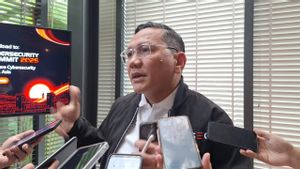
As a company engaged in global cybersecurity, President Director of PT ITSEC Asia Tbk, Joseph Edi Hut Lumban Gaol views this eSIM policy as a strategic effort to strengthen authentication at the end user level.
"I think it's a good step. The point is, in every telecommunication layer, data exchange, it's layered. With eSIM, it means that you want to embed security at the end-user level. So I think it's strategic," Joseph said on Monday, April 28 in Jakarta.
He also likens telecommunications ecosystems such as toll roads, where network providers function as road managers. With the eSIM, authentication for every 'vehicle' or incoming user is guaranteed.
SEE ALSO:


However, Joseph added, security protection should not stop at just one point. Because according to him, security or security systems must be implemented in various layers.
"If the toll road can authenticate the vehicle and the driver, that's good. But that the security responsibility is in the vehicle owner, or manufacturing from the truck, it must also be done. So various parties must implement it," he explained.
Meanwhile, the implementation of this biometric eSIM and registration is expected to significantly prevent the misuse of mobile numbers for the spread of hoaxes, scams, fraud, and reduce fake data and fake numbers.
The English, Chinese, Japanese, Arabic, and French versions are automatically generated by the AI. So there may still be inaccuracies in translating, please always see Indonesian as our main language. (system supported by DigitalSiber.id)


