

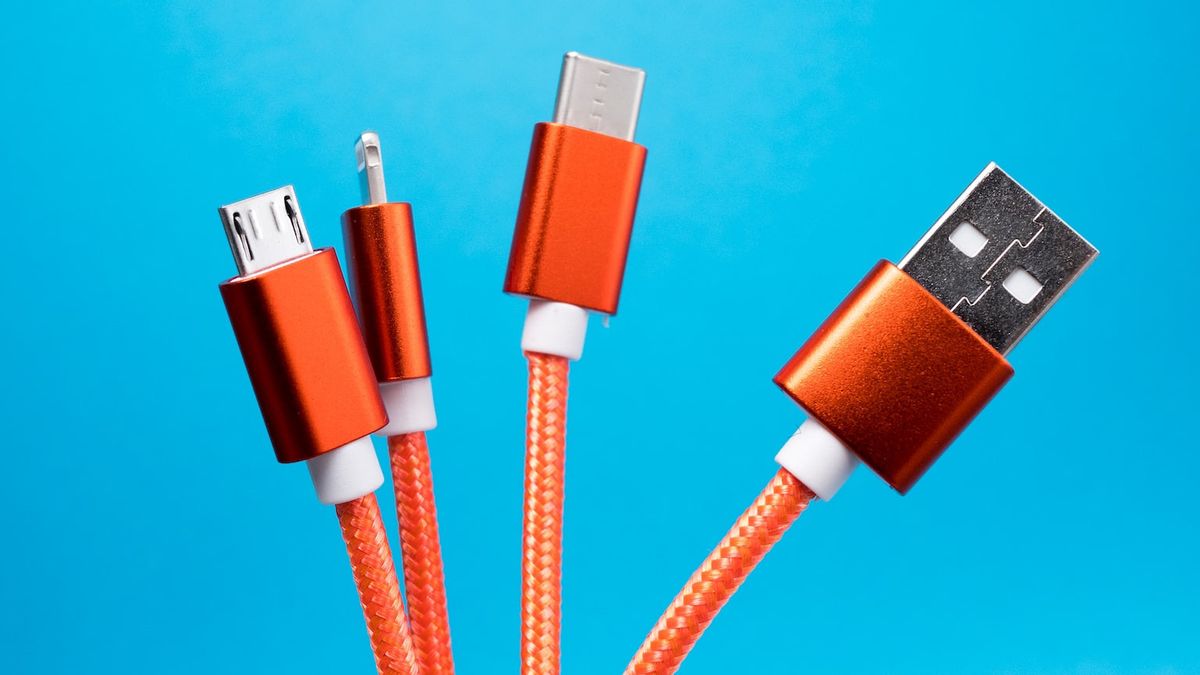


YOGYAKARTA - USB type C is officially set as a standard for general charging by the European Parliament. All mobile devices with up to 100w of charging traded in the European Union (EU) are required to use a USB-C charger by the end of 2024.
The cellular device must be equipped with USB type C including cellphones, earbuds, and tablets. A laptop type device will also be set using a USB-C port in 2026. This rule is also bad news for Apple's technology company bags.
Apple itself issues its products with different types of Lightning chargers. Forced by this rule to change Apple's product policy. Apart from Apple, several gadget brands were also affected by the impact of Huawei and Samsung.
The use of USB type C has actually been applied to various types of cellular devices since several years ago. USB Type C has a difference from the old micro-USB connector.
The most striking difference between micro USB and Type C is in its shape. USB type-C has an easier shape to use because it is symmetric in shape. Unlike micro USB which has a special form, so it cannot be poked back and forth. In addition, there are other differences from the two as follows.
From the experience of several users, USB type C is more comfortable to use because it has a symmetric form. This form allows USB C to be inserted into the phone back and forth, without the need to adjust the upper and lower sides.
While older micro USBs have a special shape that distinguishes the upper and lower sides of the probe. USB microuser must adjust the connector position when plugging it into the phone's port. This condition is more troublesome when compared to USB type C usage.
The next difference between micro USB and USB type C is on its electric power. USB type C has a larger power output of 20V and 5A. While micro USB only has a maximum output of 5V and 1.5A.
This difference in electrical power affects the speed of charging cell phones. USB type C which has a larger power is able to charging faster. In addition, the loading is also suitable for modern fast-charging standards.
There is a difference in the speed of connectors on micro USB and USB type C, although both are run with the same technology. USB technology has several versions of the transfer speed rate, ranging from USB 1.1 (12 Mbps), USB 2.0 (480 Mbps), USB 3.0 (5 Gbps), to USB 3.1 Gen 1 (5 Gbps) and Gen 2 (10 Gbps).
Most of the older micro USBs include a 2.0 version of micro USB. This USB also supports USB version 3.0. While USB type C has a speed rate of twice as high. USB type C supports up to USB version 3.1 Gen 2 (10 Gbps).
Apart from being a charger, USB technology is also used in data transfer. In this case, micro USB and USB type C also have differences. USB type C can transfer data faster up to 10 Gbps. While micro USB can only transfer data as fast as 480 Mbps.
These two types of USB are also different in terms of compatibility and usefulness. USB Type C is paired for certain electronic devices such as smartphones, monitors, and laptops. While micro USB can be used for more devices, such as cameras, sound, and other electronic devices.
SEE ALSO:



That's the difference between micro USB and type C. In various ways, USB type C is superior to micro USB. Without setting rules in the European Union, in the next few years the use of type C will be more widely applied.
Stay up to date with the latest domestic and other overseas news on VOI. You present the latest and most updated nationally and internationally.
The English, Chinese, Japanese, Arabic, and French versions are automatically generated by the AI. So there may still be inaccuracies in translating, please always see Indonesian as our main language. (system supported by DigitalSiber.id)
Most Popular Tags
#Prabowo Subianto #donald trump #firearm #8791 #giias 2026Popular


