



NASA is speeding up plans to build a base on the Moon. The first mission to prepare the project is scheduled to launch before the end of this year, with an initial habitation target in 2029.
According to a report by The Independent, quoted on Saturday, May 30, the base will be a post for astronauts in the Artemis program, NASA's program to return humans to the Moon and prepare for a follow-up mission to Mars.
"We're taking NASA's guidance from the 1960s, figuring out what worked and what didn't in this science of survival," NASA Administrator Jared Isaacman said at a news conference. "Because the lunar base is as beautiful as it is hard and unfriendly."
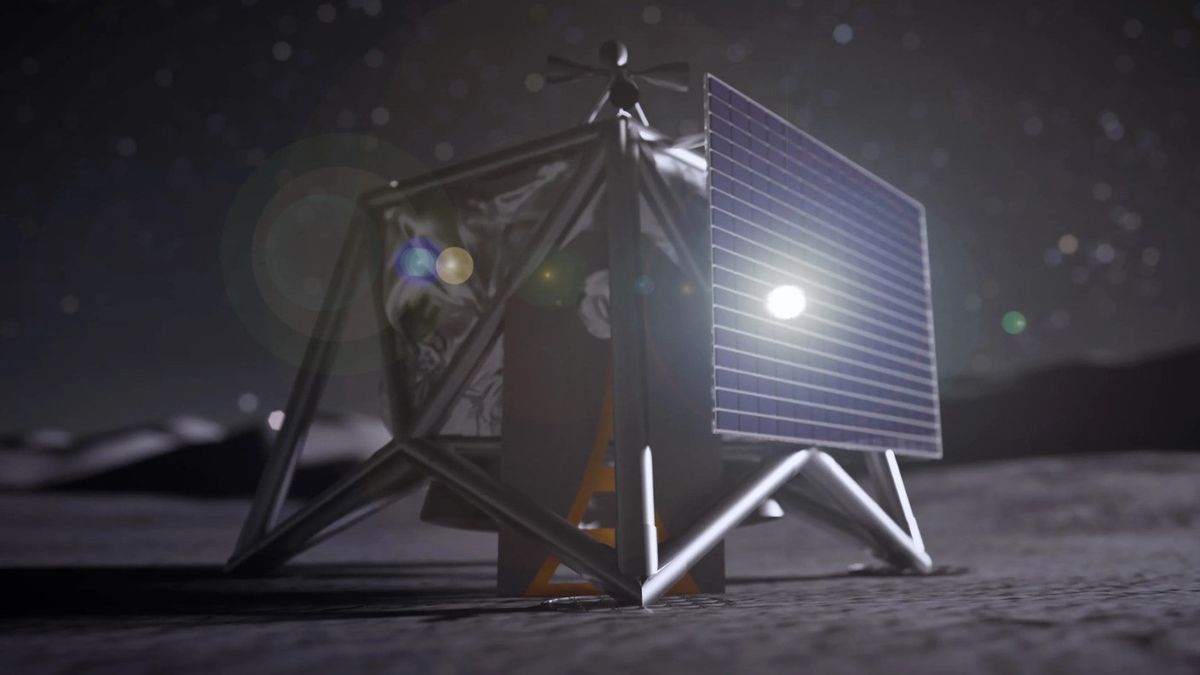
The initial mission will involve Blue Origin, the space company owned by Jeff Bezos. The mission is referred to as the first privately funded Moon lander. The Moon lander is a vehicle designed to land and operate on the Moon's surface.
The unmanned vehicle will be sent to the South Pole of the Moon to test landing capabilities and carry a number of scientific payloads, namely research equipment or instruments.
The second mission will carry the largest commercial payload to the Moon's surface, including a rover from AstroLab. The third mission will carry payloads from the European Space Agency and Korea. The two missions are also targeted to launch before the end of the year.
Isaacman said the series was just the beginning. NASA will announce more than a dozen other missions in the coming months.
The Independent reported that NASA also partnered with a number of commercial partners. AstroLab and Lunar Outpost were chosen to develop the Moon terrain vehicle. Astronauts will drive the AstroLab vehicle on the Moon's surface.
"This vehicle can travel up to 10 kilometers per hour and go up and down slopes with a 20-degree slope," said program executive Carlos García-Galán.
The Lunar Outpost autonomous vehicle will map the terrain to search for possible Moon base locations. Autonomous means the vehicle can move and work with limited human control.
Mapping will also be assisted by a Moon drone called Moonfall carried by the Firefly spacecraft. The drone will measure radiation, help determine the base limit, guide the landing, assess the terrain, and search for water and ice under the Moon's surface.
In the first phase, the lunar base program includes 25 launches, 21 landings, and 400 metric tons of cargo. All these missions are a path to phase two: building semi-permanent infrastructure and initial habitation by 2029.
A nuclear reactor to power the base could be launched as early as 2030, according to the Trump administration in April. Phase three is targeted for 2032 to support a sustained presence on the lunar surface.
The cost is huge. The Moon base is estimated to cost more than 20 billion US dollars, or around Rp356.4 trillion. The Artemis program as a whole is estimated to be around 93 billion US dollars, or around Rp1.66 trillion with an assumption of a rate of around Rp17,820 per US dollar.
NASA says missions to the Moon and Mars are important to understand the origins of life. Mars is one of the places that are suspected of having conditions that could have allowed life.
"With the Moon base, Artemis astronauts will stay longer, explore further, and conduct science that helps exploration," said NASA official Lori Glaze. "We are also learning how humans work outside Earth, building infrastructure, and preparing for Mars."
The English, Chinese, Japanese, Arabic, and French versions are automatically generated by the AI. So there may still be inaccuracies in translating, please always see Indonesian as our main language. (system supported by DigitalSiber.id)
Most Popular Tags
#Prabowo Subianto #donald trump #firearm #8791 #giias 2026Popular


