

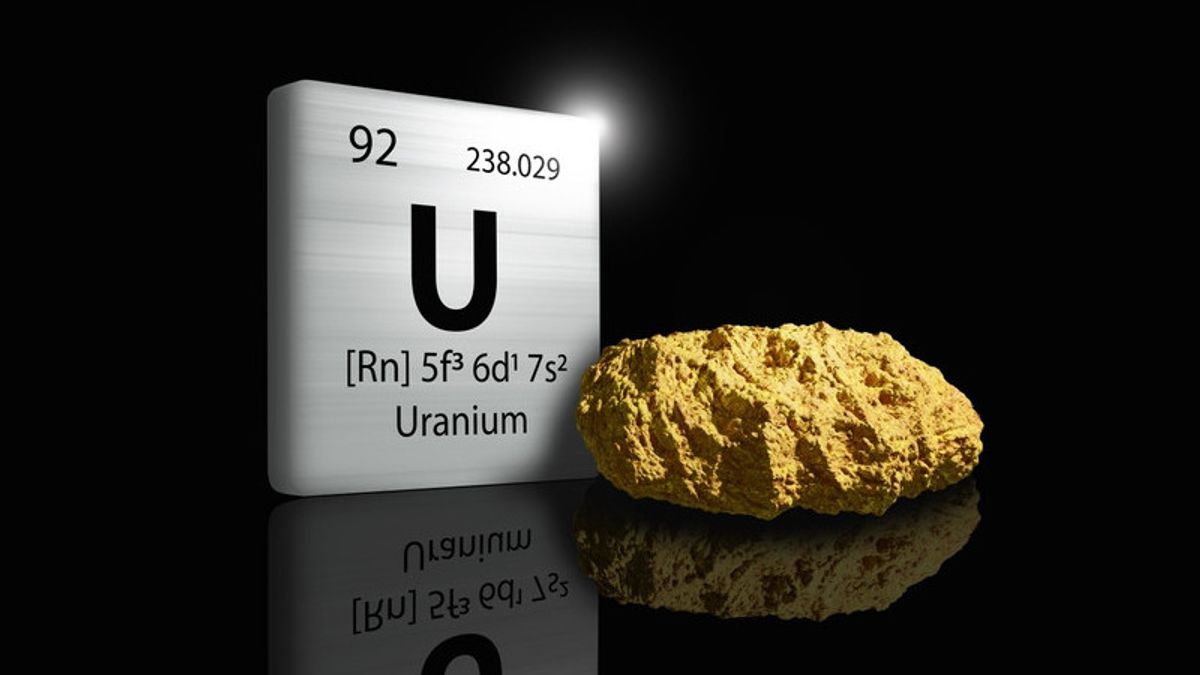


Uranium is once again in the spotlight of the world amid the heating of the Iran-United States conflict. This radioactive material is not just a common mining material, but a key component in the development of nuclear energy to a nuclear weapon of great power.
The latest tensions emerged after Iran was said to have agreed to reduce and transfer enriched uranium to a third country as part of a proposal to end the conflict with the United States. However, Tehran asked for assurances that the uranium could be returned if negotiations failed and refused to dismantle its nuclear facilities.
Behind the geopolitical controversy, there is a big question about the origin of uranium and how the process can become a nuclear raw material.
Where does Uranium come from?
Quoted from Saintteks.uk, Sunday, May 24, uranium comes from the earth's crust and is found in the form of rocks or uranium ore. This material is mined from the earth before being processed into nuclear industry raw materials.
Although spread across various regions of the world, the largest uranium reserves are known to be in Australia, Canada, Kazakhstan, Namibia, and Russia. These five countries account for the majority of global uranium supplies.
In nature, uranium consists of two main isotopes, namely uranium-238 (U-238) and uranium-235 (U-235). Of the two, U-235 is the most important isotope because it is capable of undergoing nuclear fission reactions or atomic fission that produces very large energy.
However, the content of U-235 in nature is very small, even less than one percent of the total natural uranium. That's why uranium has to go through a special process so that it can be used for nuclear needs.
How is Uranium Processed?
After being mined, uranium cannot immediately be used as nuclear fuel or weapons. Uranium must go through a number of long and complicated stages.
The initial stage starts from the destruction of uranium ore to produce uranium concentrate known as yellowcake. After that, uranium is converted into uranium hexafluoride gas or UF6.
This gas form is needed so that uranium can enter the most important stage, namely uranium enrichment.
Uranium enrichment is carried out to increase the uranium-235 content so that it can be used in nuclear reactors and nuclear weapons.
The most common method used is gas centrifugation. In this process, uranium gas is fed into a centrifugal machine that spins at very high speeds.
The rapid rounds separate the heavier U-238 isotopes from the lighter U-235. The longer the process is carried out, the higher the U-235 content produced.
In general, uranium enrichment products are divided into two main categories.
First, low enriched uranium (LEU) or low enriched uranium with a U-235 content below 20 percent. This type is usually used for nuclear power plants, research reactors, and medical needs.
Second, highly enriched uranium (HEU) or uranium with high enrichment that has a U-235 content of more than 20 percent. This type of uranium is used for military purposes, including the development of nuclear weapons and nuclear-powered submarine reactors.
Meanwhile, uranium with an enrichment level of around 90 percent is known as weapons-grade uranium.
How Long Can Uranium Be a Nuclear Weapon?
The most difficult stage in the development of nuclear weapons is actually the construction of uranium enrichment infrastructure.
Once a country masters enrichment technology, the increase in uranium levels to weapons-grade can take place relatively quickly.
International security observers assess that the process towards weapons-grade uranium can take place in just a few months if enrichment facilities and technology are available.
That is why the supervision of the nuclear program is a sensitive issue in international relations, including in the Iran-United States conflict.
Why is Uranium an Important World Issue?
Uranium has two very different sides. On the one hand, this material is a major source of energy for power plants and modern medical needs. But on the other hand, uranium can also be turned into a weapon of mass destruction with extraordinary destructive power.
Therefore, every uranium enrichment activity is always a concern for the international community. Debates regarding a country's right to enrich uranium, supervision of nuclear facilities, to the potential development of nuclear weapons continue to be an important part of global diplomacy and modern geopolitical conflicts.
The English, Chinese, Japanese, Arabic, and French versions are automatically generated by the AI. So there may still be inaccuracies in translating, please always see Indonesian as our main language. (system supported by DigitalSiber.id)


