
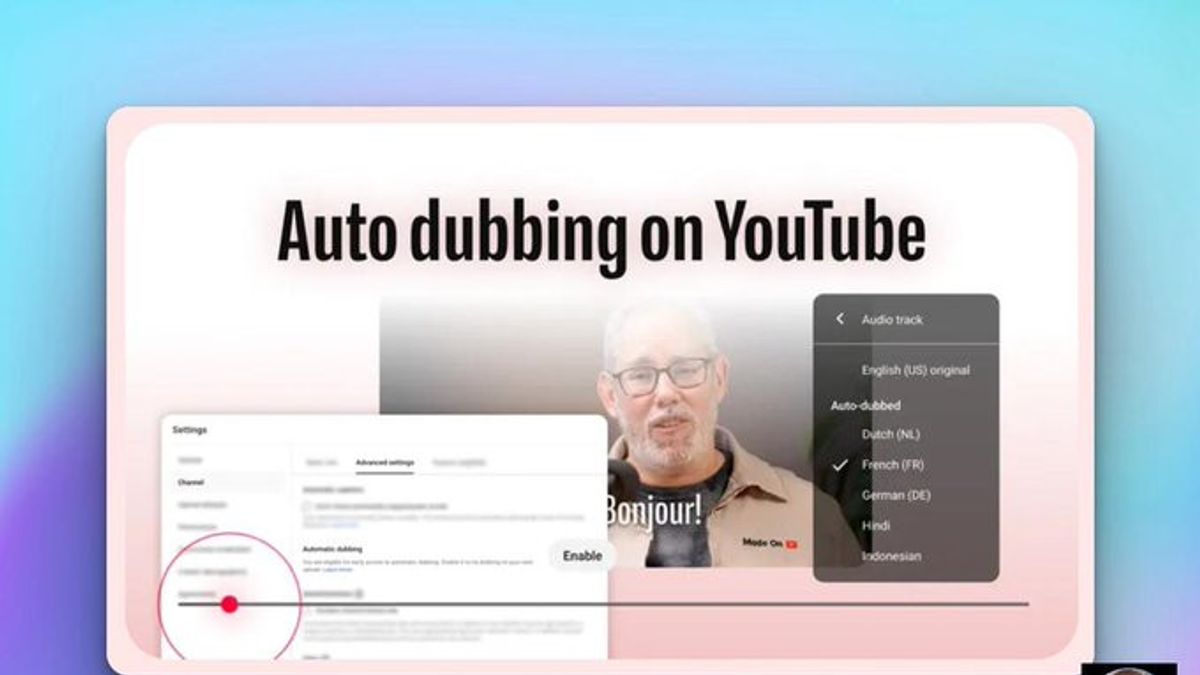


JAKARTA - YouTube is again tinkering with the language wall, and this time they are bringing a sledgehammer. The Google-owned video sharing platform has officially expanded the auto dub translations feature to all creators, while improving the quality of translated voices and significantly increasing language support.
Previously, the auto dub feature was only available to certain creators with limited language options. Now the restriction has been removed. All YouTube creators can use this technology to automatically add translated audio to their videos, without complicated processes and without having to hire additional voice actors.
YouTube is also expanding the scope of supported languages. If previously the number had not reached two digits, now the auto dub feature supports more than 27 languages, covering various major regions of the world. This step confirms Google's ambition to make YouTube a truly cross-language global platform.
One of the most striking improvements is the presence of Expressive Speech. This feature not only translates word for word, but also tries to imitate the tone, emotion, and expression of the original speaker. In other words, the translated voice no longer sounds like a tired robot working overtime at night.
Expressive Speech is currently available in eight languages, namely English, French, German, Hindi, Italian, Portuguese, Indonesian, and Spanish. For Indonesian creators, this means greater opportunities to reach a global audience without losing the emotional nuances in content delivery.
"Our goal is to make videos feel natural and easy to understand, regardless of the language of the audience," YouTube said in an official statement. "With auto dubbing, we want to help creators reach a global audience while improving the viewing experience."
Not stopping there, Google is also testing an automatic lip sync feature. This technology adjusts the movement of the lips in the video to be in sync with the translated audio, so that the dubbing results feel more realistic and human. However, this feature is still in the testing phase and is not widely available.
For users, this change is almost hassle-free. Translated audio will be automatically played according to language settings and feature availability. For creators, this is a shortcut to a global audience. For YouTube, this is a strategic step to increase cross-country engagement.
In short, YouTube is building a world where language is no longer a barrier, but merely a setting. And yes, the algorithm now understands not only words, but also feelings.
The English, Chinese, Japanese, Arabic, and French versions are automatically generated by the AI. So there may still be inaccuracies in translating, please always see Indonesian as our main language. (system supported by DigitalSiber.id)


