
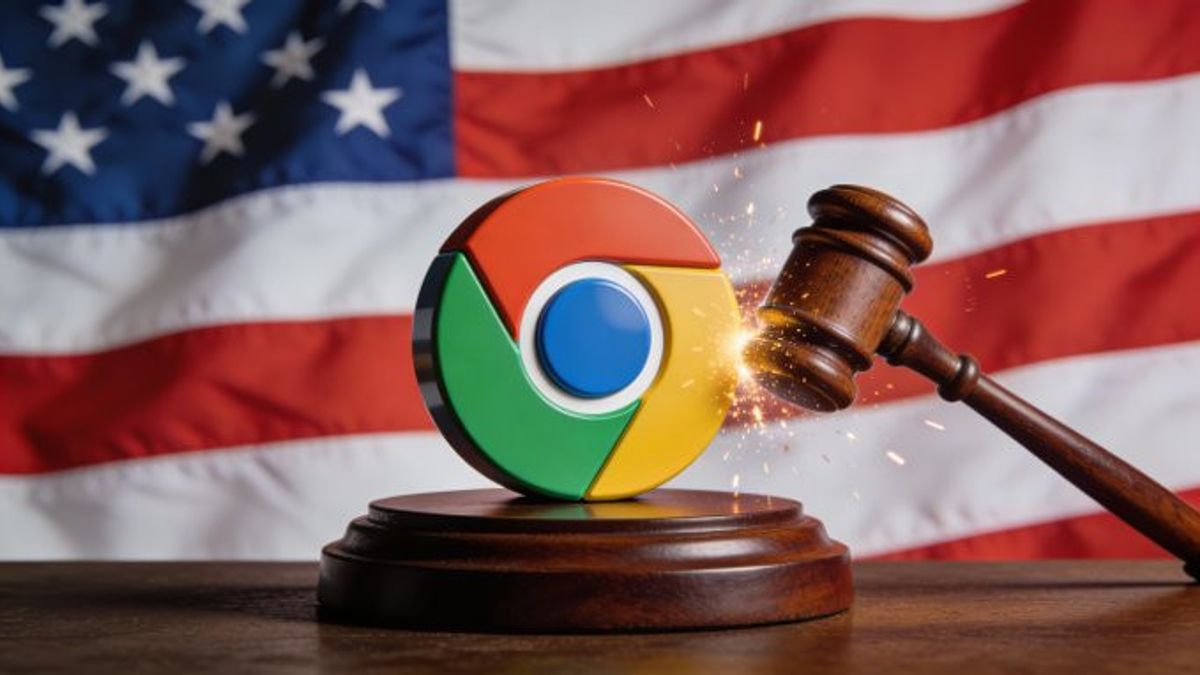


JAKARTA - The United States Department of Justice (DOJ) has taken legal action in the Google search engine monopoly case. After Google appealed the court's ruling that the company violated competition rules, the DOJ is now appealing the ruling on the grounds that the sentence imposed was too light.
Last month, Google officially appealed the ruling in the search monopoly case, insisting that the company was innocent. However, the DOJ is in an entirely opposite position. The US government considers the ruling to be insufficiently firm to crack down on Google's dominance in the online search market.
The DOJ has filed a notice of a cross-appeal plan against the court's decision. In the previous ruling, the judge decided not to force Google to remove the Chrome browser, although the company was required to share search data with competitors and stop certain exclusive agreement practices in the search business.
However, the ruling could still change, depending on the outcome of the appeal process currently being filed by both parties.
A number of US states are reportedly joining the DOJ in this appeal process. According to a Bloomberg report, the DOJ will not be alone in pushing for harsher penalties against Google.
For the record, last year the DOJ explicitly asked that Google be forced to sell Chrome as part of sanctions for monopoly violations. However, the request was rejected by Judge Amit Mehta.
At that time, Mehta stated that the lawsuit was considered excessive. "The plaintiffs have gone too far by demanding a forced divestment of these key assets, which Google is not using to carry out illegal restrictions," Mehta said in his ruling.
Now, there are two opposing positions. On the one hand, Google wants a lighter sentence, or even no sentence at all. On the other hand, the DOJ together with a number of US states actually urges that sanctions against Google be tightened, including reopening the discussion of releasing Chrome.
With the appeal from both parties, the legal process in this case is expected to continue for a long time. Even though the lower court has issued a ruling, the legal saga related to Google's dominance in the search engine market is far from over.
There is no certainty when the two parties will return to court to discuss the appeal. However, one thing that is considered quite clear, the final result of this case is still potentially changing, and it is unlikely that Google will come out of this case without any consequences at all.
The English, Chinese, Japanese, Arabic, and French versions are automatically generated by the AI. So there may still be inaccuracies in translating, please always see Indonesian as our main language. (system supported by DigitalSiber.id)
Most Popular Tags
#Prabowo Subianto #donald trump #firearm #8791 #giias 2026Popular


