
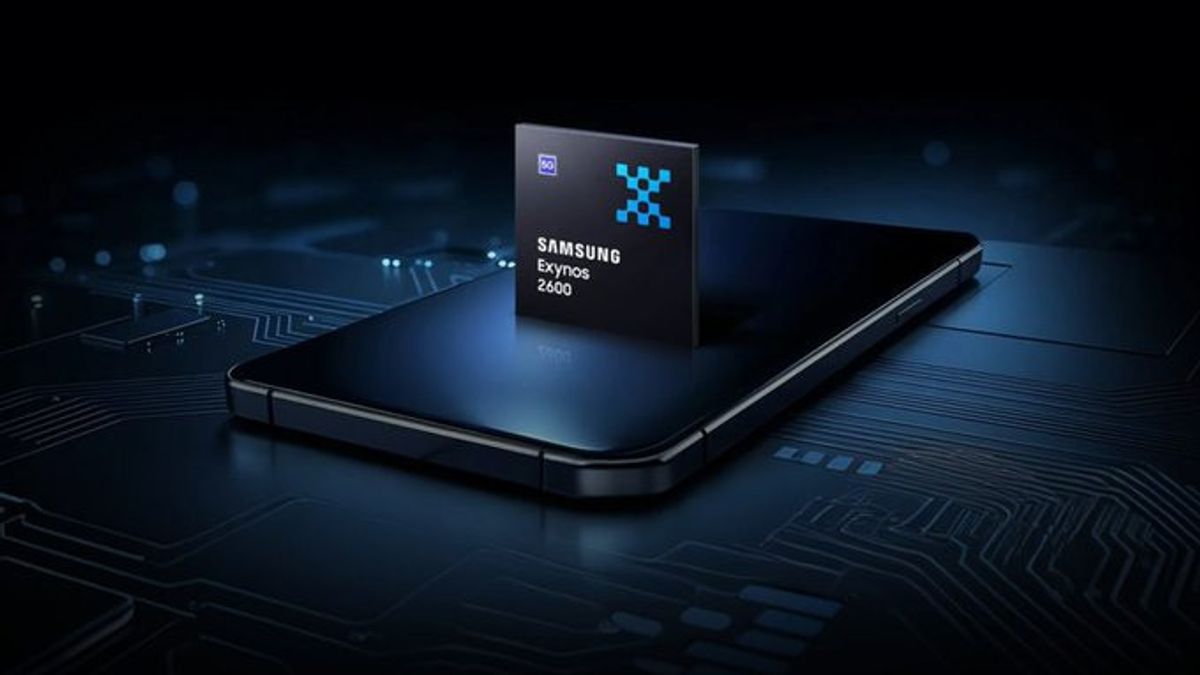


JAKARTA - Concerns have emerged about power efficiency in some upcoming Samsung Galaxy S26 variants that are expected to use the Exynos 2600 chipset. Based on reports from technology leaker Erencan Yilmaz and South Korean media, The Elec, the Exynos 2600 processor does not have an integrated modem inside its unit.
Instead, the chipset will use an Exynos 5410 type external modem, an information that was later confirmed officially by Samsung Semiconductor officials to the Android Authority.
Samsung's move to use an external modem on the Exynos 2600 is an anomaly compared to the current chipset trend. Previously, chipsets such as the Exynos 2500 used in the Galaxy Z Flip 7 and the Exynos 2200 in the Galaxy S22 series have implemented an integrated design, in which the modem is built directly into the processor for better efficiency.
Technically, external modems are usually considered less efficient in power usage compared to integrated designs, which could potentially lead to shorter battery life for Galaxy S26 and S26 Plus users later.
Even so, there are technological factors that may be able to balance this power consumption. The Exynos 2600 is scheduled to be the first smartphone chip built on a smaller 2nm fabrication process, surpassing the Snapdragon 8 Elite Gen 5 which still uses a 3nm design.
With this more advanced fabrication process, the central processing unit (SoC) is expected to work much more efficiently, so that the power savings from the main components can likely cover the higher energy requirements of the external modem. In addition, if the external modem is also made with a smaller manufacturing process, the impact on battery waste can be minimized.
Samsung's decision to separate the modem from the main chip is likely influenced by physical space limitations as well as efforts to reduce manufacturing costs, given that making a single chip that is too large is usually much more expensive.
Behind the issue of efficiency, the Exynos 2600 still carries high specifications, including a 10-core CPU, an AMD GPU that has been upgraded with "neural super-sampling" technology, a highly powered artificial intelligence processing unit (NPU), and Heat Path Block technology to optimize cooling.
Now, the public is just waiting to see if the innovation is able to provide competent battery life performance when the device is actually used in mobile connectivity in the real world.
The English, Chinese, Japanese, Arabic, and French versions are automatically generated by the AI. So there may still be inaccuracies in translating, please always see Indonesian as our main language. (system supported by DigitalSiber.id)


