
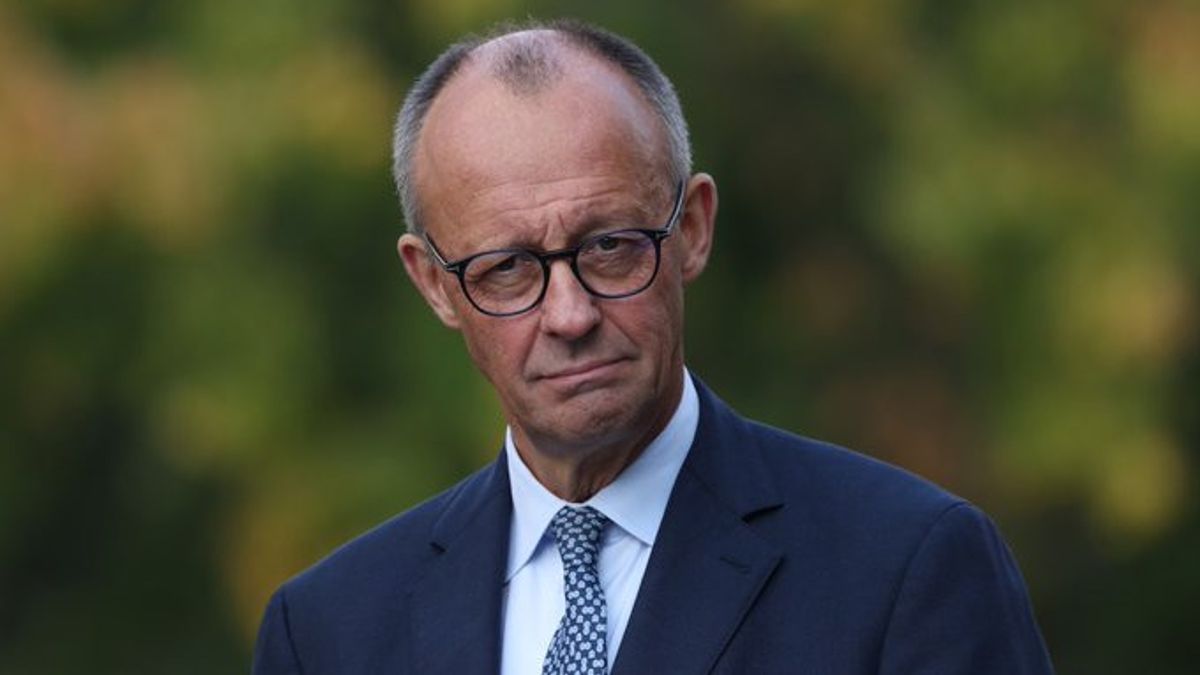


JAKARTA - The German parliament's lower house (Bundestag) experienced a massive email outage on Monday, December 15 in what officials suspected was a cyber attack. The incident coincided with high-level US-Ukrainian negotiations held by German Chancellor Friedrich Merz.
According to three senior lawmakers, lawmakers were unable to access their email accounts for more than four hours. One lawmaker said the "attack" began when Ukrainian President Volodymyr Zelenskyy entered the Bundestag to hold talks with the President of Parliament, Julia Klöckner.
A government source said he suspected the outage was a retaliatory cyberattack following Germany's decision to recall its ambassador to Russia to the foreign ministry last week over alleged sabotage incidents and hybrid warfare.
"We know where it came from," a government source said. A government spokesman declined to comment.
The email disruption came shortly after talks between Zelenskyy and Donald Trump's special envoy, Steve Witkoff, along with US President's son-in-law Jared Kushner, ended at the German Chancellor's office - just a few hundred meters from the Bundestag - on a possible settlement to end Russia's war in Ukraine.
The incident comes after Berlin on Friday 12 December summoned the Russian ambassador to face accusations of sabotage operations, cyber attacks and interference in elections.
The German government has also accused Moscow of running a disinformation campaign aimed at sowing "discord" in German society.
"This targeted manipulation of information is one of a range of Russian activities aimed at undermining confidence in institutions and democratic processes in Germany," a foreign ministry spokesman said last week.
Chancellor Merz has repeatedly warned that Russia is effectively already at war against Europe - and Germany in particular - through daily cyber attacks and acts of sabotage.
"We are not at war, but we are also no longer living in peace," Merz said on Saturday, December 13.
The Bundestag has previously been targeted by Russian hackers. In 2015, British intelligence said "large amounts of data were stolen" in an attack that affected the email accounts of several MPs as well as then-Chancellor Angela Merkel.
The UK's National Cyber Security Centre (NCSC) said it assessed "with high confidence that the GRU was almost certainly responsible."
Last week, the German government said a disruption to its air traffic control in August 2024 could now be "definitely" attributed to the Russian hacking group "Fancy Bear" and the GRU, Russia's military intelligence service.
Officials have also accused Moscow of trying to influence this year's federal election and undermine candidates including Merz by spreading disinformation through a group called "Storm 1516". The Russian Embassy in Berlin has denied the allegations.
The English, Chinese, Japanese, Arabic, and French versions are automatically generated by the AI. So there may still be inaccuracies in translating, please always see Indonesian as our main language. (system supported by DigitalSiber.id)
Most Popular Tags
#Prabowo Subianto #donald trump #Febrie Adriansyah #8791 #giias 2026Popular


