
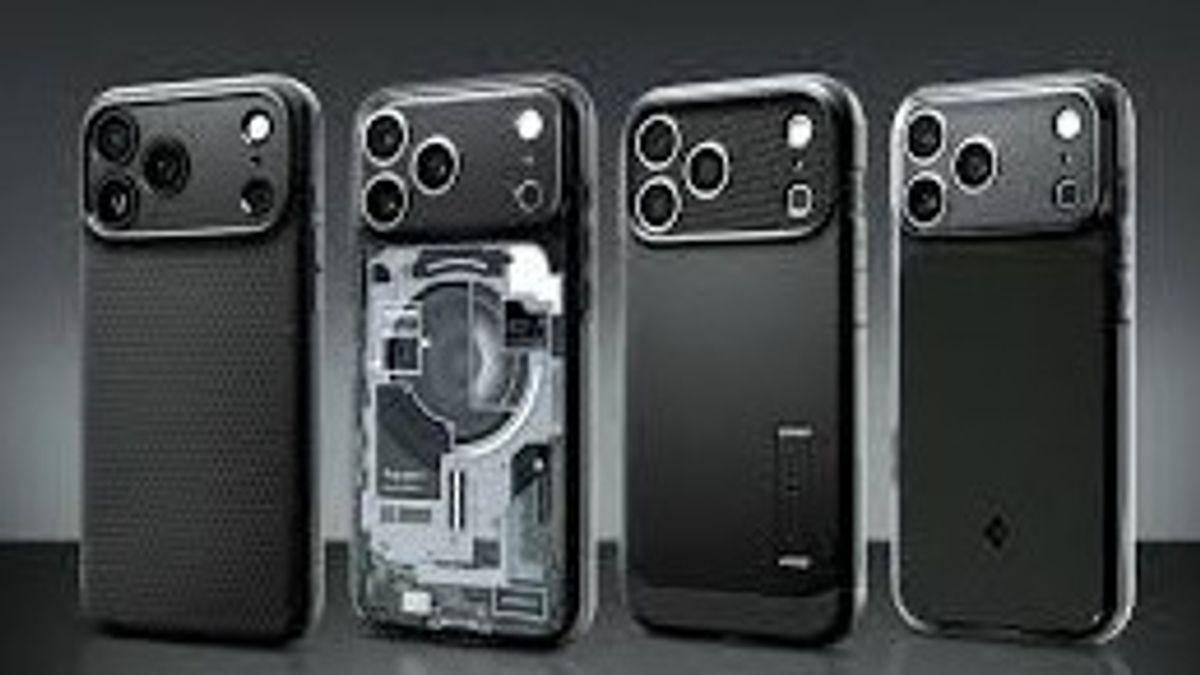


JAKARTA - A new leak from Weibo reveals that Apple is developing an iPhone casing with a touch sensor layer, which serves as a secondary interface for the future iPhone Pro model. If true, this innovation will make casing not only a shield, but also part of the device's input system.
With the iPhone 17 series, Apple introduced a TechWoven casing, which offers higher durability and a premium display through woven technical fabric materials. But it seems that Apple hasn't stopped there yet.
According to leaker Weibo Instant Digital, Apple is now working on a casing equipped with an integrated touch sensor. This case is said to be making the iPhone Pro line even more 'Pro' thanks to additional input capabilities. Although the leak is minimal in detail, strong clues come from Apple patent documents in 2024.
In the 2024 patent application, Apple describes an iPhone casing designed to function as an input surface instead of just as a protector.
SEE ALSO:
-
 | TEKNOLOGI
Red Dead Redemption akan Hadir di Lebih Banyak Platform pada 2 Desember
18 November 2025, 18:35 -
 | TEKNOLOGI
Bitcoin Terjun ke Rp1,5 Miliar, Investor Lebih Pilih Simpan Uang Tunai
18 November 2025, 17:35 -
 | TEKNOLOGI
Waspada, Penjahat Siber Sebarkan Phishing di Aplikasi Samsung Members
18 November 2025, 17:05 -
 | TEKNOLOGI
Palo Alto Networks Ungkap Kampanye Triad Smishing Makin Luas dan Berbahaya
18 November 2025, 16:35

Patent documents state that touch sensitive areas in casings, both using capacitive sensors and pressure sensors, can be used to perform functions usually handled by physical buttons on iPhones.
When the casing is installed, the iPhone can detect it and switch the button function so that the tap, pressure, or gesture on the casing can trigger the system's command.
The patent also outlines communication methods between casings and devices, including identification and signal transfer via NFC. Some versions even allude to biometric input support, allowing Touch ID fingerprint sensors embedded in casings to open specific access on iPhones "an approach that makes casing an extension of device control."
This development comes amid rumors that Apple is preparing an iPhone without bezels to celebrate iPhone's 20th anniversary. The model is said to carry a radical design with a full curved screen on all four sides, so it is estimated that there will be no more room for mechanical buttons.
Another report says Apple may switch to a capacitive-based solid-state button system. If true, the presence of touch sensitive casings will make more sense as it can move controls such as the volume or camera button to a wider surface area in the casing.
In addition, this design can reduce the touch of accidentally on the edge of the screen if the entire front of the device becomes a full screen.
Although the idea of casings with integrated touch zones sounds futuristic, so far everything is still in the leak and speculation stage. There is no official confirmation from Apple, so it is not clear whether this technology will actually come to the next generation of iPhones.
The English, Chinese, Japanese, Arabic, and French versions are automatically generated by the AI. So there may still be inaccuracies in translating, please always see Indonesian as our main language. (system supported by DigitalSiber.id)


