
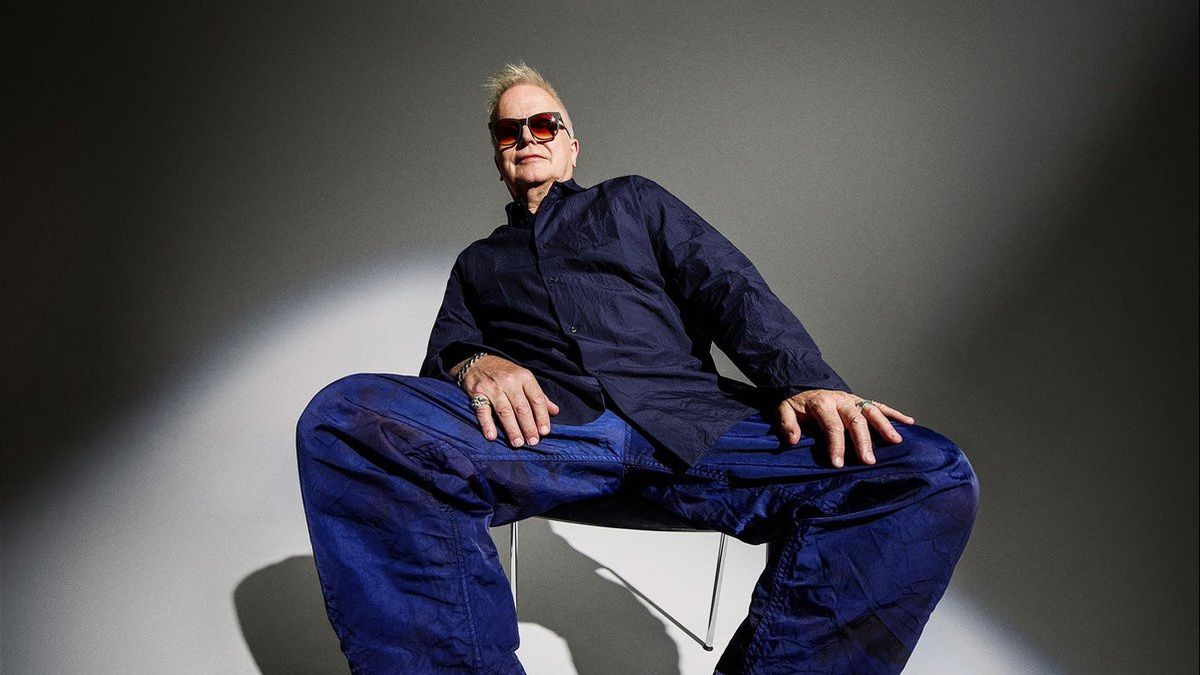


JAKARTA ChatGPT, a chatbot made by OpenAI, was declared to have violated Germany's copyright law after being proven to reproduce the lyrics of a number of well-known musicians, including legendary German singer Herbert Gr\"omeyer.
The ruling was issued by a regional court in Munich on Tuesday 11 November, in a closely monitored case related to the use of copyrighted material to train AI models.
The court found that OpenAI trains its language model using content from nine copyright-protected German songs, including popular Gr\"omeyer songs such as M\"nner and Bochum.
This case was filed by GEMA, a German music rights institution that represents composers, songwriters, and publishers. This step is part of the efforts of global artists to oppose the practice of data screening by AI companies.
SEE ALSO:
-
 | TEKNOLOGI
PlayStation Gelar State of Play Khusus untuk Pengembang Gim Jepang Gim Asia
11 November 2025, 19:08 -
 | TEKNOLOGI
Gim MySims: Cozy Bundle akan Hadir di PS dan Xbox Series pada 18 November
11 November 2025, 18:35 -
 | TEKNOLOGI
Blibli Hadirkan Apple Shop Pertama, Tawarkan Ekosistem dan Pengalaman Digital Apple
11 November 2025, 18:05 -
 | TEKNOLOGI
Dukung Program Kemendikdasmen, Canva Siap Perluas Akses Pembelajaran Digital ke Daerah 3T
11 November 2025, 17:35 -
 | TEKNOLOGI
Canva dan Kemendikdasmen Perkuat Kolaborasi Digitalisasi Pendidikan
11 November 2025, 17:05
Judge Elke Schwager ordered OpenAI to pay compensation for the use of copyrighted material, although the amount of compensation has not been disclosed.
"We hope this decision opens the way for dialogue with OpenAI on how to provide fair compensation for copyright holders," said GEMA legal adviser Kai Welp.
In its defense, OpenAI argues that its AI model does not store or copy training data specifically, but rather 'studies the pattern' of the entire dataset used. The company also states that the results of ChatGPT output are generated based on the user's prompt, so the responsibility should be on the user, not the developer.
However, the court rejected the argument. In its decision, it was stated that both the process of 'memorizing' (memorization) by the model and the reproducibility of the lyrics in the ChatGPT output both violated the right to exploit copyright.
This decision has the potential to set an important legal precedent in Europe on how AI companies can use copyrighted material.
"Internet is not a supermarket, and human creative work is not a free material that can be taken at will," said GEMA CEO Tobias Holzmueller. Today we enforce the principle that even developers of AI tools such as ChatGPT must comply with copyright law.
OpenAI said it did not agree with the decision and was considering the next legal steps.
"We do not agree with this decision and will review our options," said an OpenAI spokesperson. This case includes only a small number of song lyrics and does not affect millions of users and developers in Germany who use our technology every day.
Earlier this year, some of Bollywood's big music labels also filed a similar lawsuit against OpenAI in a New Delhi court. They accused the company of using voice recordings without permission to train its AI model signaling growing global concerns over copyright infringement by AI technology.
The English, Chinese, Japanese, Arabic, and French versions are automatically generated by the AI. So there may still be inaccuracies in translating, please always see Indonesian as our main language. (system supported by DigitalSiber.id)
Most Popular Tags
#Prabowo Subianto #donald trump #Febrie Adriansyah #8791 #giias 2026Popular


