
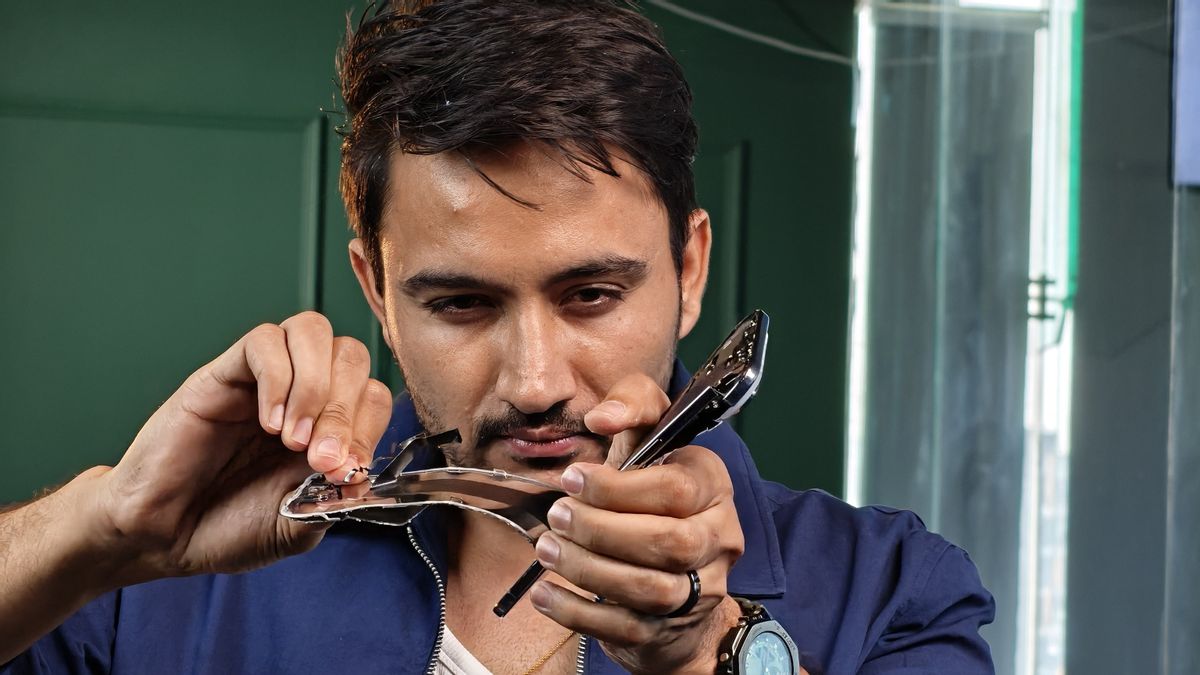


JAKARTA - The iPhone Air has managed to avoid a potential "bendgate" scandal, after a YouTuber used a machine to test the latest model in a typical destruction-themed video.
As with the annual iPhone lineup itself, YouTube videos capitalizing on the thrill of destroying iPhones and other hardware are inevitable. However, for the iPhone Air, they may be facing a challenge.
A video from the JerryRigEverything channel on Saturday, September 20th, one of the more methodical content creators in the genre, conducted a series of durability tests on Apple's thinnest model yet. Apple's claims about the iPhone Air's durability seem to align with the reality on YouTube.
The destruction video begins with the YouTuber smearing ice cream on the front of the iPhone. This is a prelude to using a Mohs hardness tester on the front glass to test the new Ceramic Shield 2.
"Glass typically scratches at a level 5 or 6, while sapphire scratches at a level 8 or 9," explains the narration in the video, as the iPhone Air's screen is attacked. No scratches were visible on level 6, and the scratches on level 7 were admitted by the host to be "barely" visible.
The video then moves on to a close-up examination of the iPhone Air with a knife. Scratches and nicks appear on the sides, as expected, but the sound from scraping the iPhone Air's titanium exterior is considered less harsh than on the aluminum model.
While the back glass and camera lens were unscratched, the plastic diffuser for the flash received numerous knife marks.
A brief session was also conducted using a lighter on the front glass. However, after cleaning, there was no apparent damage to the protective coating.
Stronger Than Expected
The second half of the video moves on to the main event: the bend test. Because titanium is stronger and more elastic than aluminum, there were high hopes for the iPhone Air's performance.
Grasping the edges of the iPhone Air and placing both thumbs in the middle, considerable effort was made to bend it by hand. After trying to bend it in both directions, the iPhone did bend under pressure, but returned to its original shape when released.
Of course, without the promise of excessive destruction that is the allure of these videos, a backup plan was employed.
Placed between two poles and connected to a crane scale, a chained pulley kept the center of the iPhone out of alignment with its edges. After several cracks, the iPhone finally bent enough to shatter the front glass at 216 pounds (about 97 kg).
When removed, the back glass was remarkably intact, but the titanium frame had a significant dent in the center. Even more remarkably, the screen still functioned after the ordeal.
While clearly excessive, the resulting damage did offer new data for more reasonable use.
That 216 pounds of pressure was concentrated in the center of the iPhone Air, whereas someone sitting on it in their back pocket would distribute the weight across the entire device. Clearly, the risk of damage from sitting on it was less than before.
The English, Chinese, Japanese, Arabic, and French versions are automatically generated by the AI. So there may still be inaccuracies in translating, please always see Indonesian as our main language. (system supported by DigitalSiber.id)
Most Popular Tags
#Prabowo Subianto #donald trump #earthquake #independence day #8791 #hut riPopular


