


JAKARTA - Kaspersky's study entitled "Improving resilience: cybersecurity through immune systems," reveals that 43% of security professionals feel their safety stacks are too complex and take time to maintain.
This complexity is often caused by the use of several security solutions from various vendors, each of which has its own management interface and operational requirements.
Respondents from Russia and several countries in Europe, Latin America, Asia-Pacific, the Middle East, Turkey, and the African region admit that this hampers their ability to respond quickly to threats.
Furthermore, 42% of organizations experienced budget swelling due to overlapping solutions. This redundancy not only increases costs but also complicates resource allocation and strategic planning.
The problem of compatibility exacerbates this difficulty, as 41% of respondents stated that they cannot automate the security process effectively because their devices are less integrated, resulting in manual intervention and increased human error risk.
In addition, 39% are experiencing difficulties with inconsistent threat visibility, as data collected from various vendors often fails to correlate smoothly.
"This complexity can create critical blind spots, making it difficult to maintain comprehensive threat visibility and respond to effective risks," said Ilya Markelov, Head of Unified Platform Product Line at Kaspersky.
BACA JUGA:
-
 | TEKNOLOGI
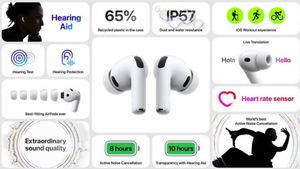
Live Translation Kini Bisa Dipakai di AirPods 4 dan AirPods Pro 2
10 September 2025, 10:05 -
 | TEKNOLOGI
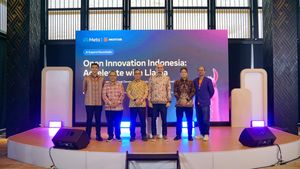
Hacktiv8 Gandeng Meta dan Komdigi dalam Kembangkan Talenta AI Indonesia
10 September 2025, 11:35 -
 | TEKNOLOGI
Bocoran Samsung Galaxy S26 Ultra Ungkap Kamera yang Makin Menonjol
10 September 2025, 12:05

However, the majority of organizations continue to operate in the current 72% multi-vendor environment managing security in some vendors. Interestingly, almost half believe that one cybersecurity provider can meet all their needs adequately.
However, only 28% have adopted a single vendor approach in practice, reflecting a cautious approach driven by concerns of excessive dependence on a single supplier or risk that could come from a lock-in vendor.
The English, Chinese, Japanese, Arabic, and French versions are automatically generated by the AI. So there may still be inaccuracies in translating, please always see Indonesian as our main language. (system supported by DigitalSiber.id)
Most Popular Tags
#Prabowo Subianto #donald trump #firearm #8791 #giias 2026Popular


