
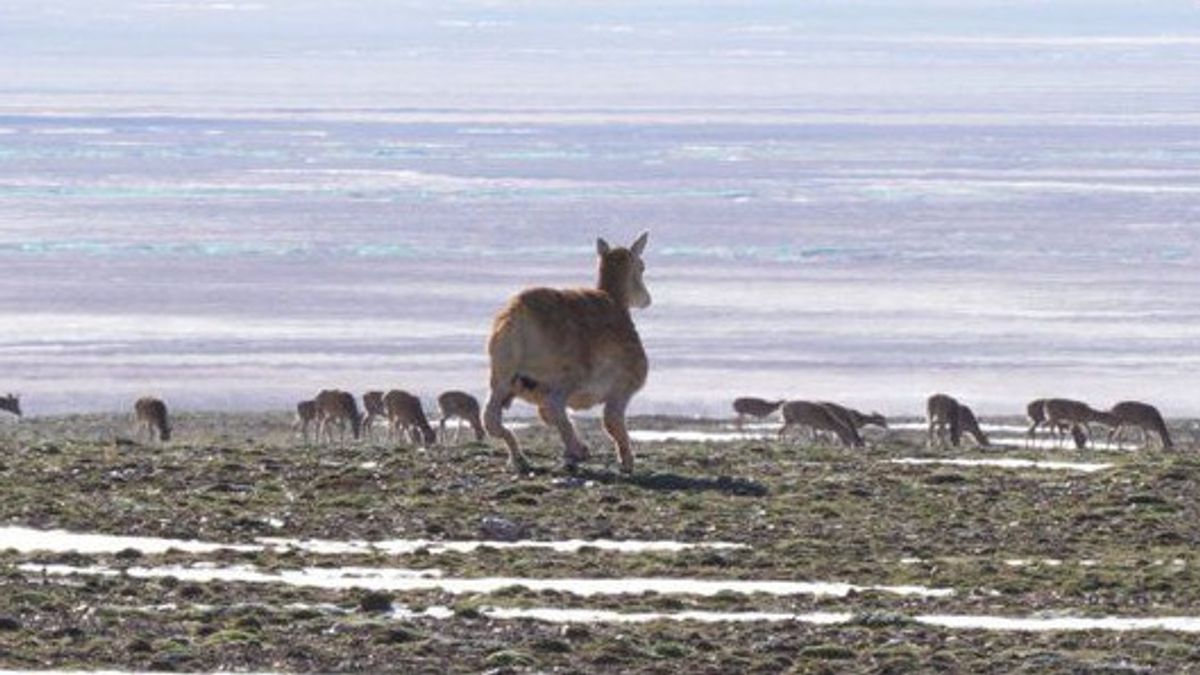


JAKARTA - For the wolves in Tibet, China's first "antivelope" may seem as lucrative as the originalantilop herd roaming the hard highlands. However, this "catch" is part of Beijing's surveillance system that now reaches the most remote places in the region.
With eyes like deer and thick brown fur, thisantilop robot is almost indistinguishable from the original envelope. Equipped with 5G technology and artificial intelligence (AI) vision system, this robot scans the Hoh Xil plateau with its sensor, as shown in footage from China's state news agency Xinhua.
Developed by Xinhua, China's Academy of Sciences, and Hangzhou-based DEEP Robotics, this robot anenvelope is equipped with 5G connectivity and an AI vision system, enabling real-time monitoring of migration, feeding, and mating patterns of the endemic rare antenvelope species in Tibet.
China subsidized tens of billions for its robotic industry and hosted the 2025 World Robot Conference, which ended on Tuesday, August 12.
The 5G network arrived in Tibet in 2019, according to Chinese government documents, and the southwest region has reached 1 million users by 2022. With the completion of the base 5G station in the city of Gogmo by the end of 2023, each district in Tibet has now been covered, according to state media reports.
SEE ALSO:
-
 | TEKNOLOGI
Bisa Berbagi dengan Mudah, Begini Cara Buat dan Gunakan Kode Spotify
12 Agustus 2025, 19:35 -
 | TEKNOLOGI
Analis Prediksi Bitcoin akan Menutup Bulan Agustus dengan Kenaikan
12 Agustus 2025, 17:35



In addition to sending live images and tracking data for rareantilop species, Tibet's 5G infrastructure now supports various AI applications, ranging from small drones that can operate in areas that radar cannot reach, to telemedicine consultations and smart grazing technology, according to China's state media reports.
China has invested heavily in Tibet, increasing the role of this sometimes restless region in China's President Xi Jinping, Belt and Road's flagship infrastructure initiatives by strengthening trade relations with Central Asia, as well as tightening surveillance of its population and expanding Beijing's digital footprint towards India, a neighboring rival country.
Analysts and human rights activists accuse Beijing of using "grey zone" tactics against countries around the Tibetan highlands. A July report from the think tank Center for Strategic and International Studies documented cases of China utilizing local telecommunications networks to spy on incident residents living in Nepal, as well as cases of cyber theft.
The English, Chinese, Japanese, Arabic, and French versions are automatically generated by the AI. So there may still be inaccuracies in translating, please always see Indonesian as our main language. (system supported by DigitalSiber.id)
Popular


