

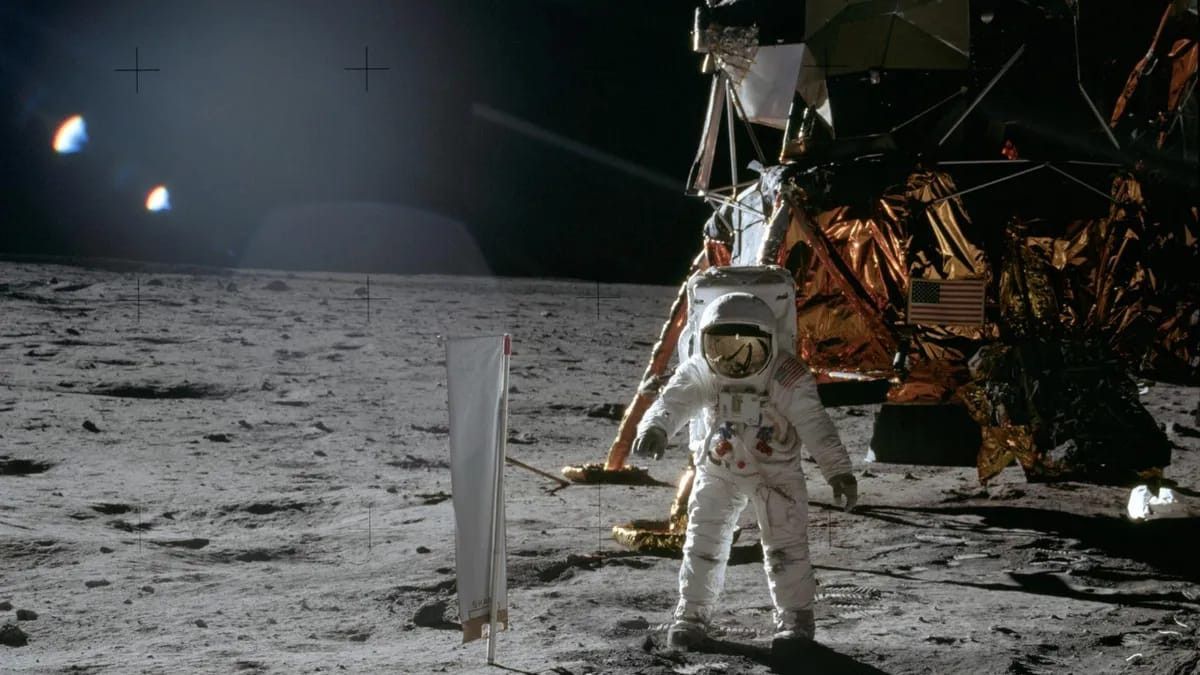


JAKARTA The latest study from a number of scientists reveals that there is a dangerous risk of lunar earthquakes in the future. This earthquake is considered to endanger landers to infrastructure on the surface of the Moon.
The study was made by geophysicists from the University of Maryland and published on July 30 in the journal Science Advances. After examining the Apollo 17 landing site in the Taurus-Littrow valley, they managed to find the worst lunar earthquake in the past.
This earthquake rocked the Taurus-Littrow region for tens of millions of years. According to research results, the earthquake was caused by an underground fault that may still be active today.
This fracture is expected to endanger various landing missions in the future. After taking into account its chances, the lunar earthquake near this active fault is expected to occur on a certain day of around 1 in 20 million years.
Although the chances are small, the risks will increase over time. Nicholas Schmerr, one of the study's authors, explained that in a 10-year lunar mission, the risk increased to around 1.5,500.
This cumulative risk is very important to pay attention to, especially as NASA plans to land humans on the Moon and create a special human habitat on the natural satellite. Schmerr also warned space agencies to be careful in building infrastructure on the Moon.
SEE ALSO:
-
 | TEKNOLOGI
Google Dapat Waktu Tiga Minggu untuk Rombak Toko Aplikasi Android
04 Agustus 2025, 20:05 -
 | TEKNOLOGI
Huawei MatePad Pro Terbaru Mulai Kaburkan Batas Antara Tablet dan PC
05 Agustus 2025, 07:05


"We want to ensure our lunar exploration is carried out safely and investment is carried out in a mature way," Schmerr said, citing Space on Tuesday, August 8.
Schmerr also advised all space agencies not to build facilities right on steep cliffs or newly active faults. The further away from that location, the smaller the risk.
To test their hypothesis, the researchers modeled a hypothetical 3.0 magnitude lunar earthquake in the Lee-Lincoln fault. Simulations show that the shock from the earthquake was strong enough to shift the boulder and trigger landslides.
Although the earthquake measuring 3.0 is considered small on Earth, the impact will be different on the Moon. This shock has the potential to damage the main infrastructure built on the surface. Therefore, careful location selection can significantly reduce hazards.
The English, Chinese, Japanese, Arabic, and French versions are automatically generated by the AI. So there may still be inaccuracies in translating, please always see Indonesian as our main language. (system supported by DigitalSiber.id)
Most Popular Tags
#Prabowo Subianto #donald trump #firearm #8791 #giias 2026Popular


