
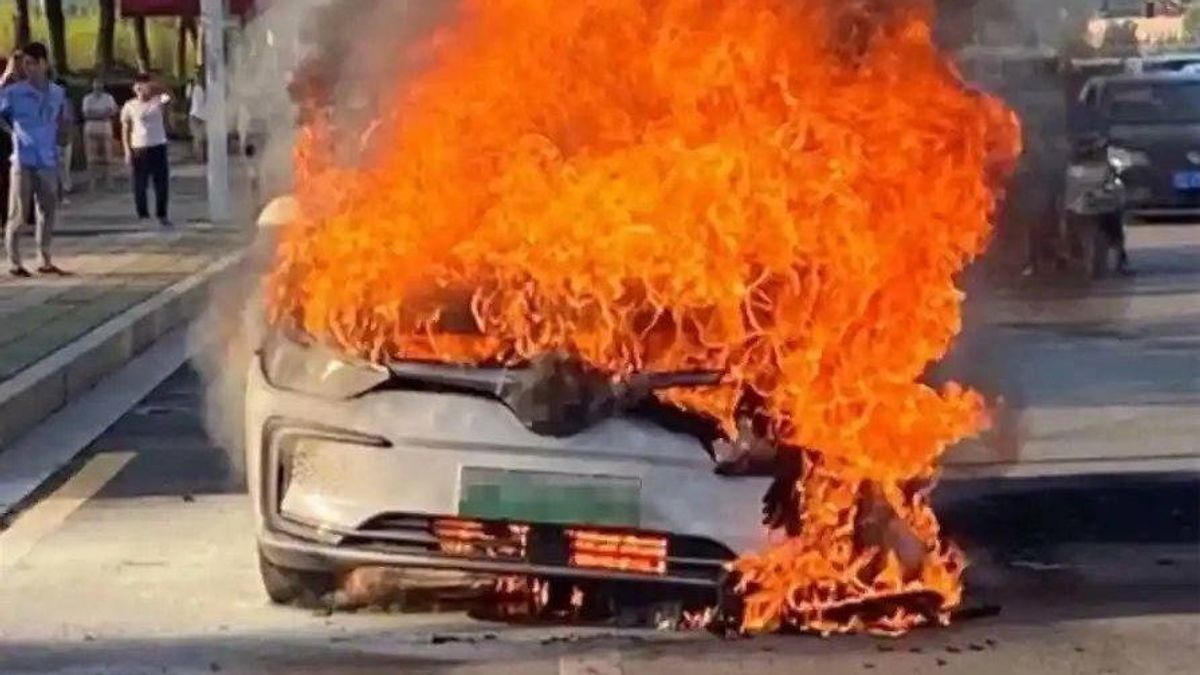


JAKARTA A tragic accident involving the Xiaomi SU7 Standard electric sedan occurred on March 29 on the Dezhou-Shangrao Toll Road (G0321), precisely in the Chiqi region near Tongling, Anhui Province, China. Three female students were killed in this incident while on their way to the civil service exam.
This is the first fatal case Xiaomi's first electric vehicle has recorded since its launch, and immediately sparked widespread concerns about the safety of autonomous driving technology.
The three victims were university students who wanted to go to Chizhou City to take CPNS exams. They used the Standard SU7 variant of the basic model of the SU7 line purchased in May 2024 and only received on October 19, 2024.
This variant uses a camera-based Navigate on Autopilot (NOA) system, without the support of LiDAR sensors such as those in the Pro and Max variants.
The accident occurred on a road that was under repair. Traffic was diverted to a narrower lane, which most likely contained debris or a construction barrier. This factor is thought to have contributed to the deadly collision.
Data from the vehicle system that Xiaomi handed over to the police provides an overview of the chronology as follows:
22:27:17: NOA system activated, vehicle speed recorded 116 km/hour.
01:44:24: The system detected obstacles on the road, issued warnings and began to slow down.
01:44:25: The driver took over manual control, swerved the steering wheel 22 degrees to the left, and started braking 31%.
At 22:44:26: The steering wheel was corrected to the right by 1 degree, and the braking was increased to 38%.
At 22:44:26:24:28: Vehicle crashed into a concrete barrier at a speed of 97 km/h. This collision was followed by a severe fire.
Several social media reports, including from the mother of one of the victims through the Douyin app, said that the car door was locked automatically after the collision, trapping the victims inside when the car caught fire. Xiaomi has not been able to verify this, although it states that the vehicle is equipped with an emergency button to unlock the door from within. However, it is not clear whether the button works in an emergency situation such as a fire.
Xiaomi also stated that the current NOA system has not been able to recognize small objects such as traffic cones or water barriers, which are thought to be the cause of the system's failure to detect obstacles before the collision occurs.
Xiaomi formed an investigative team on March 30 and submitted vehicle data to the police the day after. Xiaomi CEO Lei Jun expressed his deep condolences and promised to be transparent and provide support to the families of the victims.
SEE ALSO:
-
 | TEKNOLOGI
Asteroid YR4 Hampir Tabrak Bumi, Ukurannya Lebih Gede dari Perkiraan!
07 April 2025, 04:30




The company denied rumors that the vehicle had been secured and taken to Beijing, saying it had not even had direct access to an accident. Xiaomi also explained that the vehicle was in NOA assistance mode at high speed before the collision, and the system had warned and slowed down the vehicle's speed before a fatal collision.
Regarding the source of the fire after the accident, Xiaomi stated that it is likely that the fire originated in the cabin, not from the vehicle battery. They also confirmed that the automatic emergency brake system (Automatic Emergency Braking - AEB) was inactive because the water barrier was not included in the list of objects that could be detected by the current system.
The police are still investigating road conditions, driver decisions, and overall vehicle system performance. This tragedy sparked important debates over the reliability of autonomous driving technology, the effectiveness of emergency safety features, and more comprehensive training needs for modern electric vehicle users.
This accident is also a big test for Xiaomi in maintaining its reputation and credibility as a new player in the global electric automotive industry. Going forward, the results of this investigation will be an important reference in perfecting auto driving technology and safety features in next-generation vehicles.
The English, Chinese, Japanese, Arabic, and French versions are automatically generated by the AI. So there may still be inaccuracies in translating, please always see Indonesian as our main language. (system supported by DigitalSiber.id)
Most Popular Tags
#Prabowo Subianto #donald trump #Febrie Adriansyah #8791 #giias 2026Popular


