

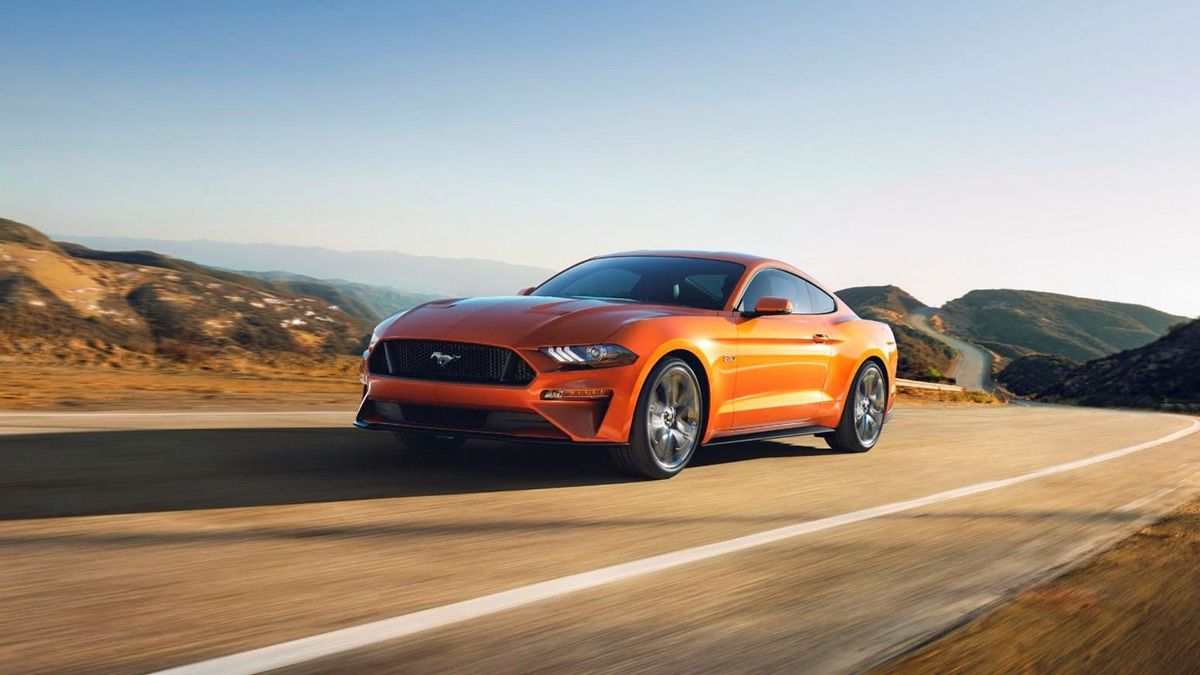


JAKARTA - A recent study from the Insurance Institute for Highway Safety (IIHS) assessed that car ads that highlight performance also contribute to the speeding culture in the United States. On the other hand, the institution was judged to have not fully highlighted another factor that is said to have a much greater influence, namely the design of the highway.
In the report, IIHS revealed that automotive manufacturers are now increasingly marketing aspects of speed, power, traction, to the performance capabilities of vehicles, while safety-related messages are increasingly rarely displayed. Scenes of drifting with thick smoke, aggressive maneuvers, to cinematic off-road action are said to have the potential to shape the perception that driving fast is normal.
Launching from Carscoops, Saturday, May 16, IIHS recorded more than 11,000 people died in speed-related accidents in the United States throughout 2024. The organization confirmed that speed is indeed one of the main factors in traffic accident fatalities.
The researchers analyzed nearly 3,000 television and digital ads. The results, the performance theme appeared in 42.7 percent of ads, while safety messages were only found in 8.1 percent of promotional materials. According to IIHS, this trend reinforces the American public's obsession with speed.
However, the study also acknowledges that there is no proven direct causal relationship between vehicle advertising and people's driving behavior. Basically, the study only highlights the possibility of an influence on the way people drive.
On the other hand, IIHS has actually long known that another factor that is considered more real affects driver behavior, namely road design. The organization has previously repeatedly supported the concept of Safe System as well as changes to road infrastructure to reduce dangerous driving behavior.
Traffic engineers have long understood that drivers tend to adjust their speed to the design of the road, not just follow the numbers on the speed limit sign. The United States itself has for decades built wide arterial roads with many lanes, long visibility, and minimal visual obstacles.
This condition makes many roads feel safe to drive at high speeds, even though the speed limit is only around 35 mph. As a result, traffic flows often run up to 50 mph. Therefore, there is a view that blaming car ads alone feels inappropriate.
If the system and the environment do shape driver behavior, then highway designs that resemble runways deserve at least as much, if not more, attention than 30-second ads that feature cars aggressively turning.
The English, Chinese, Japanese, Arabic, and French versions are automatically generated by the AI. So there may still be inaccuracies in translating, please always see Indonesian as our main language. (system supported by DigitalSiber.id)
Most Popular Tags
#Prabowo Subianto #donald trump #2026 World Cup #Febrie Adriansyah #8791Popular


