



JAKARTA - Ford Motor Company is reportedly negotiating with Chinese automotive giant BYD. The US-based manufacturer wants to explore a battery supply partnership for a number of hybrid vehicle models owned by the US-based manufacturer.
A Wall Street Journal report on January 15 said talks between the two companies were still in the early stages and had not reached a final agreement. A number of cooperation schemes are said to be under discussion, one of which is an option for Ford to send batteries supplied by BYD to its manufacturing facilities outside the United States.
If this collaboration is realized, Ford has the opportunity to gain access to battery technology from one of China's largest car manufacturers. Where, BYD is known to have cost efficiency and strong manufacturing capabilities.
This potential partnership is also in line with Ford's recent strategic move to reduce the pace of pure electric vehicle expansion, while increasing investment in hybrid vehicles. Last month, Ford publicly stated that it would shift its focus from fully electric vehicles to hybrid models.
The company targets its global sales composition in 2030 to be dominated by hybrid vehicles, plug-in hybrids, and electric vehicles to account for about half of total sales. As reported by Carnewschina, Saturday, January 17.
On the other hand, BYD itself is known as a big player in the battery industry before developing into a global-scale vehicle manufacturer. The company built a foundation through the battery manufacturing business, including for hybrid vehicles.
Currently, BYD's battery production is still concentrated in China, but the company continues to expand capacity through overseas facilities to strengthen its penetration of Southeast Asia, Europe, and Brazil. Bernstein Research estimates that BYD's battery shipments rose 47 percent last year, reaching 286 gigawatt-hours.
Although BYD has previously produced batteries for commercial vehicles at its bus manufacturing facility in California, the company has not produced passenger vehicle batteries in the United States. Meanwhile, Ford is facing challenges from slowing demand for electric vehicles.
Last month the company announced a strategy adjustment and estimated that it would have to bear costs of up to 19.5 billion US dollars, mainly related to its electric vehicle operations. In line with this change of direction, Ford is said to be expanding its range of gasoline-powered vehicles and increasing the choice of hybrid models.
In the end, this will increase the need for special hybrid batteries. Ford's hybrid vehicle sales have shown a positive trend, with fourth-quarter sales last year growing 18 percent year-on-year to around 55,000 units.
The potential for cooperation between Ford and BYD is also not new. In 2020, Ford began using BYD batteries for vehicles produced through their joint venture in China with state-owned manufacturer Changan.
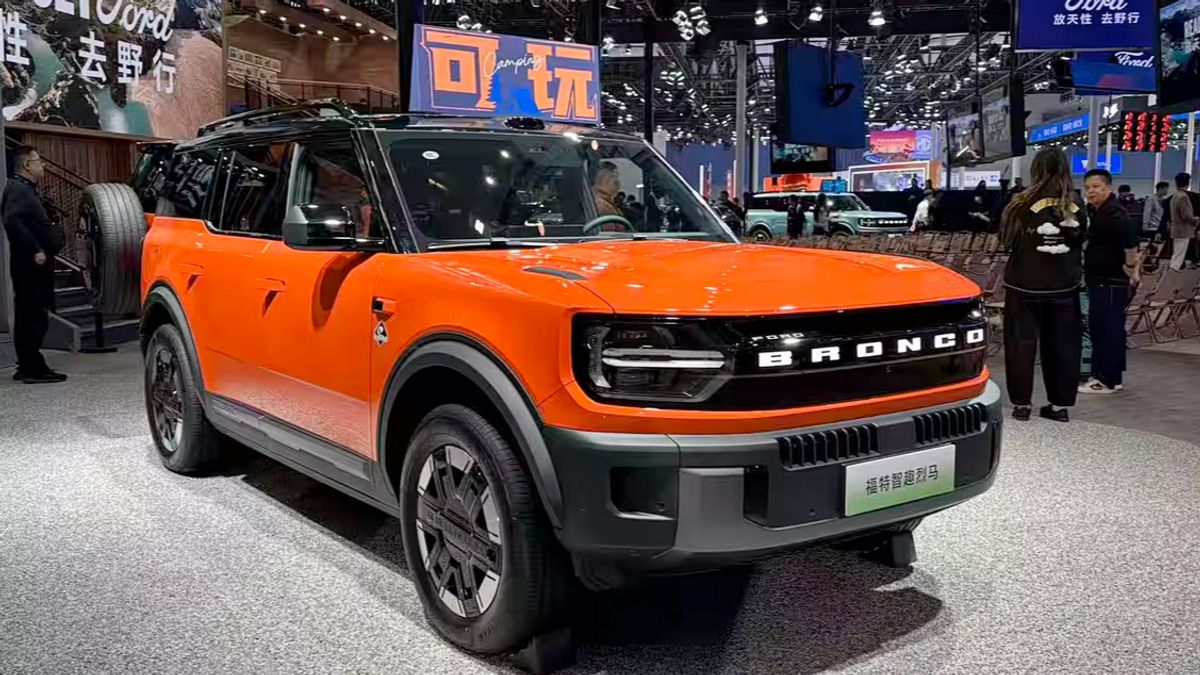
Several years later, BYD is said to have approached Ford to supply batteries for vehicles sold in other markets. The report also said that the newly launched Ford Bronco PHEV has used batteries from Findreams, a subsidiary of BYD.
The English, Chinese, Japanese, Arabic, and French versions are automatically generated by the AI. So there may still be inaccuracies in translating, please always see Indonesian as our main language. (system supported by DigitalSiber.id)
Most Popular Tags
#Prabowo Subianto #donald trump #firearm #8791 #giias 2026Popular


